






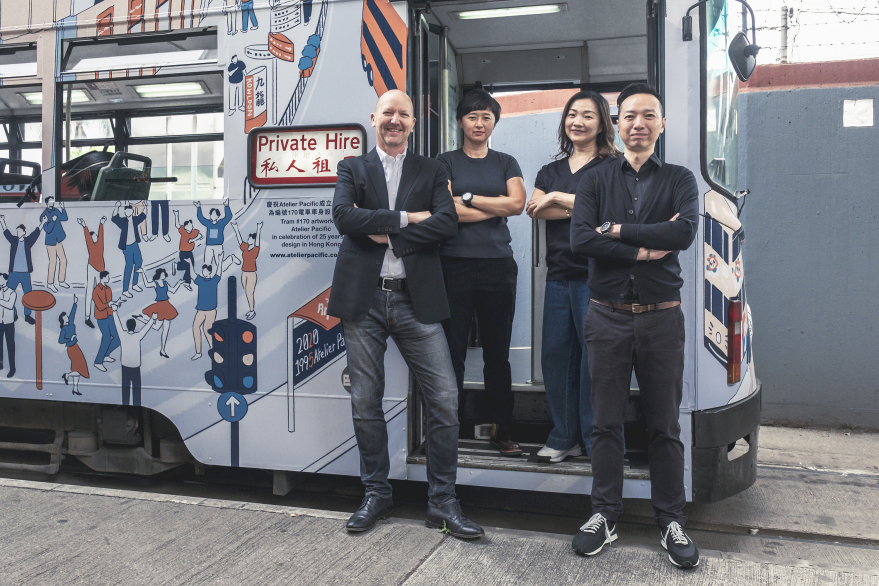
Left to Right: Nic Banks founding director, Glory Wang managing director, Mandy Yip commercial and operations director, Joey Tam project director
Branding Queen
As managing director of luxury boutique design specialist Atelier Pacific, Glory Wang views UM as a solid foundation for professional practice in Asia
Hong Kong is recovering from one of its most severe typhoon in years, and Glory Wang BED 1998 is spending a quiet day in the head office of Atelier Pacific in North Point district. In her role as its managing director, the architect shuttles between Hong Kong, Shanghai and Singapore to oversee 73 designers, architects and support staff. Unlike most firms, Atelier Pacific expanded rapidly during the pandemic, opening its Shanghai office in April 2021 followed by Singapore in 2023. Wang takes it all in stride as clients including Hermes, Louis Vuitton and Salvatore Ferragamo keep coming back for more.
Unlike a stereotypical luxury brand designer, Wang is far from dripping head to toe in European labels. Instead, she opens the door to Atelier Pacific comfortably attired in running shoes, jeans and t-shirts. She is always ready for a good laugh, often at herself or to join in the fun. It is no wonder that she has fond memories of fierce ditchball games in the mid-90s when she was working towards her Bachelor of Environmental Design (Architecture) at UM.
“Ditchball was a big thing,” she recalls, settling into her chair in the studio’s boardroom overlooking Victoria Harbour. “Everyone had to participate. What I remember more was Sketch Camp at Gimli—a real eye opener. I had always been self-conscious about my hand drawing skills. At Sketch Camp, I learned that it was not about doing nice drawings; it was about the approach. Drawing was a means towards expression. So was photography, which I got into while at Gimli. And we stayed in a Viking settlement population 500. The mayor was also the high school principal. I had a really good time.”
Born in Hong Kong, Wang’s family emigrated to Vancouver when she was 11 years old. “I originally wanted to go to culinary school,” she confesses. “Although fairly liberal, my parents balked at what traditional Chinese families assumed would be a tough job in a greasy kitchen slinging out chow mein. They encouraged me to consider something else. I was pretty ignorant and thought that architecture would be easy: drawing and model making without any need to study. Since at the time, UBC only had a master program for architecture, the next closest university was UM. It was crazy! I applied with my portfolio, got accepted and moved to Winnipeg without knowing anything about it. After staying with family friends for a few nights when I first arrived, I moved into Mary Speechly Hall.”
Being from milder climes, Wang was unprepared for snow in October. Yet being part of the Mary Speechly community for her entire stay in Winnipeg gave her a sense of grounding and yen for pierogi. History lessons with Robert Madill gave her a fresh look at dusty days of yore. “Bob always walked in with Ray Bans,” she laughs. “He had them on the entire time we looked at slides in a dark room! I don’t know why he always wore shades—maybe he was trying too hard to look cool. Let’s face it: history is boring. But the way he shared his knowledge made it very memorable. He was a good teacher.”
Another professor she remembers fondly is Leon Feduniw, though she is much less enamoured at being pried out of bed for his 8:30 am tech class three days per week. “My friends and I were always late and we would always get stuck sitting in the front row where Leon could see we slept through most of his lectures,” she grins. Feduniw suggested that she enter an American student housing competition; Wang and her team won second prize and a trip ensued to accept the award in San Francisco. “It was my first time to San Francisco,” she recalls. “It was fun. Along with visiting one of the competition judges’ studios—my dream work place—we went sightseeing.”
After graduating in 1998, Wang worked for a couple of years in Hong Kong before returning to Canada to study in Ottawa. “UM gave me a good foundation for my master at Carleton,” she says, noting that she immediately returned to Hong Kong following graduation in 2004. “My brother was working here and we’re close,” Wang notes. “And frankly, Hong Kong salaries are better than Canadian ones.” She started at Wong Ouyang, one of the biggest architectural firms in the city at the time. Although she gained enough experience for her Hong Kong Institute of Architects license, she found herself oscillating between gratitude for being employed during the 2008 financial crisis and frustration at the government-like culture of working for a practice with hundreds of staff members.
“I messaged Nic one particularly annoying day and asked if he was hiring,” Wang remembers. She had previously interned for Nic Banks, a transplanted Brit who founded Atelier Pacific in 1996. By then, she knew she preferred working within a more intimate studio that espoused an architectural approach to interiors. “I think that’s the difference between education in Canada versus Hong Kong,” she posits. “In Canada, interior design is part of architecture and architects see interiors as part of their job—everything we do is about solving a client’s needs.”
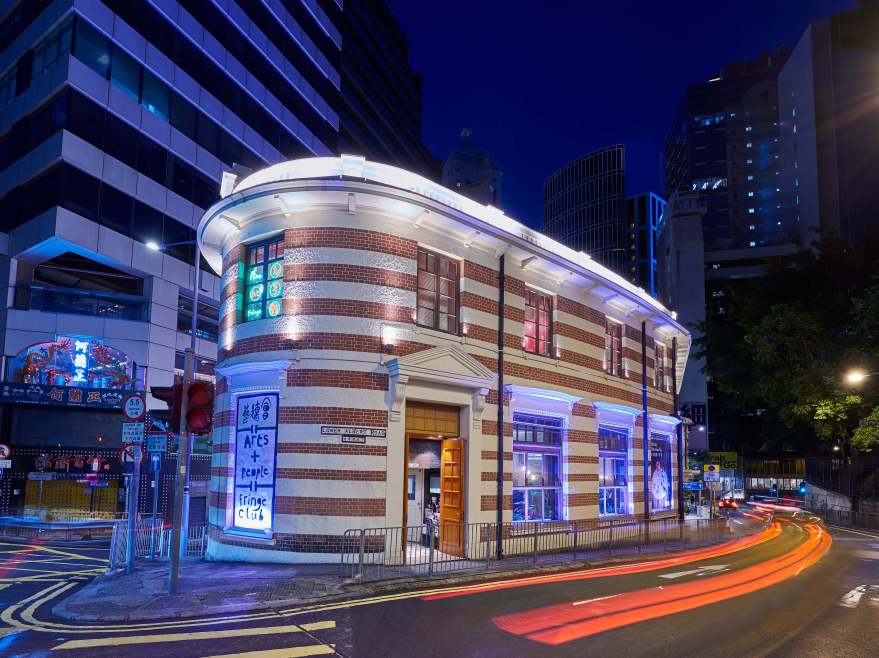
One of her first and favourite projects was the extensive adaptive re-use of Hong Kong Fringe Club; she worked closely with clients Benny Chia and Catherine Lau to get the listed heritage building structurally sound and up to contemporary building codes. “It is an iconic building,” Wang states. “At the time, it was a hub for the local arts scene. I learned a lot about its history as Dairy Farm’s storage when it was first opened in 1845. The painful part was our very tight budget and dealing with a lot of changes as the project progressed. It was like helping a patient recover from cancer with the minimal amount of financial support. There was a lot of reinstatement to its original glory. A nice surprise was the discovery of floor tiles from the 1960s in the Fringe Dairy part of the building that were in good enough condition for us to leave in situ after some cleaning.”
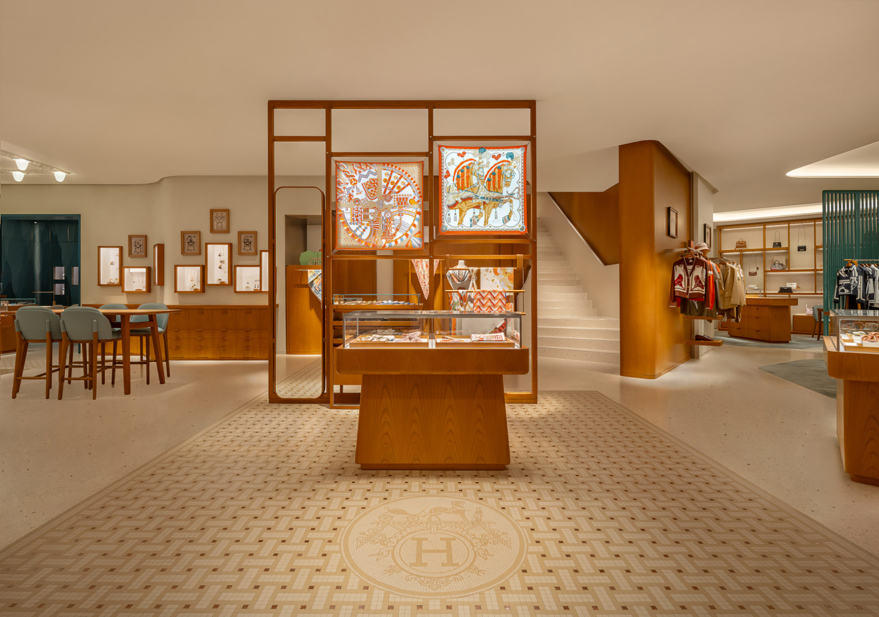
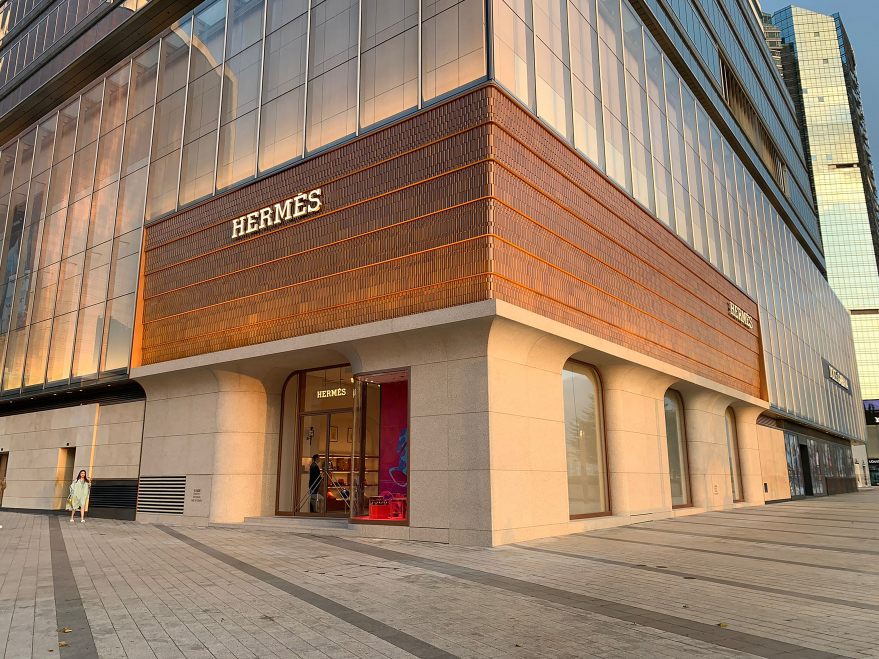
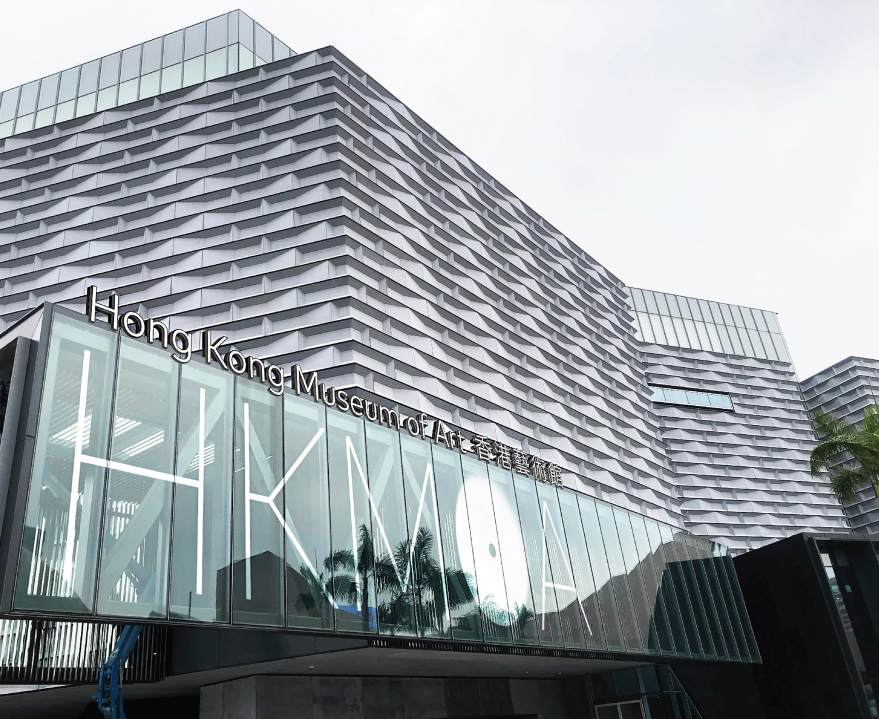
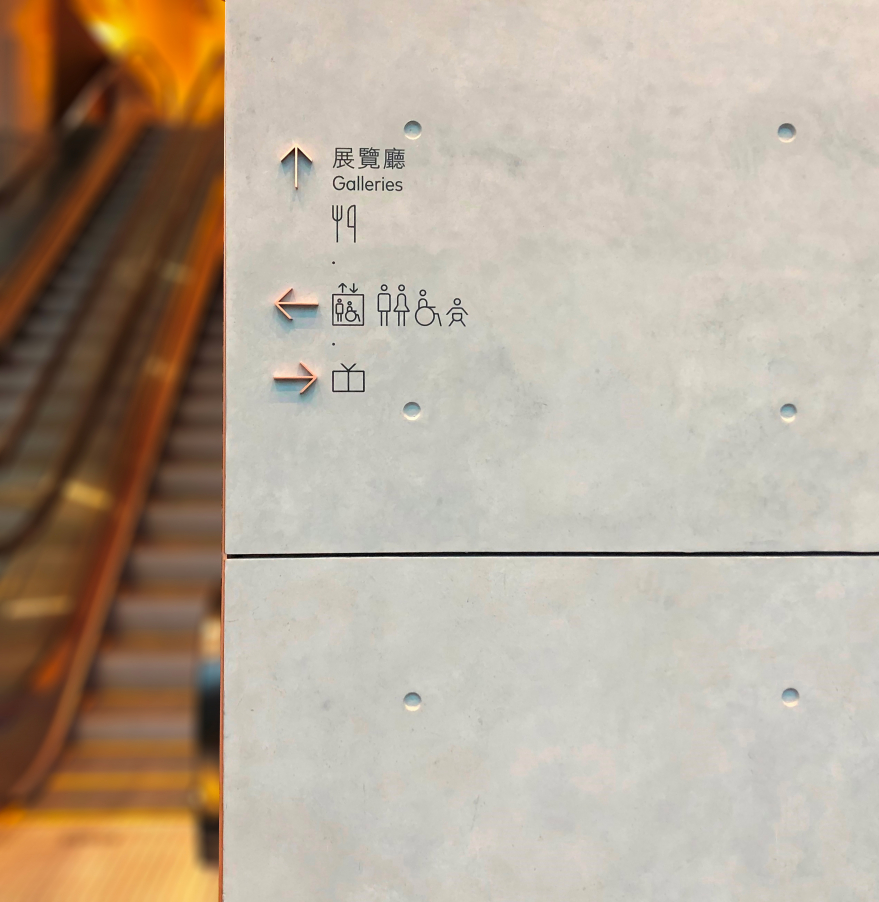
Atelier Pacific is the preferred interior architect for luxury brands in greater China, and Wang particularly appreciates the firm’s longstanding relationship with Hermes. “Its attention to detail is hats off,” she shares. “It likes to explore materials and push boundaries.” Another niche area for the studio is signage and wayfinding, with Hong Kong Museum of Art a stand out project: “The museum today compared to prior its 2019 intervention is like night and day. It’s a fresh idea executed well, and our signage design complements the building.”
Wang was promoted to managing director four years ago after Banks relocated part-time to Europe. She admits that she designs much less these days, though she still gets excited about new projects. “I was the last man standing,” she smiles, referring to the constant poaching of colleagues by fashion houses for them to work in-house. “I am the designer remaining with the longest history,” she reveals. “As both a manager and the front person for our studio, I give clients faith and trust in what we do to return for their next project.”
She helped steer the firm’s expansion from a studio with 20 people in Hong Kong to almost quadruple in size with three studios across the region. “We are intentionally getting more architects on board to work on a wider range of projects. When I first joined, we did exhibitions, proposals for houses and smaller scaled projects. Now people know us for much more. For our 25th anniversary—which we couldn’t properly celebrate as it was the height of the pandemic closures—we wrapped a tram in colourful graphic renderings of our best projects. Everyone loved it.”
Looking back at her time in Winnipeg, Wang feels she owes UM a big thank you: “My architectural education helps me think outside the box. I encourage anyone and everyone who wants to make a difference to consider studying architecture at UM.”