






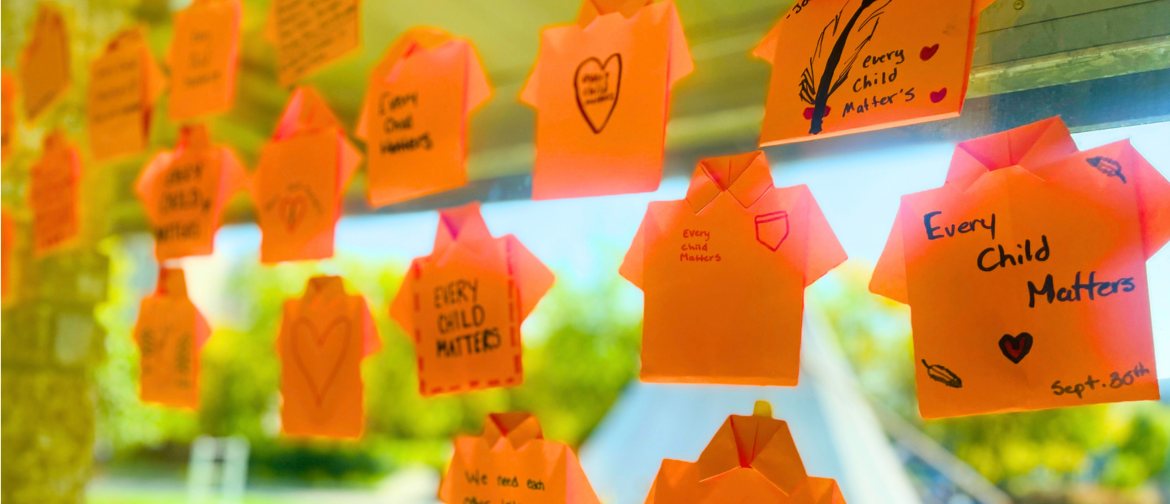
Wear orange and be part of our upcoming UM events honouring the National Day for Truth and Reconciliation.
Walking together: UM marks National Day for Truth and Reconciliation
Students, Elders and Survivors share stories of healing and hope, reminding us to listen, learn and act for reconciliation
At UM’s Indigenous Student Centre, first-year psychology student Shylo Cloud quietly folded an orange paper shirt. On it, she drew a circle — a symbol of people gathering together, remembering together and acting together. The simple gesture carried strength and care.
Each year on September 30, the National Day for Truth and Reconciliation reminds Canadians to honour Survivors, remember the children who never returned home and confront the deep wounds of colonial history.
Across UM campuses this fall, students, faculty, staff and community members will pause, reflect and respond in diverse ways.
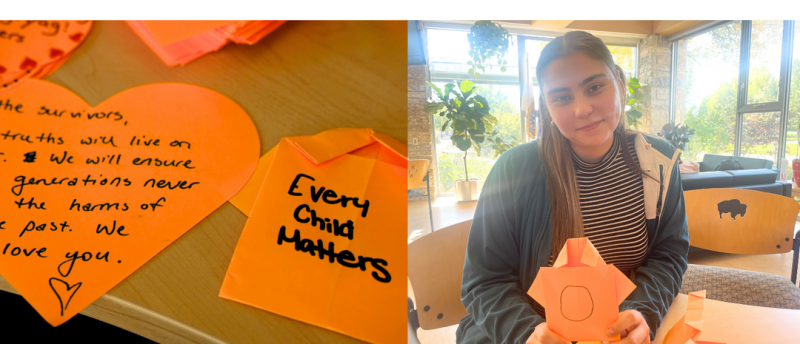
At the Indigenous Student Orientation, UM first-year student Shylo Cloud said, “I just wanted to take a moment to express myself.”
Elders’ fire
At Migizii Agamik, UM Elder-in-Residence Kookum Karen Courchene is leading an orange shirt origami activity open to all. From now until September 28, participants can fold, write or draw their messages and display them on the Indigenous Student Centre’s windows. On September 29, the shirts and cards will be placed in the fire, carrying memory and prayer to the spirit world.
“I hope those who know this history continue to tell the story. I hope those who don’t will learn it. And I hope we never forget.” — Kookum Karen
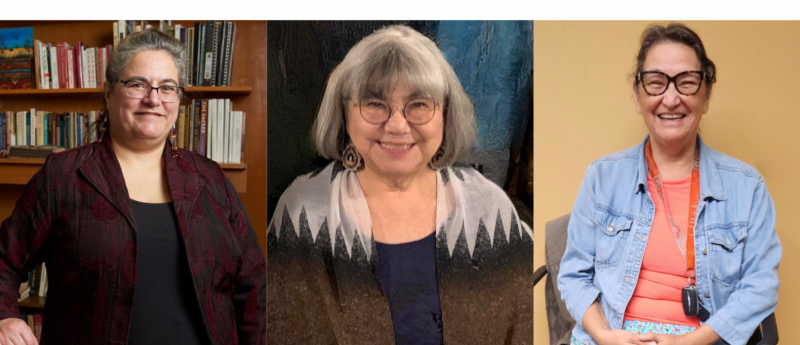
From left to right: Dr. Cary Miller, organizer of the Teach-In for Reconciliation; Survivor Astrid MacNeill, sharing her healing journey at the Heart Garden; and Elder-in-Residence Kookum Karen Courchene, leading the orange shirt origami activity.
Survivors’ voices
Since its launch in 2023 by the Office of the Vice-President (Indigenous) (OVPI), the Heart Garden has become one of UM’s most symbolic reconciliation spaces. On September 25–26, it will once again gather messages of remembrance, reflection and commitment.
Residential school Survivor Astrid MacNeill will share her healing journey, which began in community-led ceremonies.
“Healing is possible when conditions are right. Accommodation, truth and respect.” — Astrid MacNeill
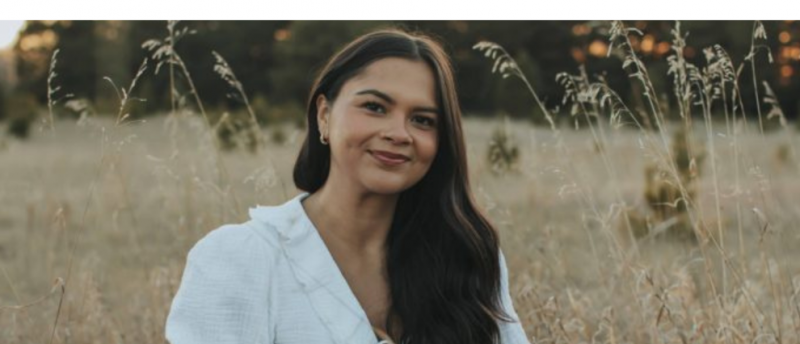
From Churchill, Manitoba, proud York Factory Cree woman Antonina Kandiurin says taking the brave step into post-secondary at 17 opened doors to growth, helping others, and building connections worldwide.
Students’ journeys
For many students, reconciliation is both personal growth and collective strength.
Master’s student in Medicine and Indigenous woman Antonina Kandiurin recalls arriving at UM with little expectation of how her identity would be shaped. She faced discrimination but also found support and belonging alongside growing resources for Indigenous students.
Kandiurin describes her experience as “transformative, grounding, empowering” and affirms: “Reconciliation is ongoing work, not a checklist. It must be realized through action, not just statements.”
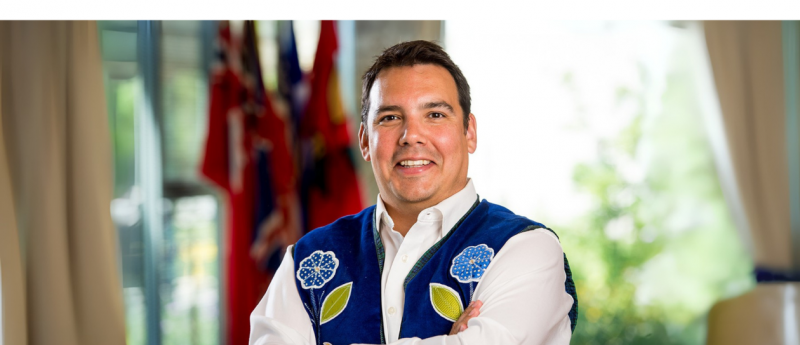
Dr. Niigaan Sinclair, Professor of Indigenous Studies at UM, is a leading scholar, writer and public intellectual dedicated to revitalizing Indigenous knowledge, language and history.
Academic and institutional change
This year also marks the 50th anniversary of the Department of Indigenous Studies. Scholar Dr. Niigaan Sinclair notes that Indigenous knowledge was once confined to “small classrooms and small courses” but is now embedded in daily conversations and institutional planning.
He points to initiatives such as the Summer Institute, led by Dr. Cary Miller, which builds Indigenous literacy among faculty and staff, and the Indigenous Credit Requirement for all Faculty of Arts students — evidence that reconciliation is becoming integral to UM’s teaching and learning.
With support from the OVPI, Dr. Miller will also host a Teach-In for Reconciliation on September 29, offering the UM community another opportunity to deepen understanding and engage in meaningful dialogue.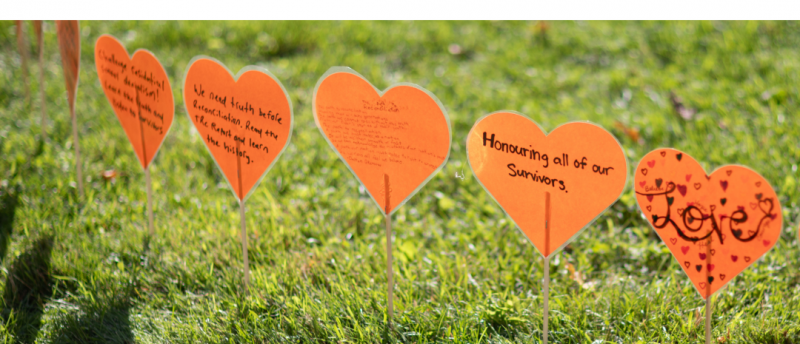
Commitment to the future
UM leadership echoes this shared vision.
Vice President (Indigenous) Dr. Angie Bruce adds that as UM has a unique responsibility to transform commitment into action through education and research.
“At UM, Truth and Reconciliation is not accomplished through a single day of events, but through an ongoing responsibility. Guided by the Truth and Reconciliation Framework, we are embedding Reconciliation into teaching, research, policy and partnerships with community. Our goal is to ensure that Reconciliation is part of the university’s everyday practice, not just marked once a year.”
As orange paper shirts turn to ash and heart cards rest quietly in the garden, these acts of remembrance remind us that reconciliation is not a single day or week but an ongoing journey — one that UM continues to walk every day.