







Well-laid Plans
The year was 1990. Scott Dunn BES 1993 MLArch 1996 was working as a ski instructor in Banff following high school graduation. The Swift Current, Saskatchewan native was a keen sportsman and loved being outdoors. But something was missing. In that moment, Dunn experienced an epiphany.
“It was on a hill that I realized I did not want to be 35 and still a ski instructor,” Dunn recalls with a grin. “I applied to the Bachelor of Environmental Studies program at UM; on my submission form, I wrote that I wanted to design ski hills.”
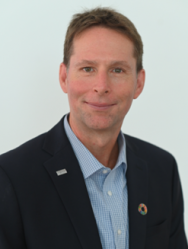
Scott Dunn portrait, Image credit: AECOM
Fast forward 45 years. Dunn has made Asia his home since the early 2000s. After marrying fellow UM alumnus Laurie Bielun MArch 1996, the couple relocated to Asia via New York City where she worked for Richard Bloch and Edwin Schlossberg—“the latter’s marriage to Caroline Kennedy made for interesting Halloween parties,” quips Dunn. While in New York, Dunn secured an interview with EDAW: “I was the seventh employee with its New York office.” The firm merged with AECOM in 2005 and the couple relocated to Hong Kong. Today, the global urban and masterplanning firm employs 6,500 people in Asia, and Hong Kong is its regional headquarters with a staff count of 4,000. In 2007, Dunn relocated to Singapore—the same year that AECOM became a publicly listed company.
These days, the couple spends holidays with their son Jack in Vancouver where he is studying film. He drops in regularly to see his folks in Saskatchewan. “I stand and look around my sister and brother-in-law’s farm outside Saskatoon and cannot see another living soul,” he shares. “I don’t think I’ve worked on any projects in Asia where this is the case.”
It may be an understatement to say that Dunn has come a long way armed with a couple of UM degrees. Yet at the same time, he is still that kid from Swift Current: he still loves pushing his body to its limits, though now he participates in triathlons instead of volleyball, basketball or ditchball.
“Ditchball was always a fun time,” he smiles. “What I remember most about the game was trying to remain upright! And not getting hurt too badly so that I can keep doing other sports.” A more sobering memory was when first year professor Gord Adaskin discovered that Dunn suffered from red-green colour blindness: “He told me that I would never make it as an architect.”
Ignoring those words, he persevered and became one of the first in his class to use CAD and laptops; his computer literacy caught the attention of professor William Thompson. “A few of us did poorly on an assignment and Bill roped us into doing extra work including library research for his projects,” Dunn rolls his eyes. “We even helped him move house! Back then, I felt the Dewey Decimal System was a waste of time; I learned to appreciate it in later years. A library’s organizational structure is similar to how we index, archive and retrieve digital twins at AECOM, for example.”
Given Swift Current’s population of 17,000, Dunn considered Winnipeg a big city move though he admits that the choice to go to UM was based on its connection to Chicago schools. “Being surrounded by multi-storied buildings downtown helped my understanding of how a city functions,” says Dunn. “Living in Winnipeg was a good foundation for the work that I do now. I had always been interested in landscape architecture from a placemaking point of view. That was why I switched from architecture to landscape architecture for my master degree. My thesis was on golf course architecture and how to make it more environmentally friendly.”
AECOM gave Dunn the opportunity to work on urban and rural environments, and he initially spent equal amounts of time on master planning and landscapes. He embraced living in Asia as he can witness first hand how cities can evolve sustainably. “In as little as three or four years, I can see our plans take shape,” he explains. “In the west, there is not this same drive for change.”
Case in point is his work on the master plan for Marina Bay and the adjacent Greater Southern Waterfront in Singapore. “I led the project and it helped establish me in the city,” Dunn says. “The 890 acre site was designed to seamlessly extend the downtown district and is a key development area. By using the Sustainable Systems Integration Model, we implemented a systematic method to assess the sustainability performance of the whole area. Based on those findings, our team was able to provide solutions relating to specific aspects of urban design, urban microclimates, landscape engineering, water management and sustainable transportation.”
In 2013, Dunn oversaw the expansion of AECOM with the opening of its Kuala Lumpur office, where he lived with his family for two years. “We grew that office from 80 to 800 people,” he notes. “We worked closely with the Malaysian government on a transformation program for the capital through metro and urban rail lines, as well as revitalized the Klang River.”
In the past decade as Dunn moved up AECOM corporate ladder, he has taken on a senior leadership role. “I deal with the overall business across our sub-regions, helping to integrate multiple disciplines such as engineers and scientists,” he explains. “Our team is very entrepreneurial and we work on projects in Southeast Asia just as much as ones in the Middle East.”
Dunn was part of the LA28 bid team that developed a concept to transform multiple clusters and venue sites across Los Angeles in the run up to the 2028 Olympics and Paralympics. “LA28 will be the first privately financed games since 1984, which also took place in L.A.,” Dunn states. “Our concept fully utilizes the massive ongoing investment in transportation by the region; it will not require construction of any additional transportation infrastructure beyond what is already planned.” With AECOM’s reputation for sports stadium design, the main LA28 stadium is well underway and on track to be completed for the next Games.
Reflecting upon his years in Winnipeg, Dunn credits UM for his ability to drive positive outcomes for millions of people: “The school teaches purpose and reasoning.”