






Supporting Indigenous success Through Career Mentorship: The Indigenous Career Mentor Program
Adrienne Huard - ICMP Mentor of the Month October 2025
The Indigenous Career Mentor Program launched in the fall of 2022 as an extension of Career Services already established Carer Mentor Program. This year, the Indigenous Career Mentor Program will profile the story of one mentor each month from September to April. Interviews from our mentors will provide insight into Indigenous success, as well as how students can best prepare for navigating the transition from university to employment.
The Indigenous Career Mentor Program is an informational interviewing program that supports Indigenous students in gathering industry information. Indigenous mentors that meet with Indigenous students provide advice on how to navigate career opportunities and challenges, mentors may also share their personal experiences navigating their own career journeys.
Indigenous students can choose their mentors from the following fields of practice: Business & Administration, Health Care, Social Services & Education, Government Services, Science & Technology, Arts & Culture, and Recreation & Sports. To learn more about the Indigenous Career Mentor Program and register visit the program homepage.
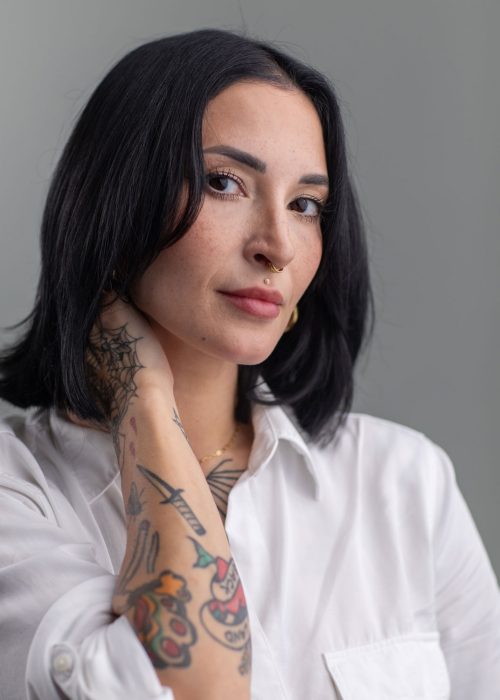 October’s mentor of the month is Adrienne Huard
What is your position title and where do you currently work?
Lecturer in Indigenous Studies
Briefly describe what you do in your current occupation:
I teach classes like Introduction to Indigenous Peoples in Canada, Contemporary Indigenous Art History, and Gender and Indigenous Societies. Additionally, I’m currently writing my dissertation on Two-Spirit performance art, aesthetics, and ancestral knowledges so I’m very involved in the Two-Spirit community in Winnipeg. I’m also a part of an Indigenous feminist co-lab called Iapi debwewin aansaamb alongside five brilliant Indigenous scholars.
What initially sparked your interest in the career you have chosen for yourself?
Being surrounded by other Indigenous thinkers, makers, and doers. I’ve been mentored by incredible people (inside and outside of academia) who’ve pushed me to make space for Two-Spirit and queer Indigenous presence and really inspired me to continue down this path. Being surrounded by inquisitive, wise, humble, and brave colleagues and community members have motivated me to think in these ways—I’m incredibly grateful and I wouldn’t be here without them.
What are some lesser-known duties or work outcomes your role is responsible for that people may not be aware of?
Staying connected to community outside of the university; taking time to build and maintain those relationships. Advocating for students and community members, maintaining an artist practice, contributing to academic and non-academic journals, collaborating with other Indigenous scholars, presenting at conferences, working on your own writing etc.
What do you enjoy most about your job?
Working with Indigenous students, and even more specifically, Two-Spirit and queer Indigenous students. As someone who is completing their PhD, it’s not lost on me how challenging and isolating academia can be for Indigenous students so I really enjoy connecting with them and offering advice when I can.
What are some changes you’ve experienced in your field, or changes you anticipate happening in the near future?
While there has always been a commitment to revitalize Indigenous languages, we’re now witnessing concerted efforts in building fluent and knowledgeable language speakers. With that, people turn to Indigenous understandings of the world and translating that into their work, whether it be health, sciences, technologies, and/or within the arts. Additionally, Indigenous peoples are challenging oppressive structures introduced by settler colonization to unlearn harmful ideologies and therefore, refrain from perpetuating them. So, we’re witnessing more and more contributions from Two-Spirit, queer Indigenous, and feminist thinkers and makers from future generations, which is pretty special.
What are some strengths, specialties, and characteristics that are considered assets in your field?
To acknowledge that we are always learning as human beings. Humility is understanding that it’s impossible to know everything under the sun and that it’s okay to admit when we don’t know or when we’re wrong. This opens possibilities to think critically and engage with other Indigenous thinkers, makers, and doers with an open heart, which is invaluable within and outside the field.
What is a piece of advice you would offer to Indigenous students interested entering your field?
Lean on your cohort, find other Indigenous students on campus and attend gatherings when you can, don’t be afraid to reach out to faculty or staff (we’re here for you), and take care of your spirit. The work takes time and energy so give yourself grace and be patient. Lastly, be true to who you are and remember your core values.
Within your industry or field, what are some related occupations that you interact with and/or find interesting?
Because my research focuses on Two-Spirit and queer Indigenous creativity and aesthetics, I am very lucky to be involved in the Two-Spirit drag community here in Winnipeg. Additionally, I work with Indigenous artists and curators in Canada, archivists, musicians, Powwow dancers, authors, language speakers, and educators etc. Indigenous Studies is a multidisciplinary field so much of our work is interconnected.
To meet with mentors like Adrienne Huard, register for the Indigenous Career Mentor Program. Explore, connect and build confidence as you proceed in your career journey!
If you are an Indigenous professional interested in sharing your story and connecting with students, consider volunteering as a mentor in the Indigenous Career Mentor Program.