






Supporting Indigenous success Through Career Mentorship: The Indigenous Career Mentor Program
Carla Loewen - ICMP Mentor of the Month January 2026
The Indigenous Career Mentor Program launched in the fall of 2022 as an extension of Career Services already established Carer Mentor Program. This year, the Indigenous Career Mentor Program will profile the story of one mentor each month from September to April. Interviews from our mentors will provide insight into Indigenous success, as well as how students can best prepare for navigating the transition from university to employment.
The Indigenous Career Mentor Program is an informational interviewing program that supports Indigenous students in gathering industry information. Indigenous mentors that meet with Indigenous students provide advice on how to navigate career opportunities and challenges, mentors may also share their personal experiences navigating their own career journeys.
Indigenous students can choose their mentors from the following fields of practice: Business & Administration, Health Care, Social Services & Education, Government Services, Science & Technology, Arts & Culture, and Recreation & Sports. To learn more about the Indigenous Career Mentor Program and register visit the program homepage.
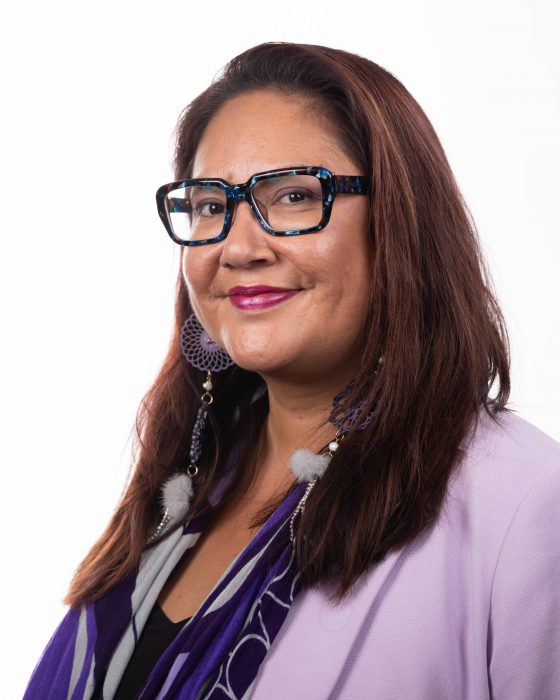 January’s mentor of the month is Carla Loewen
What is your position title and where do you currently work?
Director, Indigenous Student Centre, University of Manitoba
Briefly describe what you do in your current occupation:
As director, I am responsible for overseeing the activities and programming of the Indigenous Student Centre (ISC) in Migizii Agamik – Bald Eagle Lodge at the Fort Garry Campus. Programming includes student advising staff who take care of Indigenous students’ needs in a holistic way by offering programming for students in every stage of their academic journey including first year transition, retention and success, financial wellness, cultural learning, and student care. In addition, ISC has an Indigenous graduate student success coordinator who supports Indigenous graduate students throughout their programming. Our programming is organized and facilitated with student wellness in mind. Instilling sense of belonging, student engagement and community-building is embedded into our work, which makes it meaningful and fun because of the things we get to do for, and with, students.
ISC also has an Elders-in-Residence program who are integral to the University of Manitoba because they are available to students and staff for cultural learning, traditional teachings, Indigenous identity exploration, ceremonial work and more. We currently have two Elders and a Grandmother-in-Residence who are kept very busy!
Lastly, ISC leads the annual graduation pow wow for students in May of each year, which is an event that celebrates the achievements of Indigenous students in a culturally inclusive and special way. We love that we get to do this for students each year.
What initially sparked your interest in the career you have chosen for yourself?
I have worked in student support for my whole career starting as an academic advisor with the First Year Centre where I specialized in first year advising and was able to develop an Indigenous peer mentor program. When I moved to ISC it was to be the student advisor who led transitions programming, which I did for five years before becoming the director. Supporting Indigenous student success is the foundation of my career and is important to me.
What are some lesser-known duties or work outcomes your role is responsible for that people may not be aware of?
People may not be aware that I also oversee Migizii Agamik in terms of building maintenance and room bookings. One of the first things I did as director was to get a construction project approved to move a hallway door back to make the accessible washroom on the main floor accessible (when the building was opened it was originally a private staff washroom and designated as an accessible washroom later). That door was changed to be an accessible door. Physical Plant helped by making our other main hallway door accessible as well. This may be why Migizii Agamik is often referred to as the Indigenous Student Centre but there are several units who have offices in here, it is not just us.
What do you enjoy most about your job?
I am passionate about supporting Indigenous student success in any capacity. In this role I get to do it in a more administrative way through supporting unit activities, but I also make sure to continue to make and nurture connections with students. I’ve had the pleasure of seeing students start their academic journeys here, complete their degrees and go onto doing amazing things in their communities and networks. Through the process of being a cheerleader and informal mentor, those connections continue post-graduation, which is another perk of the work I do. Encouraging community building and creating safe and supportive networks often leads to friendship and that’s awesome!
What are some changes you’ve experienced in your field, or changes you anticipate happening in the near future?
Broadly, my career has been in post-secondary education, which has all been at the University of Manitoba. I also have received my education here. I started university in 1996 and completed my Bachelor of Education. At that time there was one Cross-Cultural Education course I could take that talked about Indigenous students in the classroom and besides what I found to help my own learning like a Cree language course and writing papers on Indigenous topics, Indigenous initiatives on campus were just starting to emerge. The Aboriginal Student Centre had only recently opened, and the Indigenous campus community was small (but mighty). The Indigenous staff that worked at UM in the mid-90s are the ones who broke down barriers and made the changes needed for the UM to be what it is today. Those folks in turn were inspired by the changemakers before them and that’s what I aspire to be for others one day; someone who helped continue to create change here. That ongoing reciprocity is the holistic approach that grounds my work and what I envisioned I could accomplish when I was starting out and developed an Indigenous peer mentor program where Indigenous students support each other through each year of study. It’s neat to reflect on this and see how that’s unfolded over time.
It’s important to acknowledge at this point amongst all the glowing comments I am making here is that that higher education institutions were founded on colonized, Western thinking where Indigenous Peoples were once not welcome. This is never forgotten in the work done within the Indigenous campus community.
What are some strengths, specialties, and characteristics that are considered assets in your field
Characteristics that have helped me in my field are patience, diplomacy, the willingness to listen, the willingness to do hard, uncomfortable work when necessary, and the ability to create relationships built on trust and reciprocity. These strengths have allowed me to create a supportive network at UM across campus(es).
What is a piece of advice you would offer to Indigenous students interested entering your field?
For this question, I am considering the field of supporting Indigenous student success. My advice is to learn about Indigenous history and contemporary issues to understand why this work is important. Most importantly, do not let where you are in your understanding of who you are as an Indigenous person limit what you can do. Everyone I know is at their own place of learning when it comes to their cultural knowledge or strengths, you can learn and work in these spaces at the same time. That is what I have done, and it has served me well and I will continue to keep learning about who I am as a Cree woman. It’s all part of the process of becoming strong in who you are. I have my mentors and Elders to thank for how I have developed over time in understanding this.
Are there any resources you feel could support Indigenous students interested in this career path?
To work in post-secondary education in a student advisor role, it’s best to have an undergraduate degree in areas such as education, family studies, health studies, or a degree in Arts or Science. Anything to help your understanding of social issues and needs. Being a university graduate also helps you understand the student experience because you have gone through it yourself. To work in administration support, an undergraduate degree is also foundational. I also have a master’s in education in adult and postsecondary and just embarked on my PhD in education to continue to give back in different ways. For those who don’t have the time or opportunity to complete a degree before going into the work field, there are so many interesting and varied opportunities for working at a university. I joke to people that once university life gets into your system, you never leave. It’s like we choose to stay at the Hotel University of Manitoba (I actually just made that last part up; if you get it, it’s maybe funny).
Within your industry or field, what are some related occupations that you interact with and/or find interesting?
Our unit has partnerships with many of the Student Affairs student resource offices and so we work with advocates, counselors, social workers, psychologists, academic advisors, librarians, career counselors, study specialists, professors, doctors, lawyers to name a few. I find them all interesting!
During your career journey what support(s), resource(s), and/or event(s) influenced your decision-making process?
When thinking about what you want to do “when you grow up” talk to people in your areas of interest because they can give you real world feedback about the field. When I was an undergraduate student just starting out, I wish I had known how many resources were available to me. I highly recommend seeing a student advisor at least once a year (for course selection assistance to make sure you are picking the right courses), see them more if you are considering a program change or run into academic difficulty, and once narrowing it down, see a career specialist who can provide more insight into your area(s) of choice.
To meet with mentors like Carla Loewen, register for the Indigenous Career Mentor Program. Explore, connect and build confidence as you proceed in your career journey!
If you are an Indigenous professional interested in sharing your story and connecting with students, consider volunteering as a mentor in the Indigenous Career Mentor Program.