






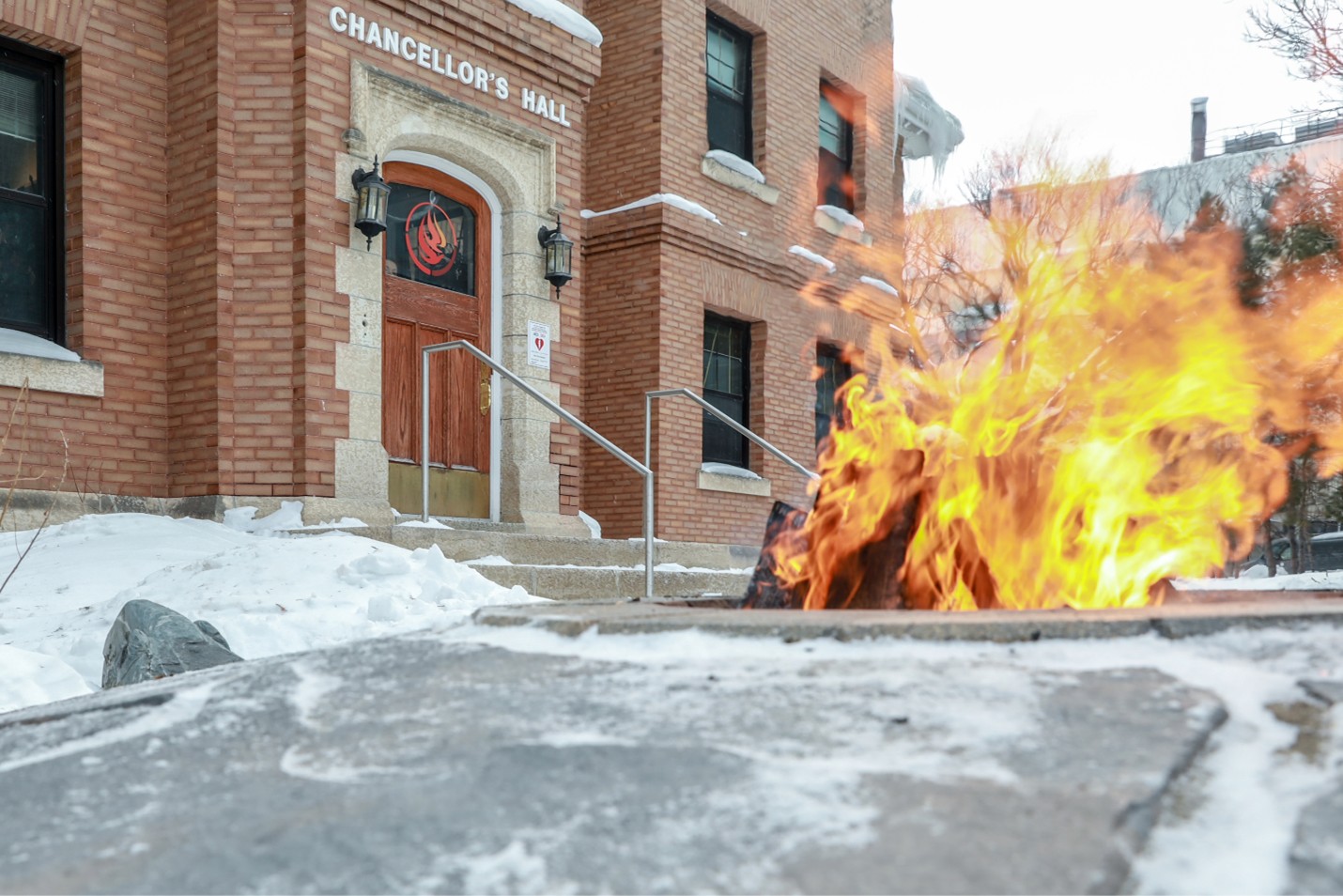
The National Centre for Truth and Reconciliation at UM Fort Garry campus.
Building on a decade of Truth and Reconciliation
Reflecting on 10 years since the National Centre for Truth and Reconciliation opened its doors at UM.
Ten years ago, Survivors’ testimonies, sacred items and archival records from the Truth and Reconciliation Commission (TRC) of Canada found a permanent home with the establishment of the National Centre for Truth and Reconciliation (NCTR) at the University of Manitoba (UM).
Born from the work of the TRC and release of the TRC’s 94 Calls to Action, the NCTR is a permanent place of learning and dialogue where the truths of the residential school experience are honoured and kept safe for future generations.
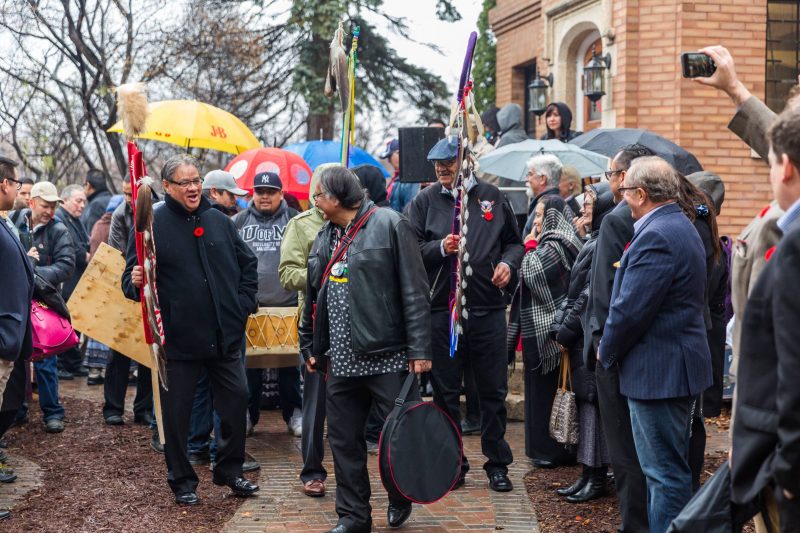
Elders, Survivors and supporters gather outside the NCTR for its opening in November 2015.
As host of the NCTR, UM is more than a safekeeper of records, it is a partner in advancing truth and Reconciliation through education, research and community-led initiatives. To reflect on this milestone, we turn to the voices of those who have helped shape the NCTR and its deep connection to UM over the past decade.
“When the NCTR was first established, we knew this work would be generational. Over the past decade, we’ve seen how truth-telling is healing and creates space for real change. It has been humbling to witness Survivors guide and inspire a shared path forward,” said Stephanie Scott, Executive Director at the NCTR and Associate Vice President (Indigenous) Reconciliation at UM. “Ten years later, our responsibility remains the same, to honour the truths Survivors continue to share and ensure their voices are heard.”
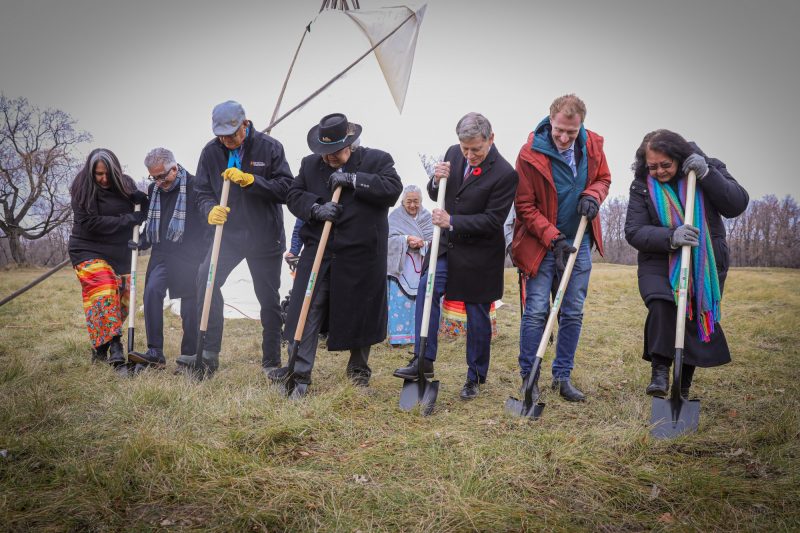
Survivors, Elders, NCTR and UM leadership and government officials at the ceremonial sod turning at the future grounds of the NCTR.
Honouring the past as we look to the future
With this milestone anniversary, we honour the Survivors who have shared their truths and guided us to where we are today. Their courage continues to light the path forward.
“At UM, we carry the trust of Survivors the Indigenous community, and all Canadians. This trust is reflected in our commitment to preserving and sharing the documented truths of the residential school experience. These truths support ongoing learning for students, faculty and the entire university community,” says Angie Bruce, Vice-President (Indigenous).
As we look to the next generation, she reminds us of the impact on future leaders. “The impact of our future generation is huge as they have the invaluable opportunity to engage with truth and Reconciliation in deeply personal and meaningful ways. Whether through visits to the NCTR, participation in ceremony or learning directly from Survivors.”
This is a place where learning is guided by Indigenous voices and where students can take part in research and opportunities that honour those truths. These experiences help shape future leaders who carry this work forward.
Education is key
For 10 years, Kaila Johnston has been part of the team shaping how the NCTR delivers educational programming across the country, and right here at the Fort Garry Campus. Currently serving as Director of Education she says the NCTR is a living resource for students and faculty across disciplines.
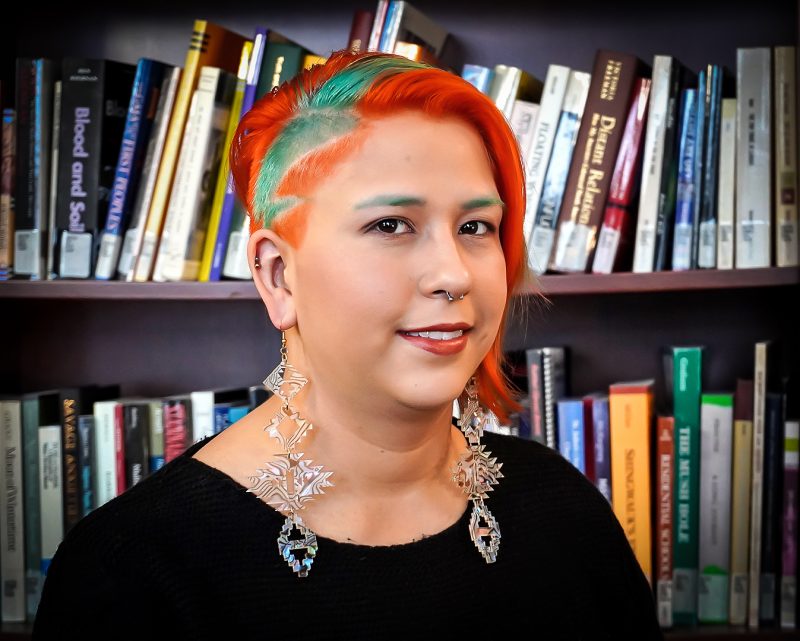
Kaila Johnston, Director of Education & Public Programming at the NCTR
“Students can book the space anytime—for study groups using meeting rooms or the gallery,” shares Johnston. “We have a non-circulating library and archivists who help researchers learn to use the database. We host open houses, lunch-hour lecture series and online courses, which faculty and students can join anytime,” she explains.
Johnston underscores both the progress and the ongoing challenges of Reconciliation in academic spaces, reflecting on the unique responsibility UM carries as host of the NCTR.
“First, I want to emphasize that UM is the only university in Canada that formally apologized for training teachers who went into residential schools. The President [Barnard] gave that apology in 2011. But Reconciliation has no end point, you have to renew your commitment every year. As Justice Murray Sinclair said, ‘Education is what got us into this mess and education is key to getting us out of it.’”
Remembering Honourable Justice Murray Sinclair
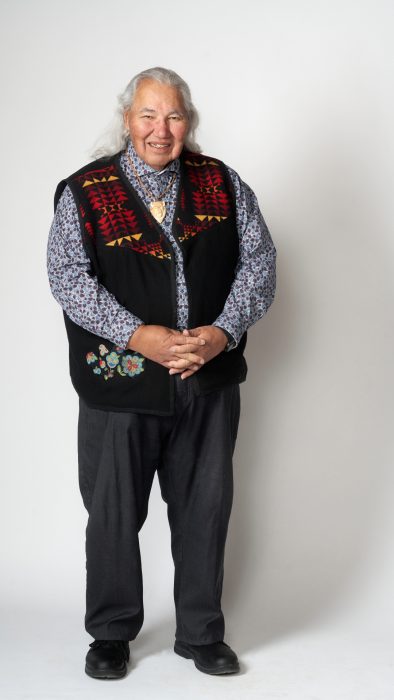
Honourable Justice Murray Sinclair. Photo by Ian McCausland.
As we reflect on 10 years of truth-telling and healing, we also pause to honour the man whose courage and conviction made it possible, the late Honourable Justice Murray Sinclair [LLB/79, LLD/02] (Mazina Giizhik-iban — the One Who Speaks of Pictures in the Sky).
“Justice Murray Sinclair gifted us so many teachings and ideas that continue to guide our Reconciliation journey, and our university is committed to honouring his legacy,” says Michael Benarroch, President and Vice-Chancellor. “His leadership helped create NCTR, and it is our university’s great privilege to help build a new, permanent home for NCTR—one that reflects Survivors’ vision and helps NCTR fulfill its mission and mandate. Like Justice Sinclair’s work, this new home will be a beacon to the world, guiding us in the essential work of understanding our true history so that we can advance Reconciliation.”
As Commissioner of the Truth and Reconciliation Commission, the Honourable Justice Murray Sinclair led efforts to gather more than 6,500 testimonies from residential school Survivors, resulting in the landmark 94 Calls to Action that continue to guide Canada’s journey toward Reconciliation.
Students leading the way in Reconciliation
Logan Nadeau, former Education Coordinator at the NCTR, continues his studies in the Faculty of Law at UM. Currently in his final year of the Juris Doctor program, Nadeau says he feels deeply connected to the NCTR, which sits just steps away from the Faculty of Law building.
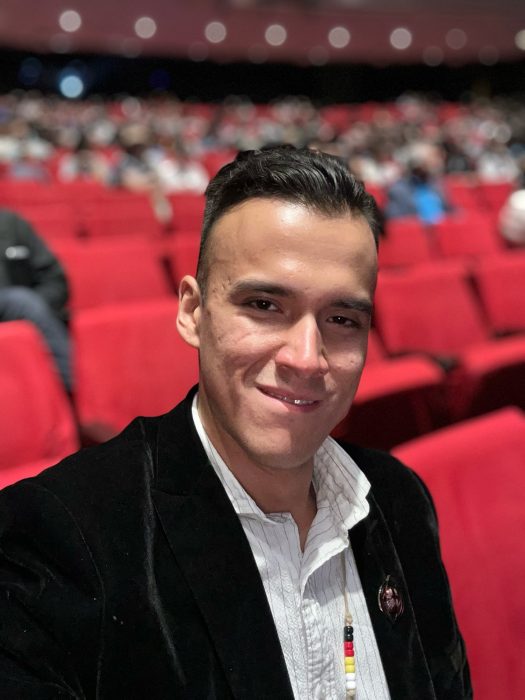
Logan Nadeau attending the Anishinaabemowin Star Wars premiere at the Centennial Concert Hall.
As Nadeau transitioned from his role at NCTR into his first year of law school, he says he remained overwhelmingly inspired by the work of the NCTR. “The NCTR fueled my drive to pursuing a law degree so that I could become the best representative I could for my people.”
Harnessing this inspiration, Nadeau introduced an important tradition of ensuring all first-year law students visit the NCTR on their very first day of class.
For Nadeau, introducing this practice is about informing his new peers of the history of Canada’s Residential School System—grounding future lawyers in truth and the responsibilities of Reconciliation before they enter the field.
He says it also deepens his own understanding of what Reconciliation looks like in action, “Working at the NCTR fulfilled my need to become more involved with the community both at the University of Manitoba and in the city of Winnipeg.”
A pivotal time, a sacred place, a permanent legacy
As the NCTR marks its first decade, attention is turning to its future. The NCTR is preparing to move into a new permanent home on lands returned to Survivors by UM.
“The generosity of our funders and allies, and our partnership with the University of Manitoba have all been a vital part in helping us carry this sacred responsibility. Together, we now look ahead to building the Centre’s new home—a place where learning, research and community will continue to center the truths of Survivors and preserve their powerful legacy entrusted to us,” says Scott.
This space will be an international attraction where history and Indigenous cultures come to life, offering room for archives, programming and community gatherings.
“The NCTR has grown so much since its inception from the Truth and Reconciliation Commission. From modest spaces at the U of M’s Research Road to its foundation at Chancellor’s Hall, the NCTR now plants root in a space that will allow its mandate to flourish and its influence to grow into the future,” Nadeau shares.
The new home of the NCTR will offer a safe and welcoming space for Survivors, families and visitors to share knowledge, find healing and reconnect. It will also create more opportunities for students, staff, faculty and the wider community to come together, strengthening NCTR’s role as a national and international leader in truth and Reconciliation.
What’s your commitment to truth and Reconciliation?
The anniversary calls on all of us to reflect on what it means to have such a significant place for truth-telling, learning and healing right here on campus, as well as the collective responsibility we share. The work of Reconciliation is ongoing, and it belongs to every one of us.
Scott reminds us that we all have a role in addressing truth and Reconciliation.
“As with any enduring partnership, there are moments that test our shared resolve. In those times, we must continue to stand together, steadfast in truth, united in purpose, and unwavering in our commitment to confront denialism and uphold Survivors’ truths.”
For more:
To learn more about the NCTR and available programming, visit their website.
Read the 94 Calls to Action.
To learn more about UM’s commitment to truth and Reconciliation, explore the Truth and Reconciliation Framework webpage.