






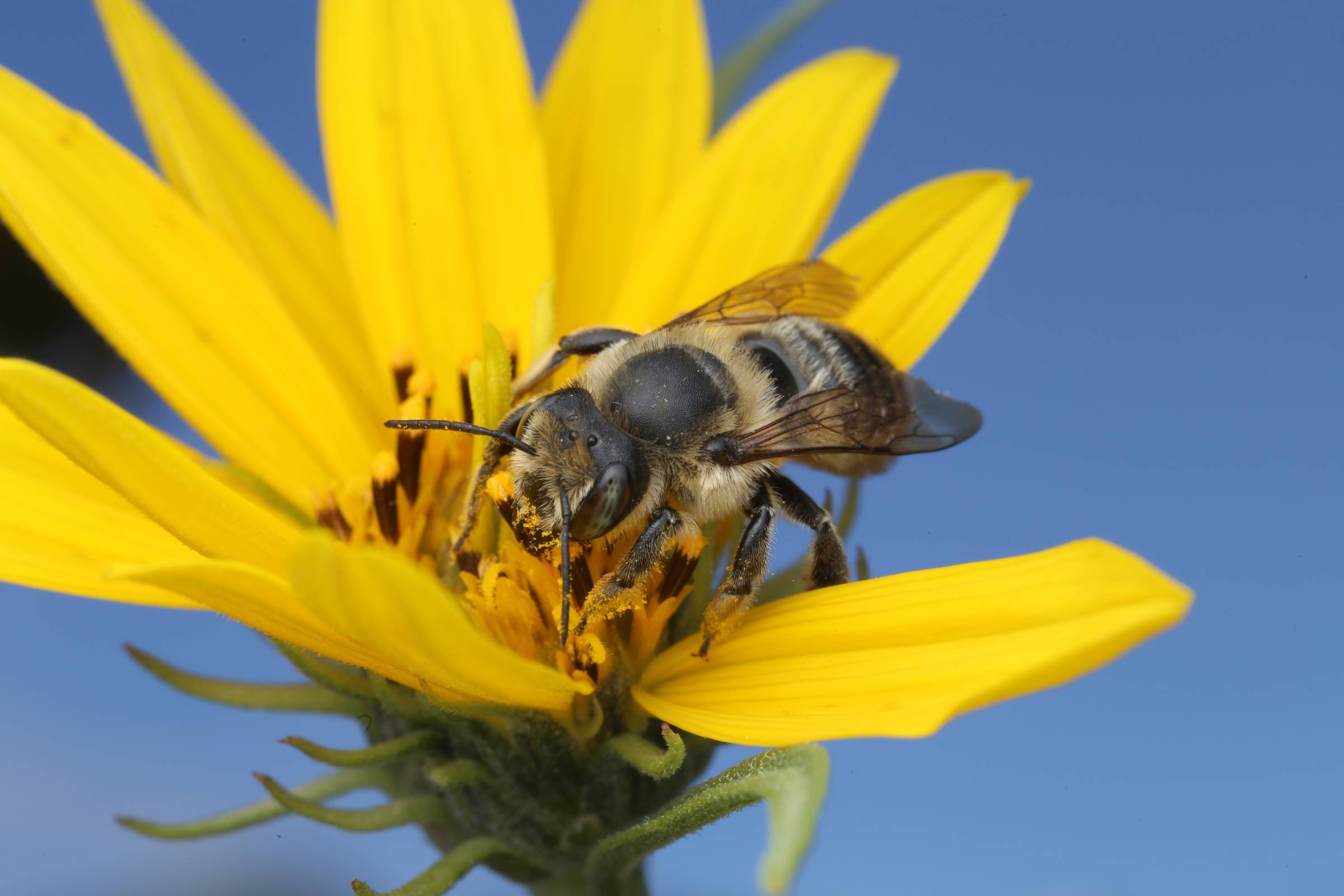
Support pollinators by keeping and enhancing the habitat you have. Photo by Jason Gibbs.
Garden heroes, small and mighty
When it comes to gardening, biodiversity and pest control, sometimes it’s best to do less! These intrepid insects benefit your soil and keep your garden healthy.
When it comes to gardening, sometimes the best thing you can do is … nothing. That’s advice from UM entomologists Jason Gibbs and Cecil Montemayor Aizpurúa, who say that leaving nature to its own devices can be the key to a thriving, biodiverse garden.
Something you can to support pollinators is to keep and enhance the habitat you have, notes Gibbs, who is an associate professor in entomology.
Fruiting trees, flowering shrubs and plants, fruits and vegetables, herbs, flowers, grasses or ground covers such as clover, as well as surrounding natural or forested areas, provide important habitat areas for pollinators. Gibbs emphasizes that bee diversity beyond honeybees — which often receive sole credit for pollination — is what truly matters. Though most of Canada’s commercial honey is sourced from the Prairies, wild bees are bigger contributors to pollination than managed bees.
In fact, Manitoba is home to around 400 species of bees, including mason bees, mining bees and the tiny and ubiquitous sweat bees, each playing a unique role in pollination.
“So having 10 sweat bees is not as good as having a sweat bee, a mason bee, a miner bee, a honeybee, and a bumblebee,” Gibbs explains. Studies show that apple orchards with a wide variety of bee species produce bigger and better fruit.
Did you know? The J. B. Wallis / R. E. Roughley Museum of Entomology at UM is one of the largest insect collections in Western Canada. With over 2 million specimens, the museum is critical to entomology education, outreach and research in Manitoba.
Do not disturb: Other unsung heroes
But it’s not just about pollinators. Beneath the soil and among the leaves, a hidden army of beneficial insects is hard at work. Cecil Montemayor Aizpurúa, who is a PhD student in entomology at UM, highlights several unsung heroes of the garden.
Ground beetles, for example, are nocturnal predators that feast on slugs and caterpillars. Ants, often misunderstood, help aerate soil and recycle nutrients. On leaves and flowers, green lacewing larvae (nicknamed “aphid lions”) hunt pests, while minute pirate bugs and hoverfly larvae keep aphid populations in check.
“Many of these insects thrive when we minimize soil disturbance and support habitat diversity,” says Montemayor Aizpurúa. Simple practices like avoiding over-tilling and planting flowering borders can make a big difference. In the fall, leave dried flowers and stems standing, along with leaf litter; let messy and natural parts of your yard stay undisturbed.
Next time you’re tempted to tidy up your garden, consider letting nature take the lead.
“Take a moment to observe your garden up close,” Montemayor Aizpurúa suggests. “You might be surprised by what you find. There’s a whole world of bugs right under our noses, quietly working to keep the garden in balance.”
Have questions about identifying an insect? Call the Bugline
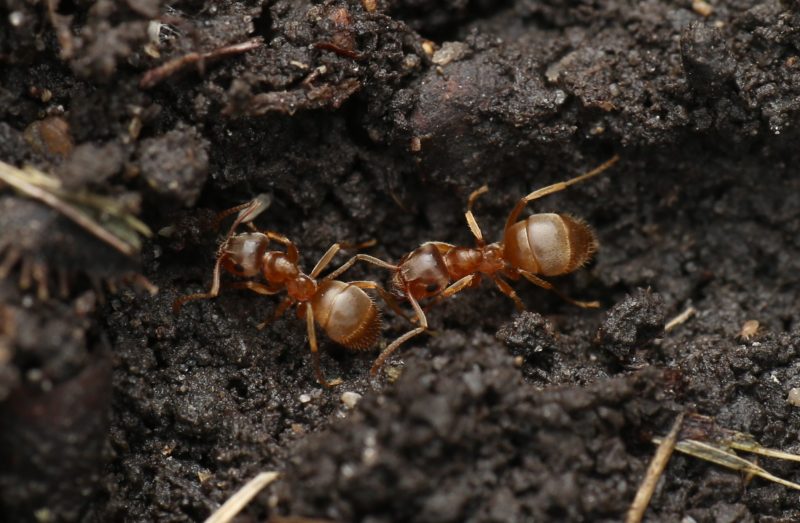
These intrepid insects benefit your soil and keep your garden healthy. Photo by Jason Gibbs.
A fine balance of beneficial bugs
Here are a few beneficial insects that play an important role in garden ecosystems, especially when it comes to supporting soil health and keeping pest populations in check. (List from Cecil Montemayor Aizpurúa.)
Helpful bugs in the soil:
- Ground Beetles (Carabidae family): These beetles are great nighttime predators that live in the soil and leaf litter. They feed on slugs, caterpillars, and many other garden pests. Their presence usually means your garden is healthy and undisturbed.
- Ants (Formicidae family): Even though ants are not always seen as “helpful,” many of them do a great job in gardens. Their tunnels help air and water reach plant roots, and some species also feed on insect eggs, caterpillars and even help clean up organic debris in the soil, contributing to nutrient cycling.
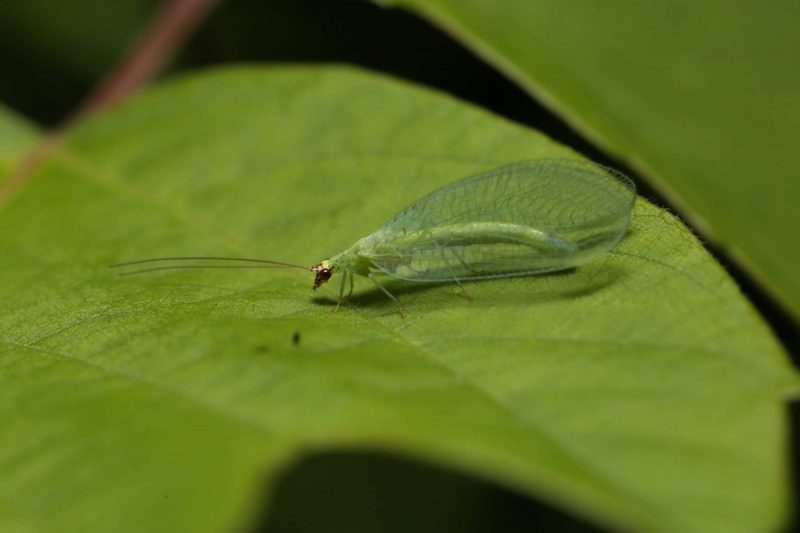
A friendly Green Lacewing blends into the scenery while protecting your garden. Photo by Jason Gibbs.
Good bugs you’ll find on leaves and flowers:
- Green Lacewings (Chrysopidae family): They look very friendly with their bright green color and long, clear wings, but their larvae are fierce predators! Called “aphid lions,” they feed on aphids, whiteflies, thrips, and even small caterpillars.
- Minute Pirate Bugs (Anthicoridae family, especially the Orius genera): These are tiny generalist predators (2-3 mm). Their wings look like a pirate band black and white. They are generalist predators and eat thrips, aphids, spider mites, and more. They’re very useful in flower and veggie gardens.
- Hoverflies (Syrphidae family): These flies look like small bees and are often seen hovering around flowers. The adults are important pollinators, and their larvae stage are voracious predators of aphids, thrips and other soft-bodied pests.