






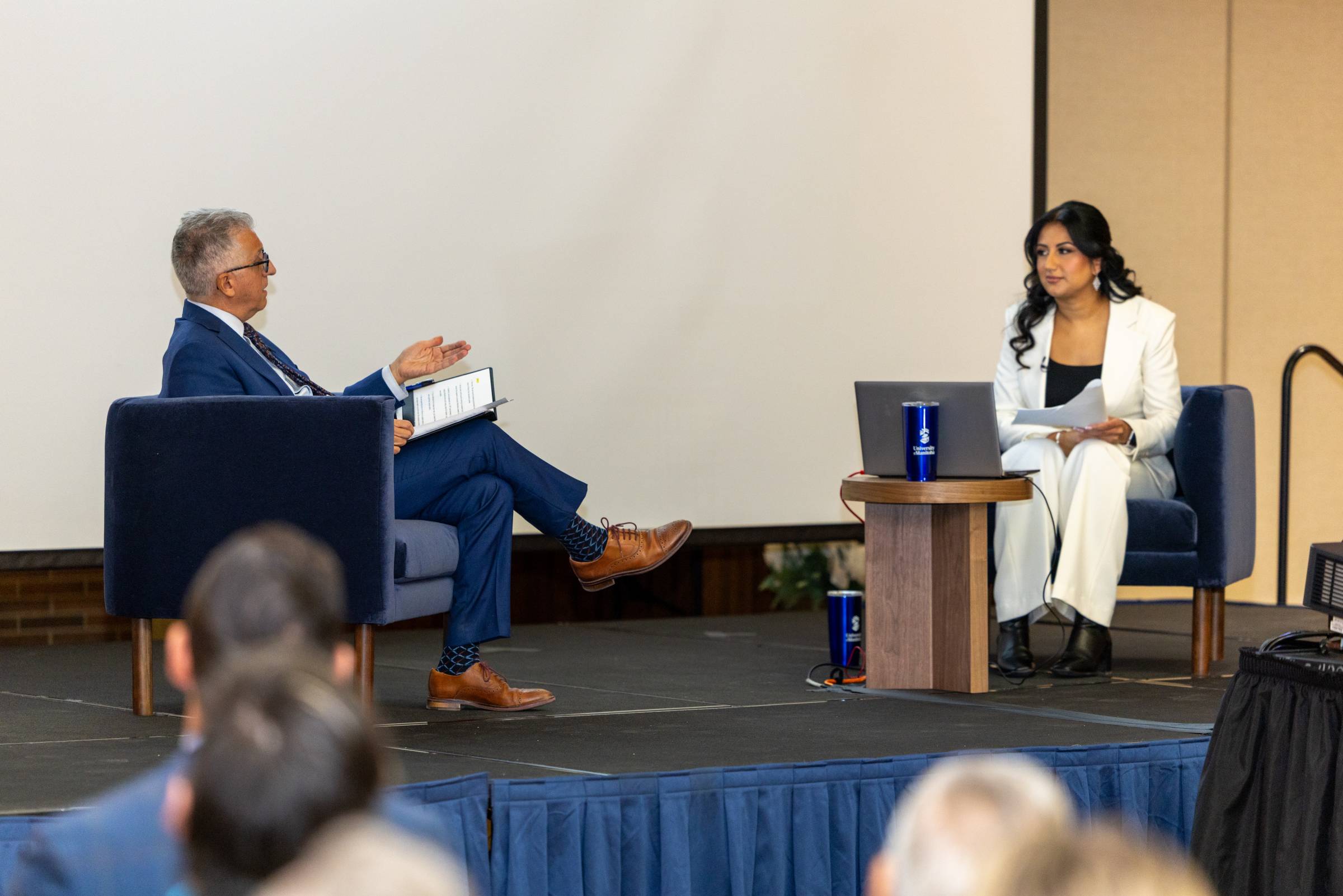
President Michael Benarroch and Raman Dhaliwal, Associate Vice President (Administration) and Chief Risk Officer, sit down in front of a capacity crowd to talk through UM's new capital plan.
UM unveils bold vision for campus renewal
Ambitious capital plan looks 30 years ahead
The University of Manitoba has unveiled a bold new roadmap to renew its campuses and tackle a mounting capital deficit over the next three decades.
On Jan. 20, UM launched Building Bold: UM’s Capital Plan for People, Place and Possibility to a packed hall, outlining how the long‑term plan will help UM move beyond piecemeal fixes toward strategic, sustainable investments in its infrastructure. (Watch the full event online.)
Developed under the leadership of Associate Vice-President (Administration) and Chief Risk Officer Raman Dhaliwal, the plan is grounded in a comprehensive assessment of the structural and mechanical integrity of UM’s 155 buildings, as well as its roads, riverbanks and 600 acres of land. Dhaliwal’s team also engaged community members to understand capital needs across the spaces where Bisons live, work and play.
Benarroch was quick to address the feasibility of Building Bold in his opening remarks, noting that on its own, UM cannot afford to complete everything the roadmap lays out, but “we need a real honest discussion about how we move forward.”
UM receives just $4.2 million annually in provincial funding dedicated for infrastructure, leaving the university to cover roughly $85 million in additional capital costs each year. Of that, $15 million is directed to deferred maintenance, which is any repair or renewal done to keep a building in good condition. And despite this annual spending, UM faces a $600 million deferred maintenance backlog.
“Simply put, we have a very large capital deficit at the University of Manitoba and we need a bold vision to overcome that deficit,” Benarroch said.
To guide difficult choices, Dhaliwal’s team used an industry-standard Facility Condition Index to categorize each building as Good, Fair, Poor or Critical. “Critical,” Dhaliwal stressed, doesn’t mean a building is unsafe, only that it has many pressing maintenance and repair needs. Each building was also evaluated for accessibility, sustainability and its ability to support UM’s academic mission and commitment to Reconciliation, including considerations such as spaces for smudging ceremonies.
A key conclusion of the assessment is that UM cannot maintain its status quo.
“The main realization and a key component of the master capital plan is divestment,” Dhaliwal said. “We can’t keep all these buildings open and for those buildings where it doesn’t make sense for us to retain that infrastructure, we need to demolish it and deliberately plan for the replacement, consolidation, or modernization of the functions those buildings currently support.”
This approach, she noted, is essential to prevent cascading facility failures and to ensure UM can continue to support teaching and research into the future. Without divestment, the deferred maintenance backlog will only grow.
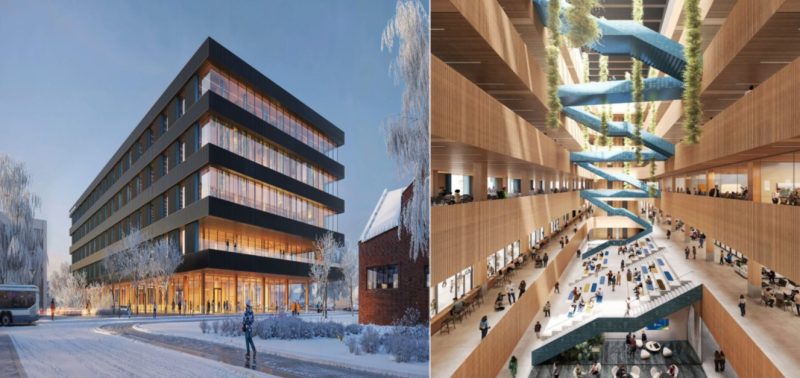
Rendering of what a new Dafoe Library could look like.
Among the top priorities identified for construction are additional parking, development of new teaching and research facilities and outdoor gathering space at the Bannatyne campus, the demolition and reconstruction of Dafoe Library at the Fort Garry campus, and new laboratories for the Faculty of Agricultural and Food Sciences. And much exciting progress has already begun: new leading-edge dental clinics are being erected on the Bannatyne campus and UM has broken ground on the Prairie Crop Soil Research Facility and the PRAIRIE Biologics Accelerator.
“This plan is ambitious. It’s bold. It’s going to take longer than 30 years,” Dhaliwal said. “But it’s setting us on the right path for the future. It’s about stewardship, ensuring we spend our capital dollars in the best way possible.”
The plan is supported by a formal capital prioritization framework and process that guides how projects are identified, evaluated, and sequenced across major capital, minor capital, learning space, and deferred maintenance categories. For transparency, the University has published online listings of proposed and active projects within each category, along with a 30-year phasing document that illustrates demolition, renewal, and temporary “decanting” locations. These materials will be updated as planning evolves.
Because capital plans take such a long time, Board Chair and architect Michael Robertson said at the event, “we have to build what we believe. [This is] a statement of belief about the future of our institution and province….The challenge for us is to balance our bold aspirations with our responsibility to take care of what we already have. And this plan does that so well and the Board is proud to endorse it.”
You can find intake forms and more details on how the prioritization framework is being operationalized on UM’s intranet.