






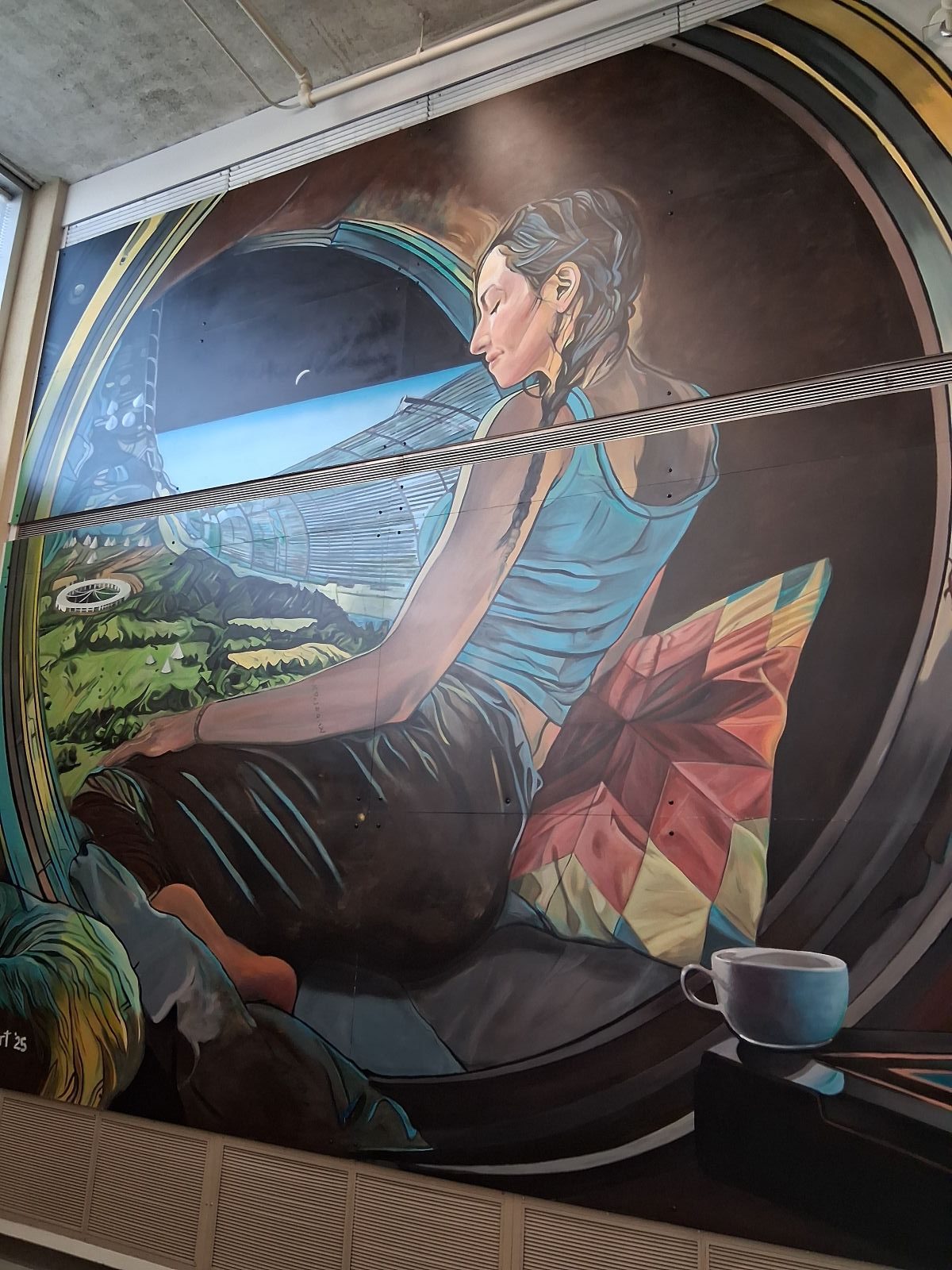
Join artist Mike Valcourt for conversation on new Dafoe mural
Indigenizing places and spaces within UM Libraries
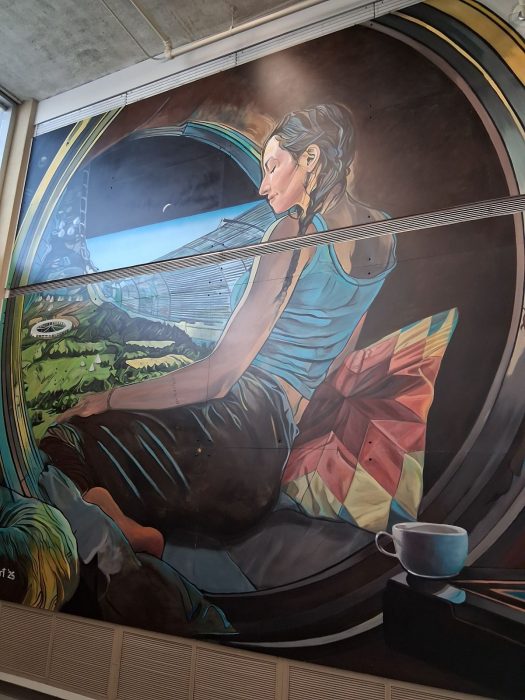
Join artist Mike Valcourt for a conversation about the process and vision behind his new mural, Echoes of the Earth.
Artist Talk with Mike Valcourt
December 15, 2025
3:00 – 4:00 p.m.
Location: Elizabeth Dafoe Library, 2nd floor by Echoes of the Earth mural
Light refreshments to follow in 208C Dafoe
Valcourt has been painting professionally since 1995, with years of experience painting murals and mentoring youth through Take Pride Winnipeg and Graffiti Gallery. “I am easily influenced by the Woodlands style of art,” Valcourt says, “maintaining its narrative, sometimes derivative, yet contemporary quality,” and he finds “the art of Jackson Beardy to be a great source of inspiration and vision.” Valcourt works with focus groups, judging panels, community outlets, and corporations that require insight and focus. Developing those ideas, bringing visions to life, creating harmonious spaces, and finding solutions is what he does best. Valcourt has also worked on other University of Manitoba murals, such as the Truth and Reconciliation in Engineering mural in the Price Faculty of Engineering.
The future contrasting the past
In its current location, Echoes of the Earth inspires a vision of the future in contrast to a previously installed Indigenous mural exhibiting a view of the past.
UM Libraries Art Committee selected contemporary pieces from local prairie Indigenous artists in a variety of mediums, from photography to sketches and from a neon sign in Cree to a giant beaded hide. Some of the newly purchased Indigenous art is already on display in library spaces, with the rest of the art to be installed over the next year. The Libraries Art Committee comprises both Indigenous and non-Indigenous members from Libraries and the School of Art.
Creating a sense of belonging
Echoes of the Earth is part of the UM Libraries strategy and Reconciliation Action Plan goal to make spaces more welcoming to Indigenous students and to help students, faculty and staff feel proud of their library spaces. The new Libraries art not only directly supports Indigenous artists, but is also intended to help students feel they belong in spaces they might not have previously imagined themselves in.
Transforming library spaces with Indigenous art
Cree neon sign brightens Music Library
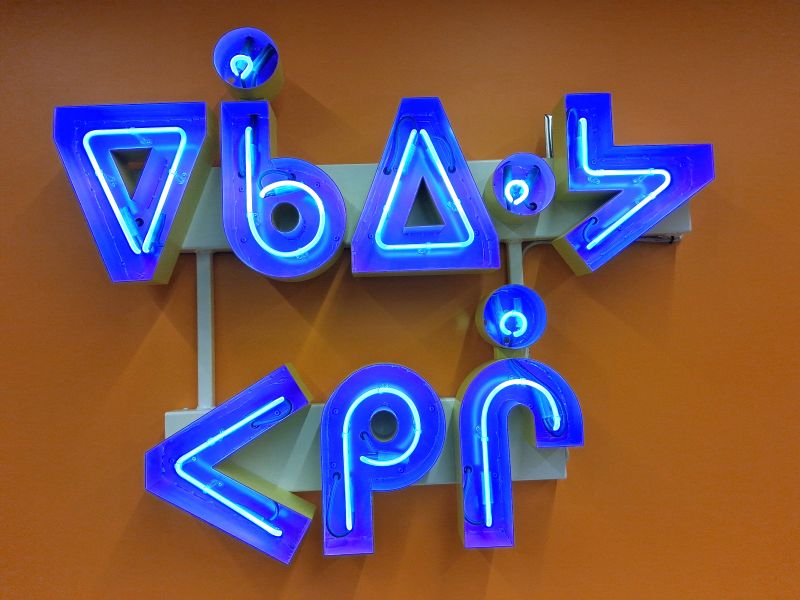
ᐁᑳᐏᔭ ᐸᑭᒌ (ēkāwiya pakicī / Don’t Give Up ), 2023 by Joi T. Arcand is displayed in the Eckhardt-Gramatté Music Library, attracting interest from students and faculty from the Faculty of Music as this bright light can be seen through the library’s glass walls.
For Joi T. Arcand, an artist from Uskeg Lake Cree Nation, Saskatchewan, Treaty 6 Territory, the written Cree language “is not only imbued with cultural significance – it’s an aesthetically beautiful form unto itself.” (CBC). She believes the Cree language deserves to be more visible to the general public, and her most recent work reproducing nēhiyawēwin into neon lights is an extension of her work reclaiming and Indigenizing public spaces through the use of Cree language and syllabics. This piece specifically explores the vulnerabilities of mental health and the ways that messages of toxic positivity can sometimes cause more harm. This edition of the multicoloured signs mimics the cheerful façade of toxic positivity which rejects difficult emotions in favour of a positive mindset.
Birch bark biting and embroidery added to study area in Father Harold Drake Library
In a back study corner of the Father Harold Drake Library are Bee Love, 2022 by Pat Bruderer and Northwest 3, 4 and 5, 2022 by Tracy Charette Fehr.
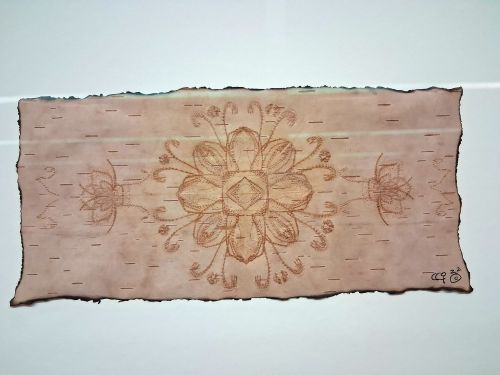
Bee Love is a piece of birch bark biting. Birch bark biting was an ancient traditional art form done with teeth, creating images by biting into very thin layers of birch bark, but it was almost lost because of colonization and residential schools as it was usually passed down through families. It was once done all across Turtle Island, and was used for recording stories, ceremonies, and creating patterns. “It was originally called birch bark transparencies, because when held to the light you can see through it and it turns to gold,” Bruderer says. “Birch bark biting are like people, they’re beautiful and there’s no two the same.” Bee Love was created as a way to “honour the bees”, Bruderer says, “because if it wasn’t for the bees, we wouldn’t exist on this planet.”
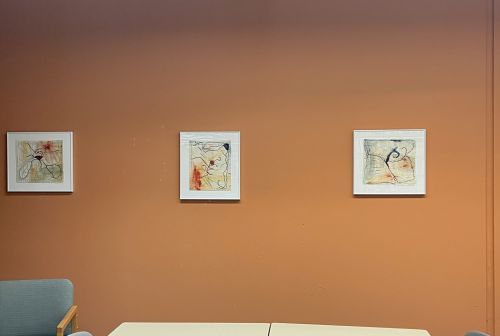
Tracy Charette Fehr is an interdisciplinary artist and Red River Métis citizen who has a special interest in Indigenous arts and culture including handwork in beading, quill, embroidery, and clay. Northwest 3, 4, and 5, displayed in Father Harold Drake Library in St. Paul’s College, represent the Northwest landscape using Métis art traditions of beading and embroidery to depict rivers, bloodlines and land. Charette Fehr hopes students “will enjoy the blend of textures, lines and images” and “will get a sense of the landscape of feeling, imagination, identity and spirit that I try to convey.”