






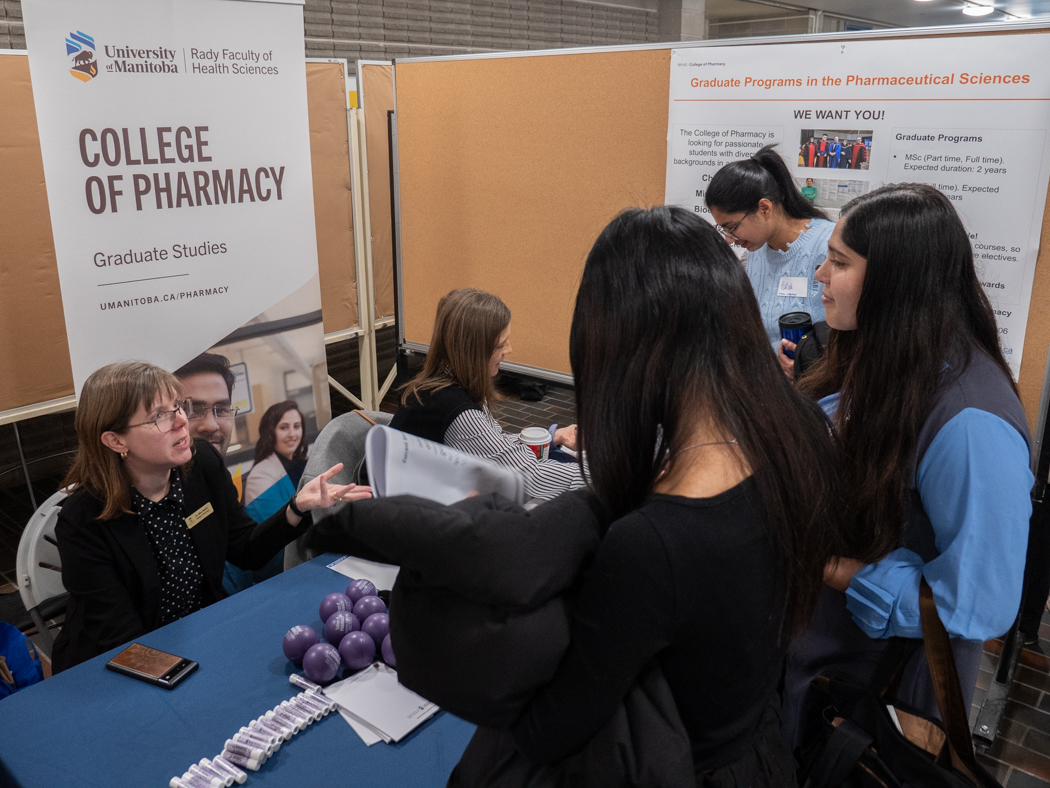
Dr. Jillian Stobart (left) and Dr. Anna Chudyk (right) chat with students at the College of Pharmacy booth. Raeesa Hoque, in blue sleeves, talks with Stobart.
Exploring graduate studies in the Rady Faculty
Open house presents wealth of opportunities
First-year undergraduate student Raeesa Hoque joined dozens of peers on UM’s Bannatyne campus on Nov. 14 to explore graduate program opportunities in the Rady Faculty of Health Sciences.
Hoque, who studies health sciences in UM’s interdisciplinary health program on the Fort Garry campus, said: “I want to see what’s available and who does what. As a first-year student, I really don’t know what’s available.”
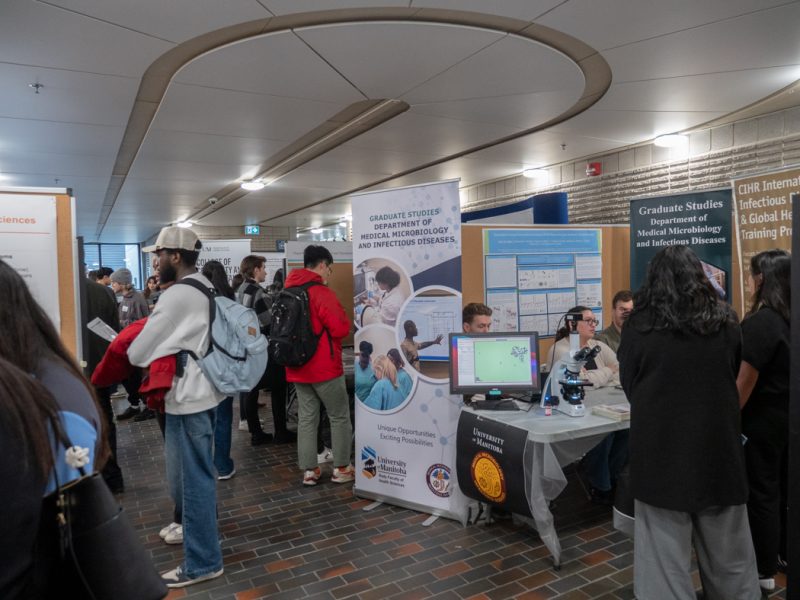
The information village on Joe Doupe concourse.
The annual Graduate Studies Open House started with an information village where students visited booths, followed by presentations from 13 graduate programs in Theatre B at the Basic Medical Sciences building.
Departments highlighted what makes them unique and the supports available, including financial assistance, research funding and professional development opportunities.
Presenters also talked about what graduates’ careers can look like in the future, from working in academia and industry to non-profits and government.
“When I came here today, I thought, ‘Whoa! There’s so much more than I imagined,’” said Hoque. “There are so many opportunities.”
Why choose graduate studies?
Dr. Samantha Pauls, assistant professor at the College of Pharmacy and Rady Faculty programming lead for graduate student professional development, spoke about why students should consider graduate studies – both the professional and research programs.
The professional programs, which include master of physician assistant studies, master of public health, master of science in rehabilitation sciences, master of nursing and others, emphasize coursework and clinical training.
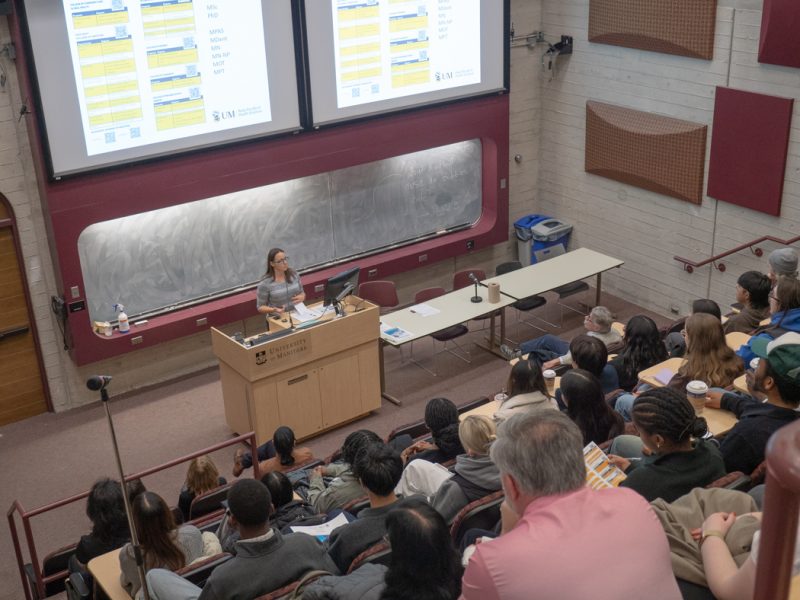
Dr. Samantha Pauls addresses event participants in Theatre B at the Basic Medical Sciences building.
“Health care is a team sport. MDs and nurses just can’t do all of the health care that’s needed for our communities and society,” said Pauls.
“These professional programs – that are master’s programs – really will turn you into competent and compassionate members of the health-care team as a whole.”
The research programs in departments such as medical microbiology and infectious diseases and human anatomy and cell science typically require a thesis and involve significant research work.
Pauls said undergraduate studies focus on “what we already know.” Graduate research asks, “What don’t we know?” and challenges students to add new knowledge that could lead to better health treatments and policies.
Building on a passion for research
Hans Sanchez, a soon-to-graduate student in microbiology on the Fort Garry campus, is considering graduate studies. His interest lies in improving human health through research.
He has research experience through a co-op term in associate professor Dr. Ayesha Saleem’s lab at the Dr. Gerald Niznick College of Dentistry.
Sanchez attended the open house to learn about what different departments and colleges provide to their graduate students.
“I’m here to figure out which grad program will best support my research interests,” he said.
“What classes can we take? Do we have a stipend? I love presenting, so I’m finding out what opportunities they have for grad students to present their work – whether it’s local or international. I want to be in a program that will support my academic goal.”
Graduate programs offer interdisciplinary paths
Both Sanchez and Hoque were excited to learn that graduate studies offer interdisciplinary opportunities.
“Programs aren’t limited to their college’s name – pharmacy programs, for example, explore much more than pharmaceuticals,” said Sanchez.
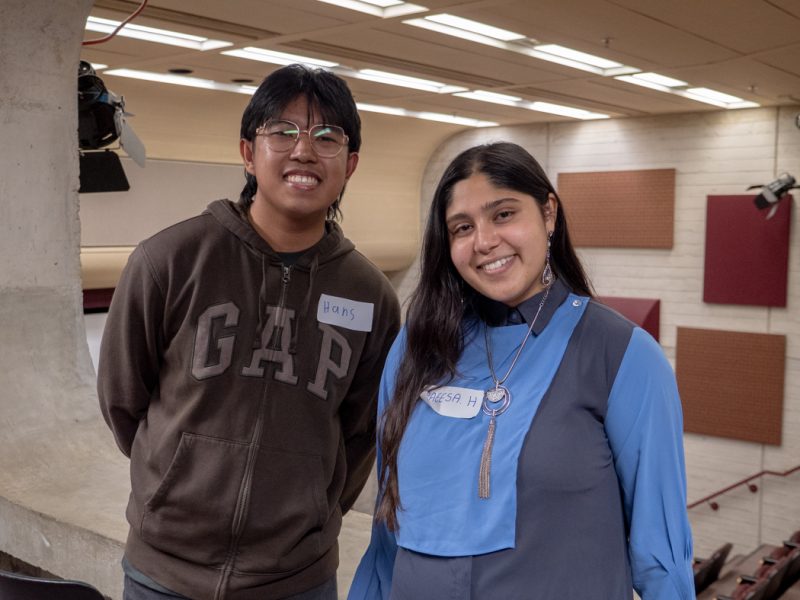
Hans Sanchez (left) and Raeesa Hoque (right) at the University of Manitoba’s Bannatyne campus.
Hoque, whose interest is in neuroscience and global health, said she appreciates the knowledge she gained at the event.
“This is why the open house is so good – to network, to talk, to do hands-on activities,” she said. “After the presentations, it made me think maybe I’d want to do a joint program instead of focusing on just one department.”
Sanchez shared some advice for students considering research.
“Put yourself in uncomfortable situations and get your foot in the door,” he said. “Go to those open houses, talk to those professors. They’re there to help and guide you in achieving your career goals. And maybe one day, you’ll also be a leader in health care. It just takes one small but important step.”
***
Learn more about graduate programs in the Rady Faculty of Health Sciences at umanitoba.ca/health-sciences/programs-of-study