






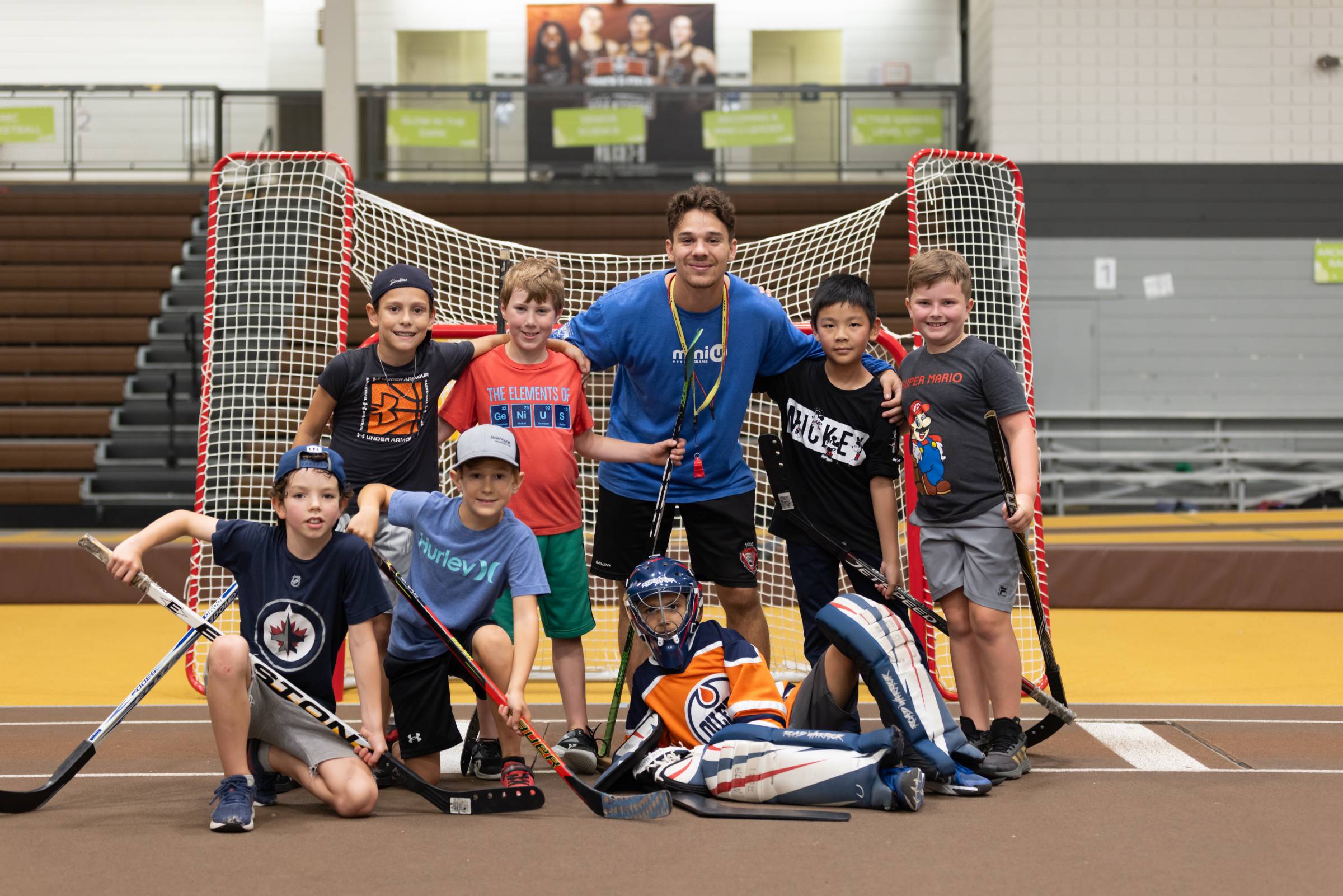
Cultivating tomorrow’s leaders
Mini U's culture is intentionally shaped by empowering their team through leadership training and professional development.
Ashley Gagnon, the Associate Director of Children’s Programs, says parents always say one thing when they’re asked why they chose Mini U; the camp leaders. Gagnon says this response is not by chance. Mini U works hard to help its team members and campers grow together.
“We see the leadership development of our leaders and their ability to be positive role models for the campers as the core of what we do,” says Gagnon.
Gagnon says the leaders and supervisors are the people who are with the campers every day. They are the people who make the biggest difference to the camp experience. She says it’s important for Mini U to provide them with the tools and support they need to succeed.
Developing leaders first
“Every single part of every job here is to create an experience for someone”
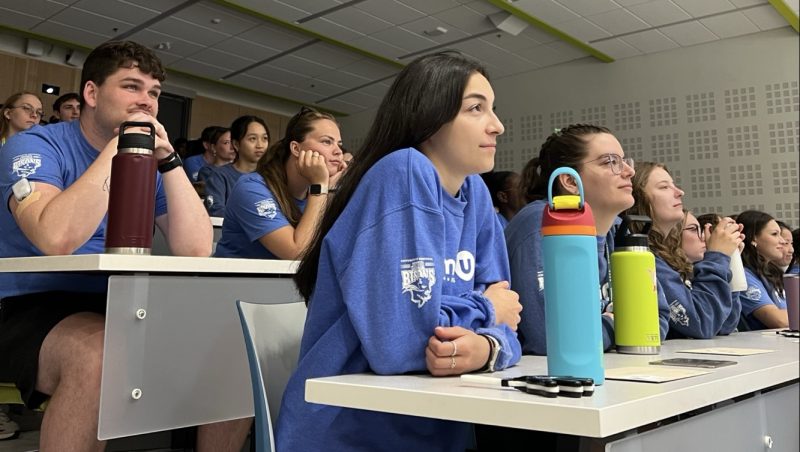
Mini U leaders during a leader week workshop
Gagnon says helping team members grow into leaders has been her focus for over a decade. That focus prepares them to excel in their roles with Mini U and in their communities. She says Mini U uses workshops, clear expectations and focused feedback to give team members chances to grow.
This focus is also a part of the Faculty of Kinesiology and Recreation Management’s 2024-2027 strategic plan. Gagnon believes the experience of the team members is a core part of their function within the faculty.
“Every single part of every job here is to create an experience for someone,” says Gagnon. “And that is in part why the leadership training is so ingrained in what we do, because I see that as how we can contribute to the professional development of UM students and influence the camper experience.”
From workshop to field: The training difference
Gagnon says Mini U’s training for camp leaders mixes formal workshop teaching and purposeful games and activities. She says these opportunities give leaders a chance to work together and practice solving complex problems. This helps prepare them for real-life problem-solving once camp starts.
Gagnon says leadership is a skill you learn and get better at over time. Mini U’s leadership training focuses on five key skills for every job: communication, problem solving, team work, relationship building and reflection.
“It’s very much a part of our culture that permeates through everything we do.”
“Training isn’t just about our senior leaders answering questions; we recognize that our first year team members have a job here because they have external experience, and learning from those experiences only makes our programs better,” says Sara Johnson, a Program Supervisor who has been with Mini U for six years.
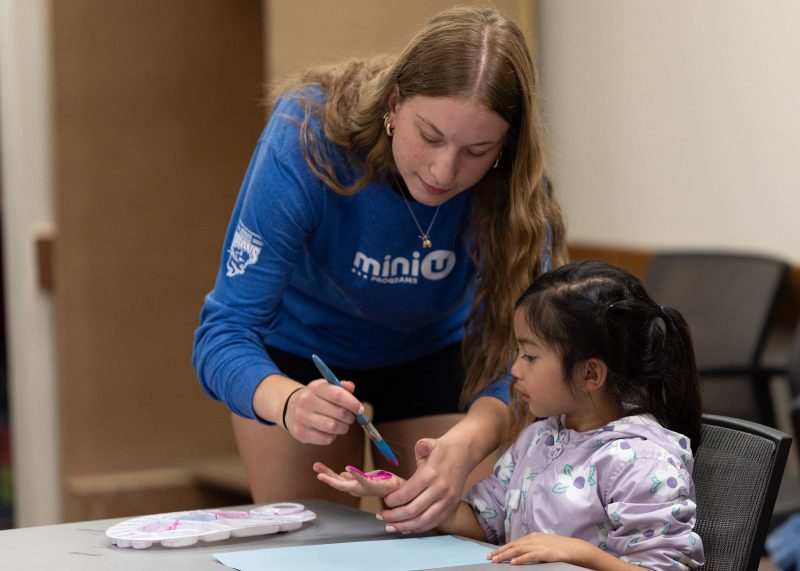
A Mini U leader during the Froggies camp
Johnson says training for leaders is made to feel like the best possible camp experience; something that is both fun and fulfilling. She says the experiences during training help to build community and a sense of trust. Something crucial to help people feel safe and allow them to step outside their comfort zones on the job.
“We want returning and new leaders to participate equally and have fun because in turn, that allows them to understand how they might make the experience more meaningful for the campers,” says Johnson. “It’s very much a part of our culture that permeates through everything we do.”
Growing towards a goal
Gagnon says Mini U builds on its leadership development every year. This helps team members learn to solve problems through different stages of their growth. Jesse Michalski, a coordinator on the Mini U team, says supervisors learn about the administrative and planning needs to run Mini U behind the scenes. They also learn five-step plans for having difficult conversations with other team members or parents. As supervisors gain skills in each area, their tasks become more complex and independent.
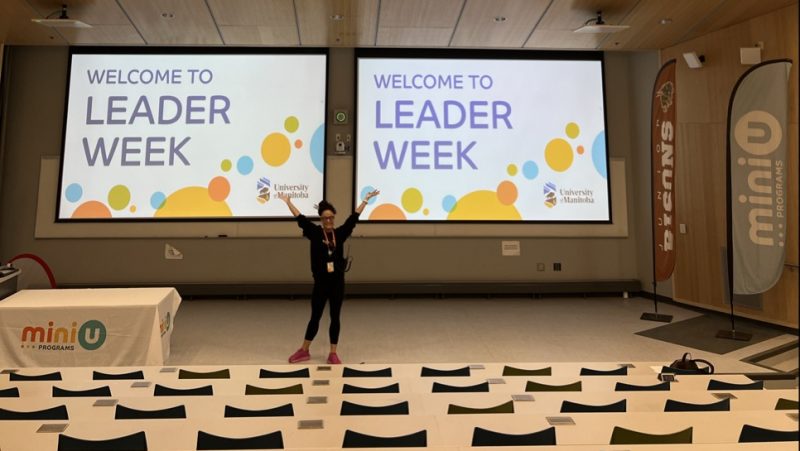
Ashley Gagnon during the start of Mini U’s leader week
“People come to us from other positions with their own history of problem solving, communicating and building relationships,” says Michalski. “We try to refine those skills in every experience and grow their practical skills as they become more experienced leaders in the program.”
Mini U also uses mentorship, pairing new team members with someone with more Mini U experience. Michalski says this is an opportunity help experienced leaders practice their communication while giving new team members authentic feedback from peers.
Gagnon says this authentic feedback is “a vital part of that journey.” She says Mini U uses direct feedback, new challenges and a culture of teamwork. This builds collaboration to build trust and shared responsibility among everyone at Mini U.
Reinforcing excellence: The impact of tangible recognition
One way Mini U gives direct feedback is through positive recognition. Michalski says team members might get a ‘leadership card’ from a teammate. It is a simple thank-you from a teammate who noticed their colleague reflecting Mini U’s values in their work.
“When you’re recognized for something that you didn’t go out of your way to get recognition for, it’s so much more empowering,” says Johnson. “It leaves such a lasting impression and contributes to our learning and positively reinforces the good stuff we’re doing.”
The Mini U culture: Community, empowerment and results
Gagnon says the leaders are what ultimately set Mini U apart from other childcare programs across the city. They are helped to be their best through a balance of planned and real-life learning opportunities, with a positive community to help support them in trying new things.