






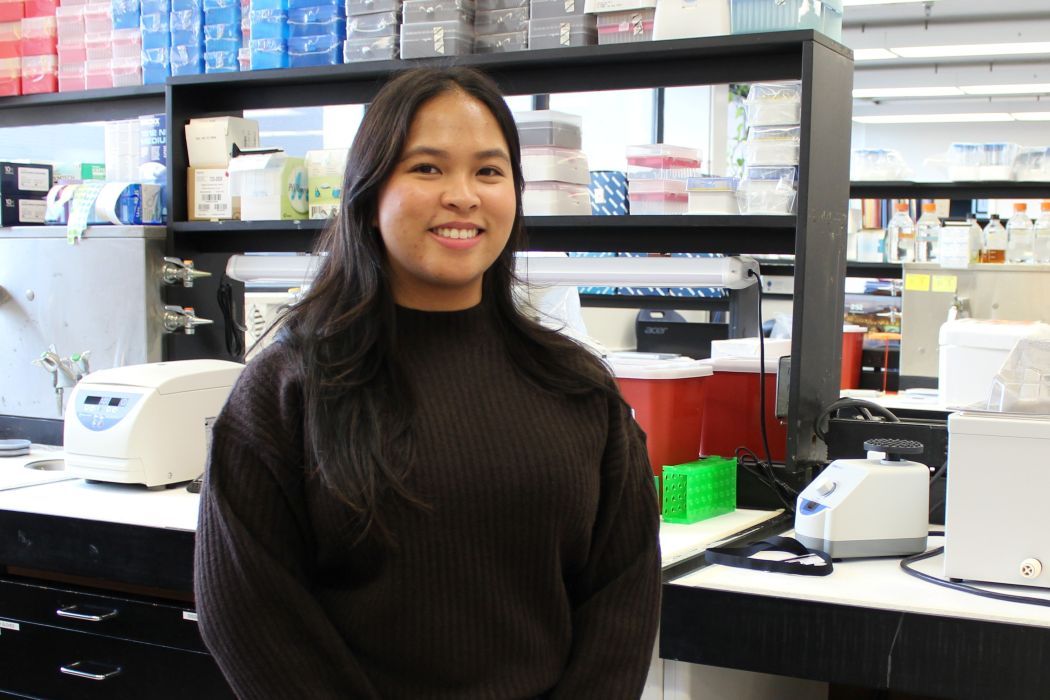
Deanne Nixie Miao is one of four UM PhD students to receive the prestigious Vanier Canada Graduate Scholarship this year.
Rady Faculty Vanier Scholar feels she now ‘belongs in academic research’
For Deanne Nixie Miao, receiving the prestigious Vanier Canada Graduate Scholarship has helped her feel that she fits in doing research in the lab.
“There aren’t a lot of Filipino researchers that I see on campus. Receiving this scholarship means that I have a place here, too,” said Miao, 26, who grew up in the Philippines and immigrated to Canada 15 years ago.
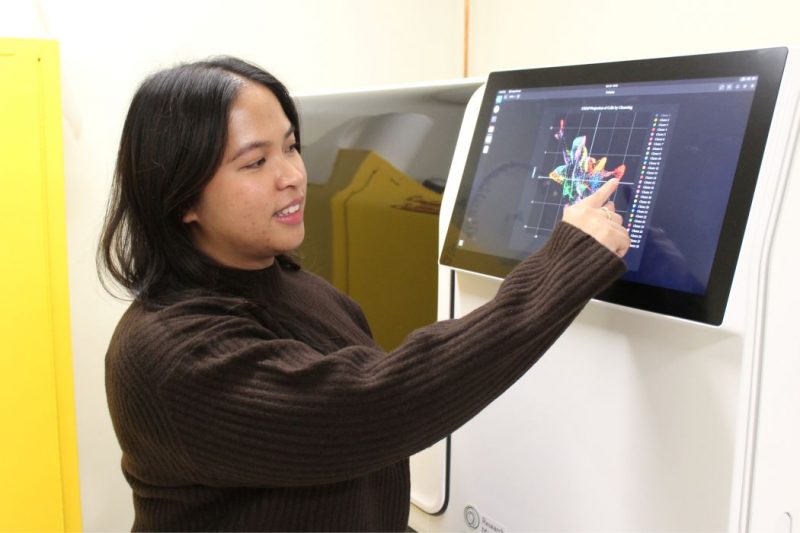
Through her research, Deanne Nixie Miao aims to raise a greater awareness about adverse drug reactions.
Miao, a fourth-year PhD student in biochemistry and medical genetics at the Max Rady College of Medicine, Rady Faculty of Health Sciences, said the Vanier Scholarship allows her to dedicate herself fully to her research without the constant worry of financial pressures.
Miao will receive $150,000 over three years as part of the scholarship. She is one of four UM PhD students, and one of 166 PhD students from across Canada, to be named Vanier Scholars this year.
Beyond the financial support, Miao said the award has also strengthened her confidence that her work is valued and that she belongs in academic research spaces. It has also provided her with more opportunities to take on leadership roles within the graduate student community.
Miao’s supervisor is Dr. Britt Drögemöller, assistant professor of biochemistry and medical genetics and Canada Research Chair in pharmacogenomics and precision medicine at the Max Rady College of Medicine.
UM Today sat down with Miao to learn about her research.
Can you please explain your research?
My research focuses on cisplatin, a cancer drug used to treat a variety of cancers. However, there’s a major limitation to it because it causes permanent hearing loss. Up to 80 percent of patients who receive this treatment develop hearing loss, or cisplatin-induced ototoxicity (CIO).
Pediatric patients are particularly susceptible, with children less than five years having a three-fold higher risk of developing this adverse drug reaction compared to those who are 15 years or older.
Hearing loss during critical periods of speech and language development can cause delays in the development of communication skills, which can subsequently lead to poor academic achievement and psychosocial function.
To uncover the genetic factors that contribute to CIO, I use cutting edge technologies such as single-nuclei RNA sequencing and single-nuclei ATAC sequencing. These datasets will allow me to identify the specific cochlear cell types, genes, and biological pathways affected by cisplatin.
By integrating this information with human genome-wide association studies and polygenic scores, my research will also be able to develop predictive and preventative strategies to mitigate cisplatin-induced hearing loss.
What drew you to this area of research?
I want to raise a greater awareness about adverse drug reactions. My own family has experienced them. My mom had a serious adverse reaction to Celebrex (a NSAID), and my grandfather developed a persistent cough from Ramipril, a medication to treat high blood pressure.
When my mom’s reaction happened, it was brushed off, but those experiences showed me firsthand how easily adverse drug reactions can be overlooked, despite the real impact they have on people’s lives.
These continue to drive my commitment to studying adverse drug reactions so that future treatments can be safer and more personalized.
What impact could your research have in the future on the health of Canadians?
I’m developing a polygenic score to show how likely an individual is to develop hearing loss after receiving cisplatin. This would allow patients to know their risk before treatment begins, enabling more informed decisions about their care.
Another aspect of my research focuses on prevention. By identifying the specific genes, pathways and cell types involved in cisplatin-induced hearing loss, we can uncover putative causal genes that we can use as therapeutic targets. From there, these targets can guide the discovery of otoprotective agents that can mitigate the development of CIO.
What motivates you to do the work you do?
I recently joined a program that pairs graduate students with patient partners.
Meeting patient partners has been eye-opening. It helped me step outside of the tunnel vision that can come with research and see the broader implications of my work.
Their perspectives remind me that my research is not just about data and experiments, it’s about contributing to something bigger than can ultimately improve patient care or outcomes. That sense of real-world impact is what motivates me every day.
What are your plans after you finish your PhD?
I hope to establish my own independent research lab where I can continue advancing precision medicine and pharmacogenomics.
My training at UM is preparing me well for that goal, and I’m fortunate to have mentors who not only provide excellent guidance but also connect with the resources and opportunities I need to grow as a researcher and future leader.