






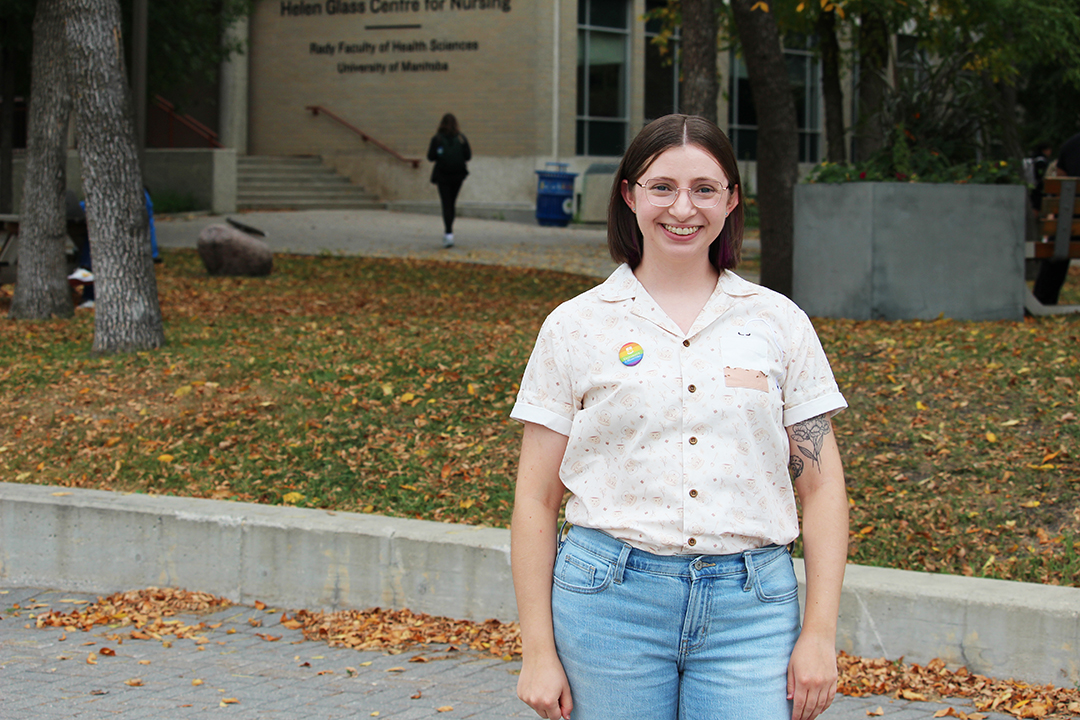
Nursing grad student seeks to close gaps for 2SLGBTQIA+ families with infants in intensive care
When she was working as a bedside nurse in a neonatal intensive care unit (NICU), UM nursing alumna Ashley Bell saw some 2SLGBTQIA+ families were not receiving the same level of care as other families.
That experience led Bell to return to UM to pursue a master’s degree with a thesis on the lived care experience of 2SLGBTQIA+ families with an infant in a NICU.
Bell, who was born and raised in Winnipeg, graduates with a master of nursing degree in October, and has already started a permanent full-time research position working with her mentor, Dr. Roberta Woodgate, distinguished professor at the College of Nursing, and Canada Research Chair in child, youth and family engagement in health research and health care.
We spoke to Bell about her research.
What got you interested in your area of research?
I was always very interested in supporting families and how we can improve care for families. As a queer person myself, working in the NICU, I had a certain vantage point of seeing how people received care. I saw some gaps and thought, “we can do a little better here.” I saw that there wasn’t any research out there on this topic and thought, “you have to start somewhere.”
Some of your work involves arts-based research. How did you get interested in that?
I really enjoy hearing people’s stories, and seeing how art can be used as a coping tool and elicitation tool to hear about people’s stories. As a person who does a lot of art and creative work myself – I like crafting and textile arts like sewing and crochet – I think there’s a really important place for that in health care and research.
What arts-based methods did you use in your work with 2SLGBTQIA+ families with an infant in the NICU?
Before their interviews, parents were provided instructions on creating a journey map – a way for them to creatively describe their journey, from the end stages of their pregnancy throughout their NICU stage and then a little bit as they went home. They could use pictures, words, drawings, images – whatever they wanted to communicate the ups and downs of their journey. I asked them to consider the emotional impact as well as their interactions with staff members and other individuals on the unit.
After that, I guided them through a few questions to get their perspectives, to understand the joys and challenges of being a 2SLGBTQIA+ parent in the NICU and their recommendations for care and advice for other 2SLGBTQIA+ parents in the NICU.
I also used qualitative methods, which provided a really nice structure for understanding what the lived experience is. The overarching theme I found was called “Being Me,” which pulled from one parent’s journey map and underscores the importance of recognizing parents’ individuality – the unique factors of their identity, how that shapes their experience, and the importance of recognizing that by everyone in the care journey.
Did anything surprise you in your research?
The one thing that surprised me was the creativity and thoughtfulness each parent put into their journey map. They all appreciated being able to talk about their experiences, and their journey maps helped them share their insights. They valued having care from queer- and trans-identifying nurses. They found it was much more comfortable and they were able to be themselves. Some even recommended that as a change for NICUs – that they should have more staff hired that identify as 2SLGBTQIA+ to improve their care.
What’s next for you?
I will be publishing these findings soon. I’d also like to develop an infographic that we can send out, as a tangible way to share recommendations and how we can integrate these findings into care.
I also just started my new position with Dr. Woodgate as a multi-methods researcher and analyst. I want to learn more about arts-based qualitative research methods and develop my skills in this area. Those are my immediate next steps.