






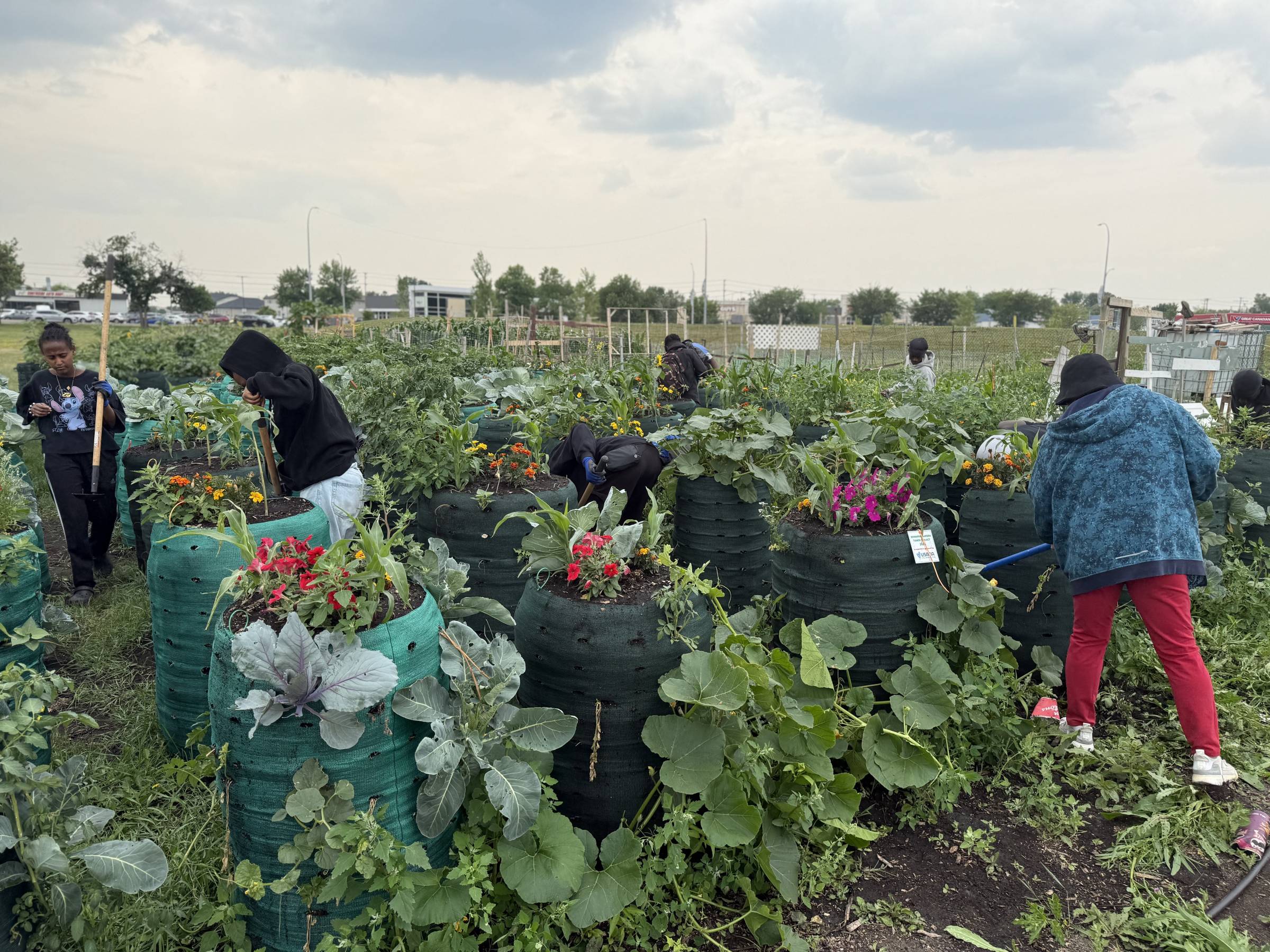
Rainbow Gardens celebrating a successful 2025 growing season
Learn more about the community gardens at UM
For 17 years, Rainbow Gardens has supported new immigrant families in Winnipeg.
Located on the Fort Garry campus, the two-acre plot helps community members grow their own food, share their native culinary traditions and establish meaningful social networks with other immigrants and local community members.
The Bannatyne campus also has a small garden plot, supporting 12 families over the summer months.
Both gardens have seen incredible food volumes this summer, with many families harvesting 50-100 kilograms of produce thus far.
Building community and growing food
The garden was initiated in 2008 by a group of newcomers, including Raymond Ngarboui.
Born in Chad, Ngarboui has been a pillar of community work since arriving in Canada, advocating for healthier living and better integration for new immigrants and refugee families. With degrees in agriculture and community economic development, he has played a key role in the initiation and success of many community food projects and has been recognized for his dedication, earning the UNICEF Canadian National Volunteer Award and the Queen Elizabeth II Platinum Jubilee Medal.
Together with the Refugee Immigrants Farming and Integration in Manitoba Inc. (RIFIM) and co-organized by Community Education Development Association (CEDA) and partnerships with Knox Church and the University of Manitoba and others, Ngarboui has grown Rainbow Gardens into a place where hundreds of families gather and grow food.
In 2025, the Fort Garry Rainbow Gardens supported 313 families, many of them with at least 7 family members.
RIFIM expanded their capacity this year by partnering with Harvest Manitoba to access 200 garden towers. These towers provided 32 new families the opportunity to grow and harvest produce using vertical growing techniques.
Gardening challenges
Rainbow Gardens faced some gardening woes over the summer, including an early drought and produce theft.
The drought was thankfully lessened by consistent watering made possible through a permanent water supply from UM. Unfortunately, theft was at an all-time high this summer with many families losing their produce. RIFIM kindly asks people to respect the garden and the hard work of the families by not taking any produce.
As the growing season comes to an end, RIFIM is looking for ways to improve next year’s garden. Future projects are to include a shelter from the rain and a private place for breastfeeding mothers. To improve yield and quality of produce, RIFIM is also looking for ways to provide organic fertilizer to the families.