






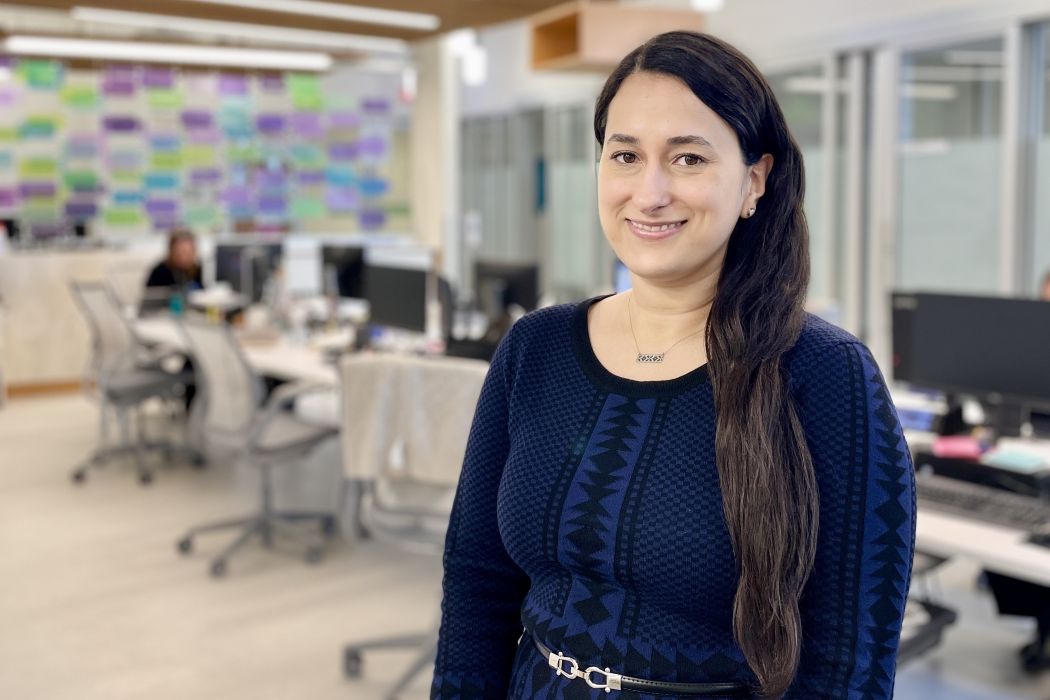
Master’s degree paved way for research project management role
Oksana Harasemiw says a love of learning has always guided her path.
From dreaming of becoming a librarian as a child to project-managing national and international health research projects at Winnipeg’s Chronic Disease Innovation Centre (CDIC), her dedication to learning has been a driving force.
After earning a bachelor’s degree in biology at the University of Winnipeg, Harasemiw completed her master’s in community health sciences in UM’s Rady Faculty of Health Sciences in 2016, with a specialization in aging offered by the university’s Centre on Aging.
Her master’s thesis focused on understanding the relationship between social isolation, social support and mental health among Canadian older adults.
Her passion for studying this age group was sparked by hands-on experience working in a personal care home throughout her undergraduate and graduate studies.
“I wanted to better understand the social, psychological and physical health of older adults – especially how we could improve their quality of life through research and interventions,” she says.
After graduation, Harasemiw began her professional journey as a research co-ordinator at the CDIC, a non-profit corporation that serves as the research arm for Seven Oaks General Hospital and the hospital’s Wellness Institute.
Her curiosity and drive quickly propelled her into more senior roles that combined project oversight with data analysis.
“I have had the chance to grow through on-the-job training, workshops and leadership courses,” she says. “I’ve been lucky to work in a place that encourages career development and lifelong learning.”
Now, as a project manager, Harasemiw helps oversee more than 100 research projects spanning clinical trials, big data analytics and health innovation.
She writes grants and project proposals, manages timelines, facilitates knowledge translation and collaborates with teams across Canada and beyond. The CDIC’s collaborators include patients with lived experience of chronic illness.
What Harasemiw loves most about her work is the people she collaborates with. “The best part is that I get to work with a smart and engaging team in a community hospital, where each day brings something new and exciting,” she says.
Her graduate studies, she says, helped her build not only technical skills such as data analysis and academic writing, but also core competencies such as resilience and adaptability.
“Science is hard. Rejection is part of the process, whether it’s a failed grant application or a research setback. Grad school taught me how to rebound and keep pushing when something is worth pursuing.”
For current students, Harasemiw recommends exploring career options through student jobs, networking events and mentorship.
“I cannot overstate the value of mentorship. My grad school mentors, and later my workplace managers, played a huge role in helping me grow, not just professionally, but as a person,” she says.
She also highlights that mentors come in many forms – not just supervisors, but peers and colleagues who can help shape your perspective and career path.
Above all, she encourages students to find purpose in what they do. “Passion for your work and its potential impact is the driving force that gets you through challenges. That is what keeps me going.”