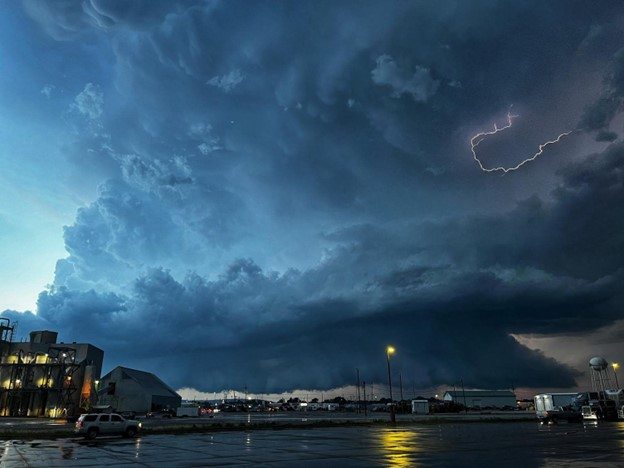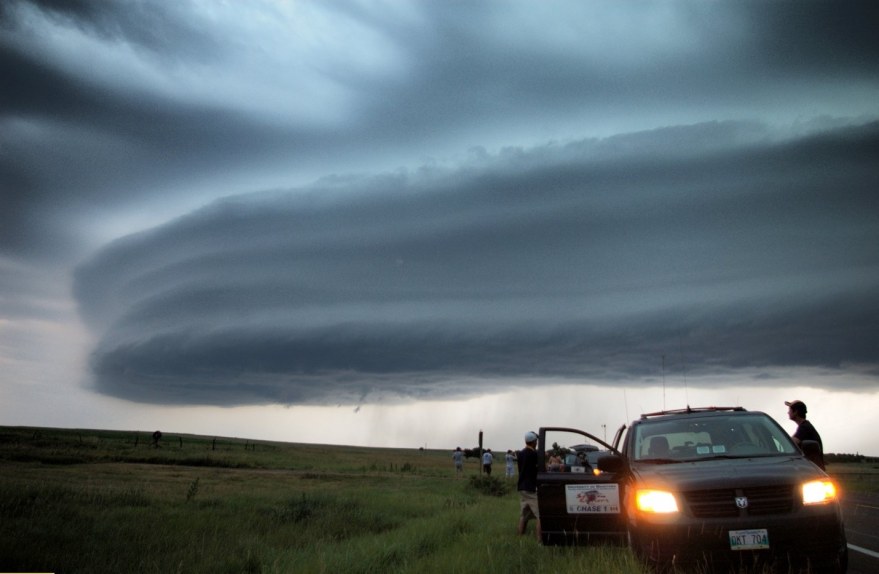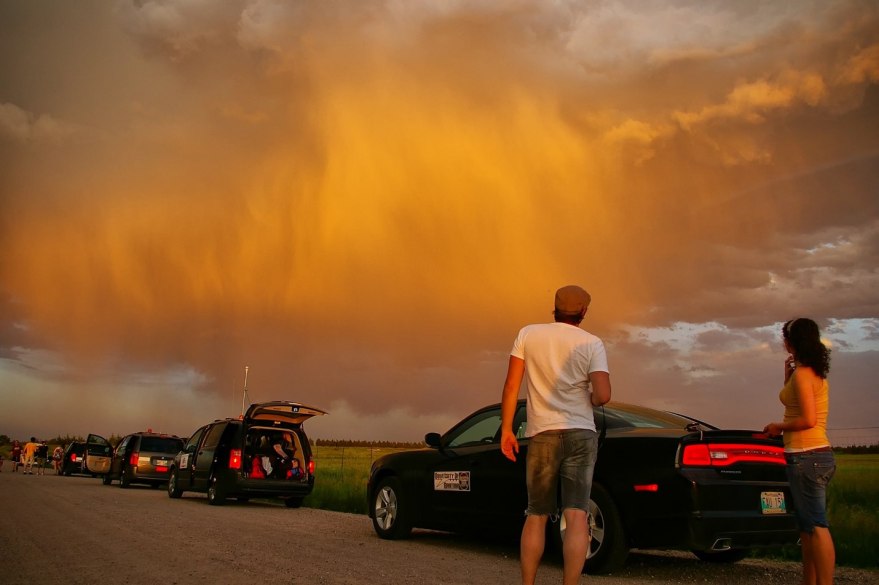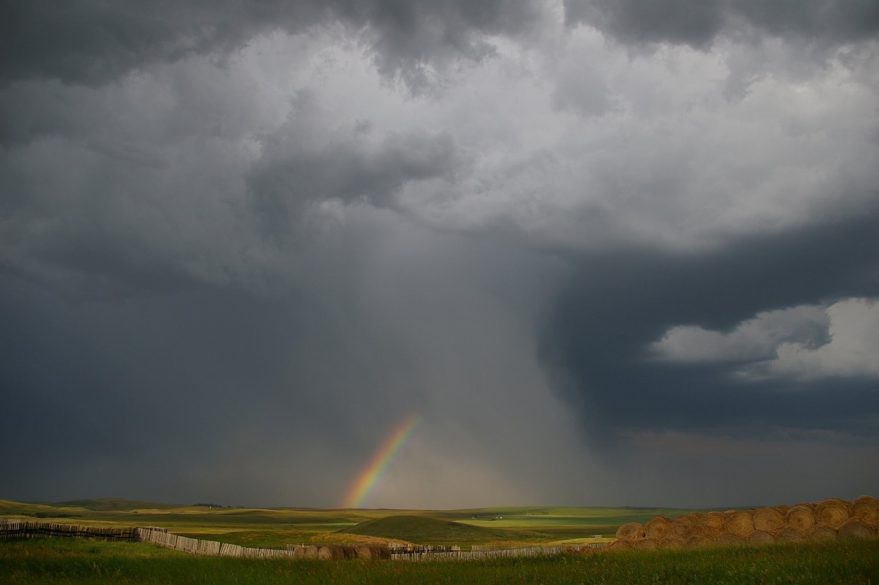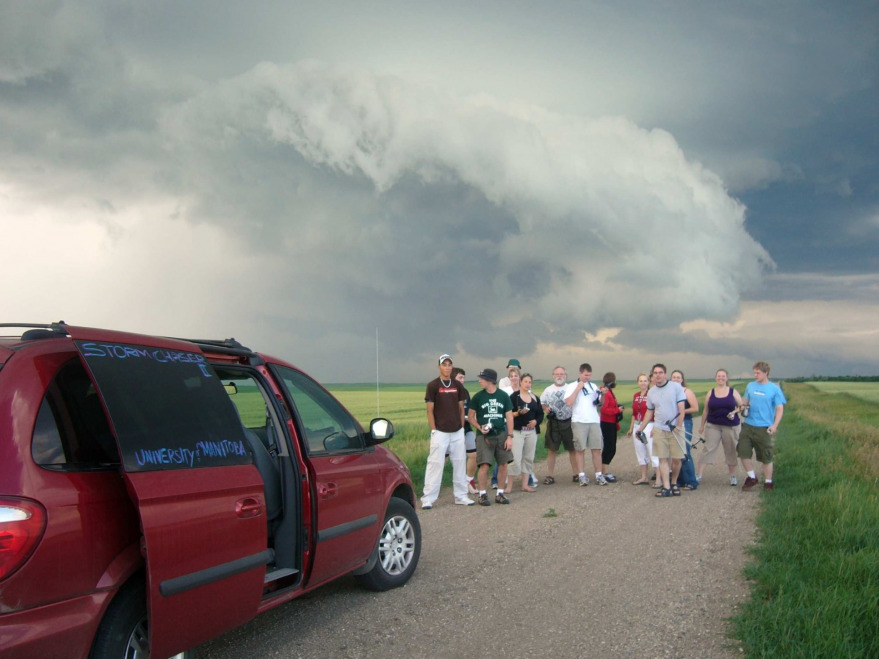







Dark, swirling clouds are forming an intense storm over a grassy field.
Storm chasing field course celebrates 20th anniversary
Established in 2005, this year marks the 20-year anniversary of the “Severe Thunderstorms - Storm Chasing and Field Techniques” course offered by the Clayton H. Riddell Faculty of Environment, Earth, and Resources.
“Severe Thunderstorms – Storm Chasing and Field Techniques” is an occasionally offered summer course that focuses on extreme weather research, granting students a chance to experience the life of a storm chaser. The course is offered by Dr. John Hanesiak, a professor from the Department of Environment and Geography.
The course focuses on the science behind severe weather, including storm analysis, diagnosis, prognosis, and nowcasting (short-term forecasting). Students begin by examining surface and upper-air data to understand the conditions that can lead to storm development. From there, they apply forecasting tools such as computer models and radar systems to predict potential storm activity.

A digital map displays various information on weather tracking.
“In the classroom, students learn the main atmospheric ingredients that lead to tornadic storms, the tools and methods used to predict them as well as nowcasting techniques to increase their chances of seeing tornadic storms,” says Dr. Hanesiak. “Exercises in class mimic the analysis necessary to make predictions and to selecting the best target areas for storm chasing opportunities. The 8-9 day field trip puts students’ newly found skills to the test. This includes working in small groups/teams for morning weather analysis followed by student weather briefings that explain where and why they selected their main tornadic storm target area(s) for the day. Instructors provide feedback and their own analysis for comparison. The rest of the day is spent driving to the initial target area then using nowcasting techniques to refine the threat area(s), with the hope of witnessing storms and possible tornadoes.”
As the course has spanned over 20 years, the technology used has drastically changed. Back in 2005, access to the internet and technology was bleak, leading to many stops at restaurants and libraries that offered free Wi-Fi. When asked about the most significant changes in available technology, Dr. Hanesiak shared the following, observing a more noticeable shift within the last 10 years:
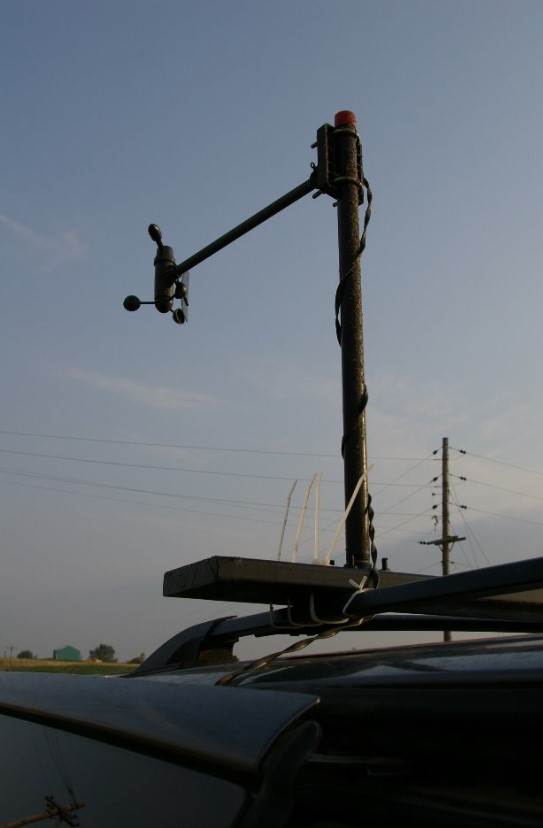
“…The three biggest leaps forward for storm chasers over the last 10 years is (1) many websites that provide excellent weather data, (2) real-time continuous cell and weather data in vehicles as you drive, and (3) weather apps available for cell phones and tablets/iPads. Another big leap for our course was being able to have large monitors in each van that were connected to our laptops/iPads so students could see real-time weather information as we drove to a target area – this vastly improved our teaching ability.”
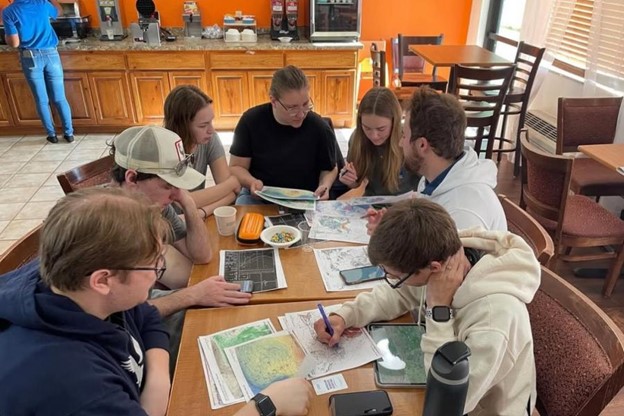
A group of students are preparing for the field by looking at various maps and data.
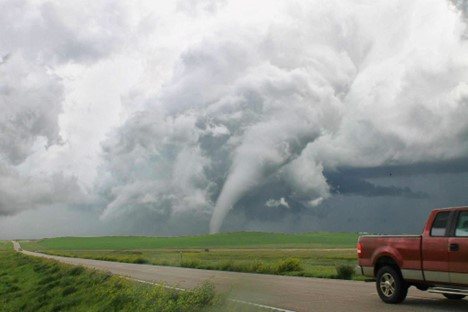
This year’s trip was the longest ever, spanning over 7400km in 8 days. The class saw 4 tornadoes and several good storms throughout the trip, experiencing different and intense warnings, such as sirens and phone alarms. When speaking about the encounter students had with such fascinating formations, Dr. Hanesiak added the following:
“Safety is always top priority. If tornadoes are present, we like to stay within a few kilometers if possible, however, there have been times where the road network got us closer than we would have liked! Nonetheless, we always manage to stay safe. Students usually come away saying this is the best course they have ever taken. This is due to the practical skills they learn that can be applied for the rest of their life, whether they choose a weather related career or not.”
Use the following link to read more about the 20th anniversary trip.
Check out this interview from CTV News with Dr. Hanesiak and student Jaydon Svensson discussing the latest trip: U of M storm chasing learning experience – CTVNews
To enroll in the course, students must have at least taken GEOG 2300, but preferably GEOG 3310 as well (GEOG 4300 also helps), or other related courses from other universities if applying from outside UM. To apply, contact Dr. John Hanesiak (John.Hanesiak@umanitoba.ca).