






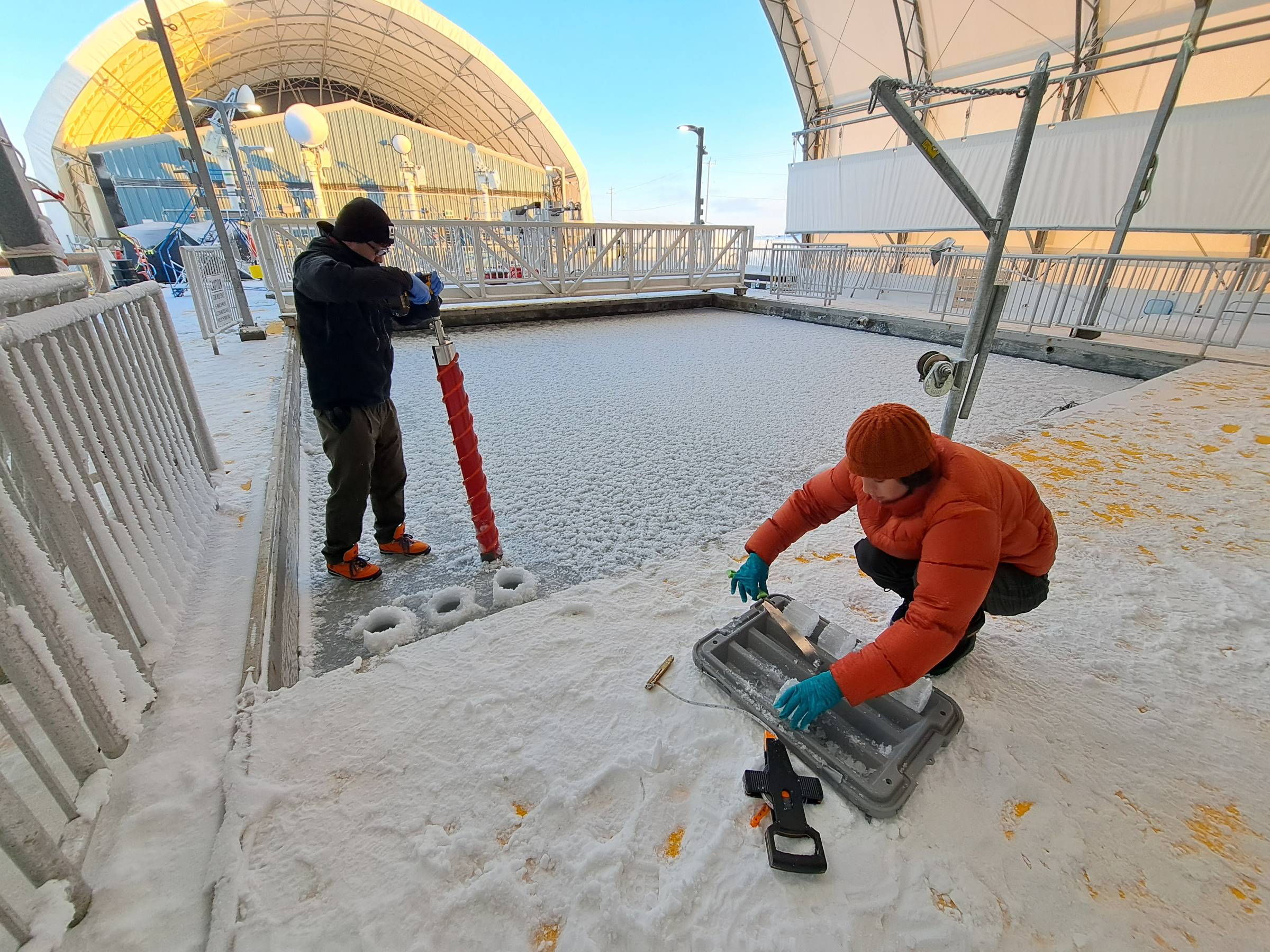
Graduate students Rei Shibue (University of Manitoba, left) and Alia Sanger (McGill University, right) collecting ice cores for the GENICE II project. Credit: Jocelyn Plouffe.
Celebrating one year of research at the Churchill Marine Observatory
The Churchill Marine Observatory celebrates the 1-year anniversary since opening on August 27th, 2024.
August 27th, 2025 marks the first anniversary of the grand opening of the Churchill Marine Observatory (CMO). Both internal and international researchers have made use of the facility, which is led by Project Lead Dr. Feiyue Wang and Co-Lead Dr. C.J. Mundy, for their work over the past year.
The town of Churchill is home to North America’s principal seaport in the Arctic, which is also the only one connected to the southern railway grid. The CMO is a unique facility for both its location as well as its infrastructure, including built-in laboratories and the Ocean-Sea Ice Mesocosm (OSIM), which incorporates outdoor pools that allow for experiments using water drawn directly from Hudson Bay.
The first international researchers to work at the CMO were a team from the Arctic Research Centre at Denmark’s Aarhus University, who visited last November. In collaboration with Dr. Wang, their work focused on monitoring and studying the initial stages of thin ice formation to investigate how algae and microorganisms concentrate, and how they may influence cloud formation and the Earth’s radiation balance.
Shortly afterwards, a team of researchers from the GENICE II project led by Dr. Eric Collins with Dr. Dustin Isleifson, Dr. Gary Stern, and Dr. Nagissa Mahmoudi put the OSIM facility to the test by conducting its first-ever controlled oil spill experiment. Their use of OSIM allowed them to inject marine diesel beneath a layer of ice in the experimental pool and monitor changes while comparing it to the adjacent pristine control pool.
The GENICE II project’s multidisciplinary approach involves microbiology, remote sensing, and chemistry, and allows researchers to investigate how oil would behave and degrade in a natural Arctic environment. The project is funded by Genome Canada and Genome Prairie, with support from the University of Manitoba and McGill University.
In February, a research team led by Dr. Julienne Stroeve and Dr. John Yackel, with collaborations from Dr. Dustin Isleifson, conducted an experiment studying how salinity changes the properties of snow and radar scattering when thin layers of sea ice are weighed down by large amounts of snow precipitation and subsequently flooded from underneath – a phenomenon that could occur more regularly in the Arctic as the sea ice thins under a warming climate.
The CMO has also supported the thesis research of Maeva Gremaud, a visiting graduate student from ETH Zurich in Switzerland. Gremaud studied the distribution of mercury, a major contaminant of concern in the Arctic, by comparing sea ice cores taken from OSIM with natural cores retrieved nearby from Hudson Bay.
In July, the CMO’s on-site water treatment system successfully cleaned the OSIM pool water from the first-year experiments, meaning it can be released back into Hudson Bay.
Another core element of the CMO is its Environmental Observing (EO) System, which monitors biogeochemical data from the Churchill River estuary and out along the main shipping lane in Hudson Bay. As part of the EO System and in collaboration with the Port of Churchill, a cabled observatory was deployed off the wharf in the estuary this year in a testing phase, with plans to retrieve it in the fall and redeploy it next spring.
A community-based monitoring program hiring local community members in Churchill to examine drivers of production in the estuary has also been launched through a collaboration between the CMO and Oceans North.
Finally, the CMO is also equipped with an on-site atmospheric monitoring station collecting real-time meteorological and air quality data, supporting research on the atmospheric chemistry and physics of the rapidly changing sub-Arctic region.
Looking forward, the CMO is prepared to host more researchers from different disciplines and sectors, including local and Indigenous researchers, to conduct specialized experiments and to co-develop knowledge and technologies with the town of Churchill, as well as other communities in the region. For example, the GENICE II team will return to the CMO to expand on their study this winter.
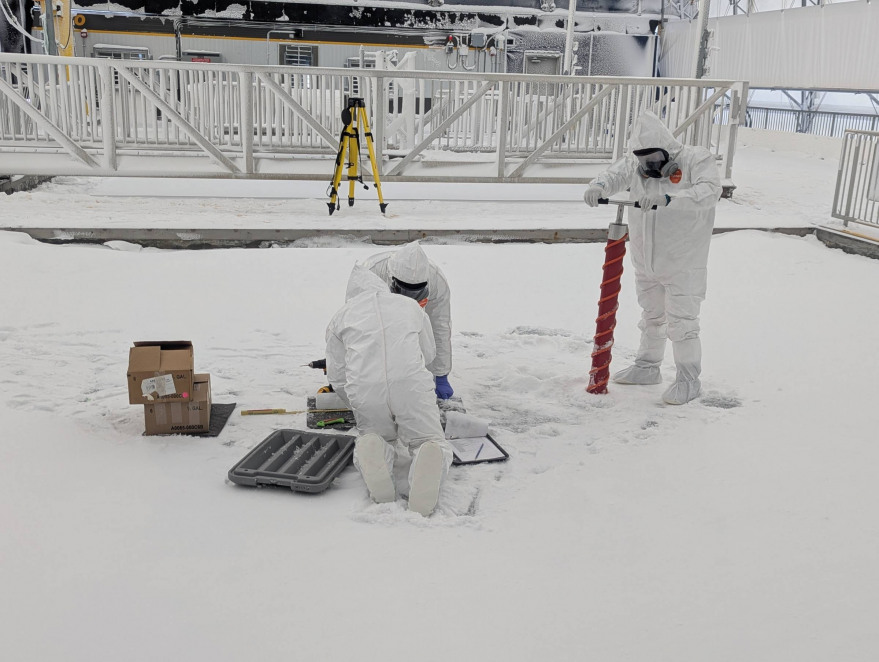
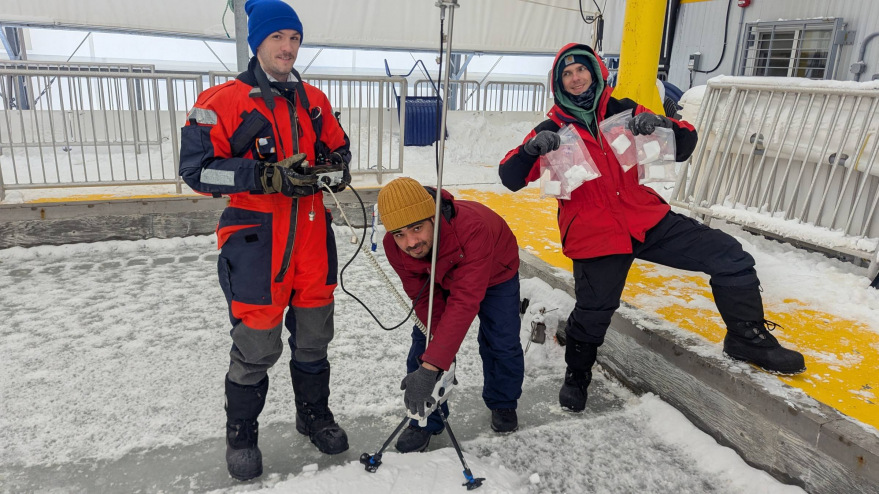
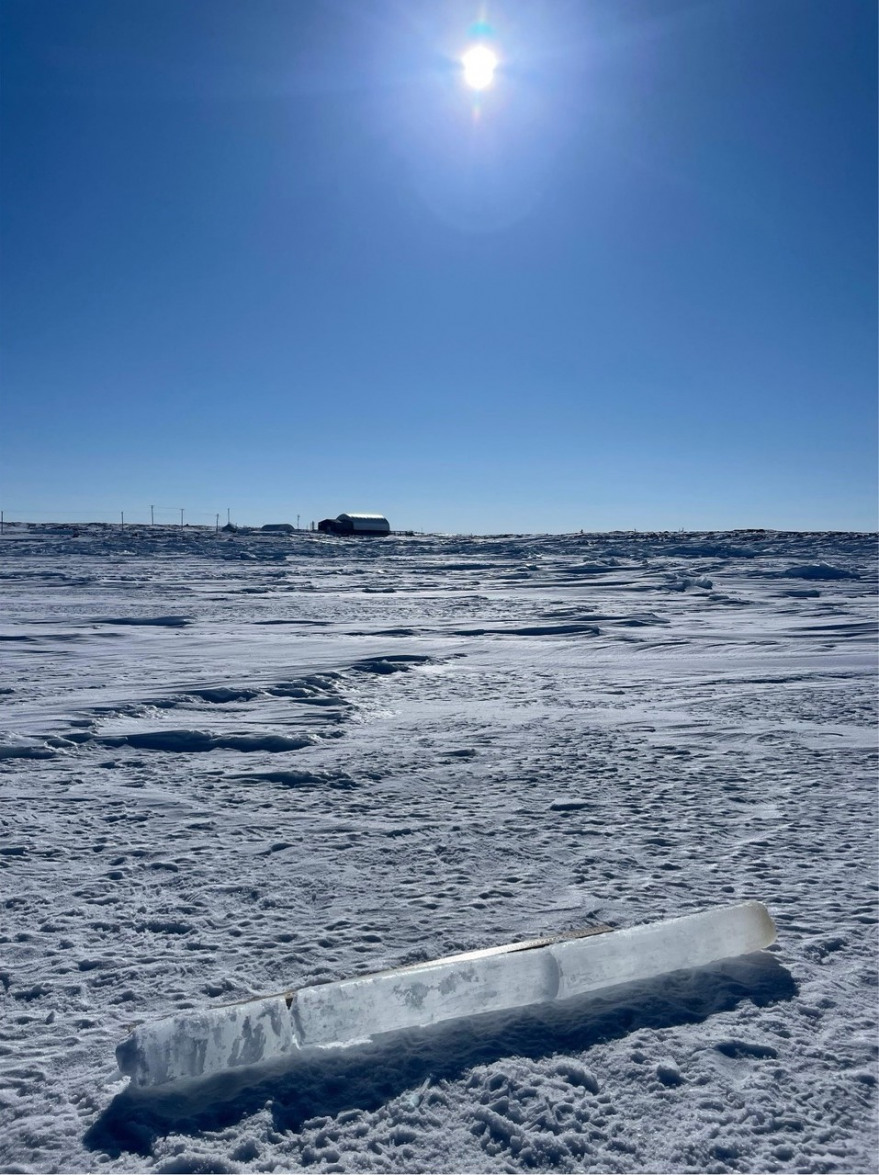
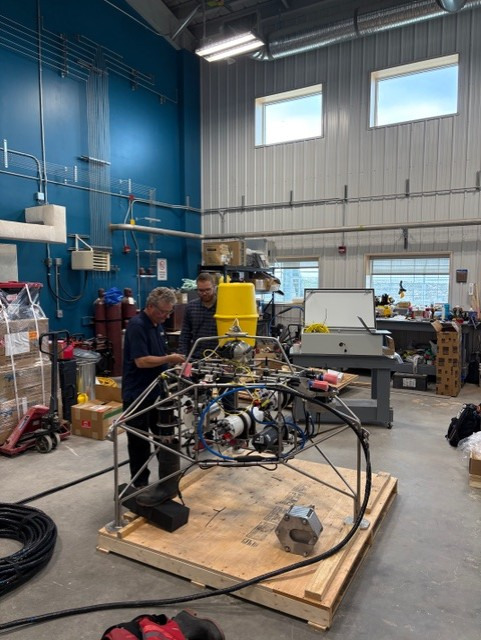
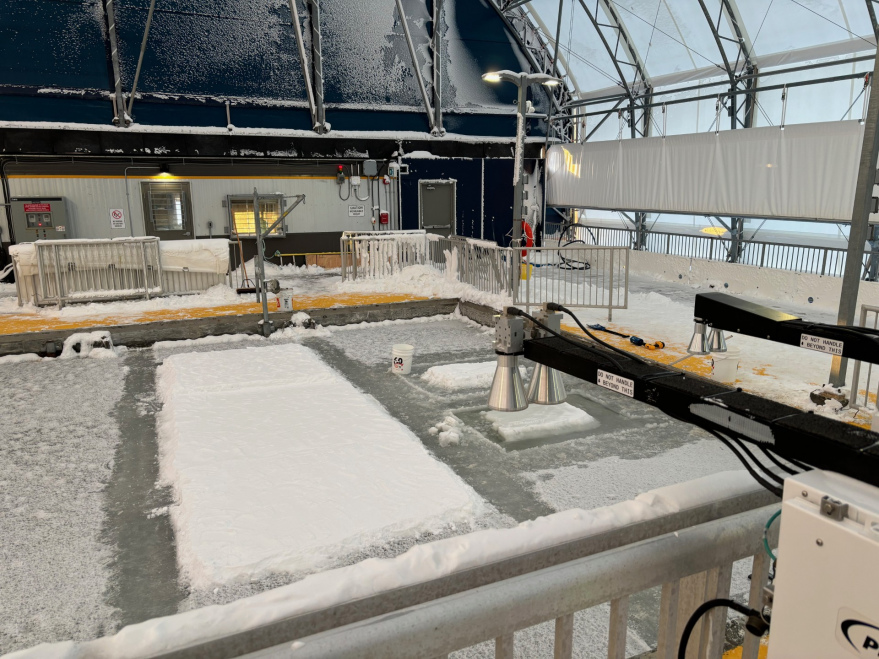
Image 2: Researchers Clément Soriot (University of Manitoba, left), Kiledar Tomar (University of Calgary), and Anton Komarov (University of Manitoba, right) using a snow micropenetrometer to measure the microscopic physical structure of snow grains. Credit: Robbie Mallett.
Image 3: An ice core from Hudson Bay with the CMO in the background. The bottom of the core is brown due to the growth of sea ice algae. Credit: Maeva Gremaud.
Image 4: The EO System’s cabled observatory being prepared by MTE Instruments staff in the CMO workshop prior to its deployment into the Churchill River estuary. Credit: C.J. Mundy.
Image 5: A dual-frequency radar called the KuKa observing a layer of thin ice and a layer of snow as part of the sea ice flooding experiment. Credit: Clément Soriot.