






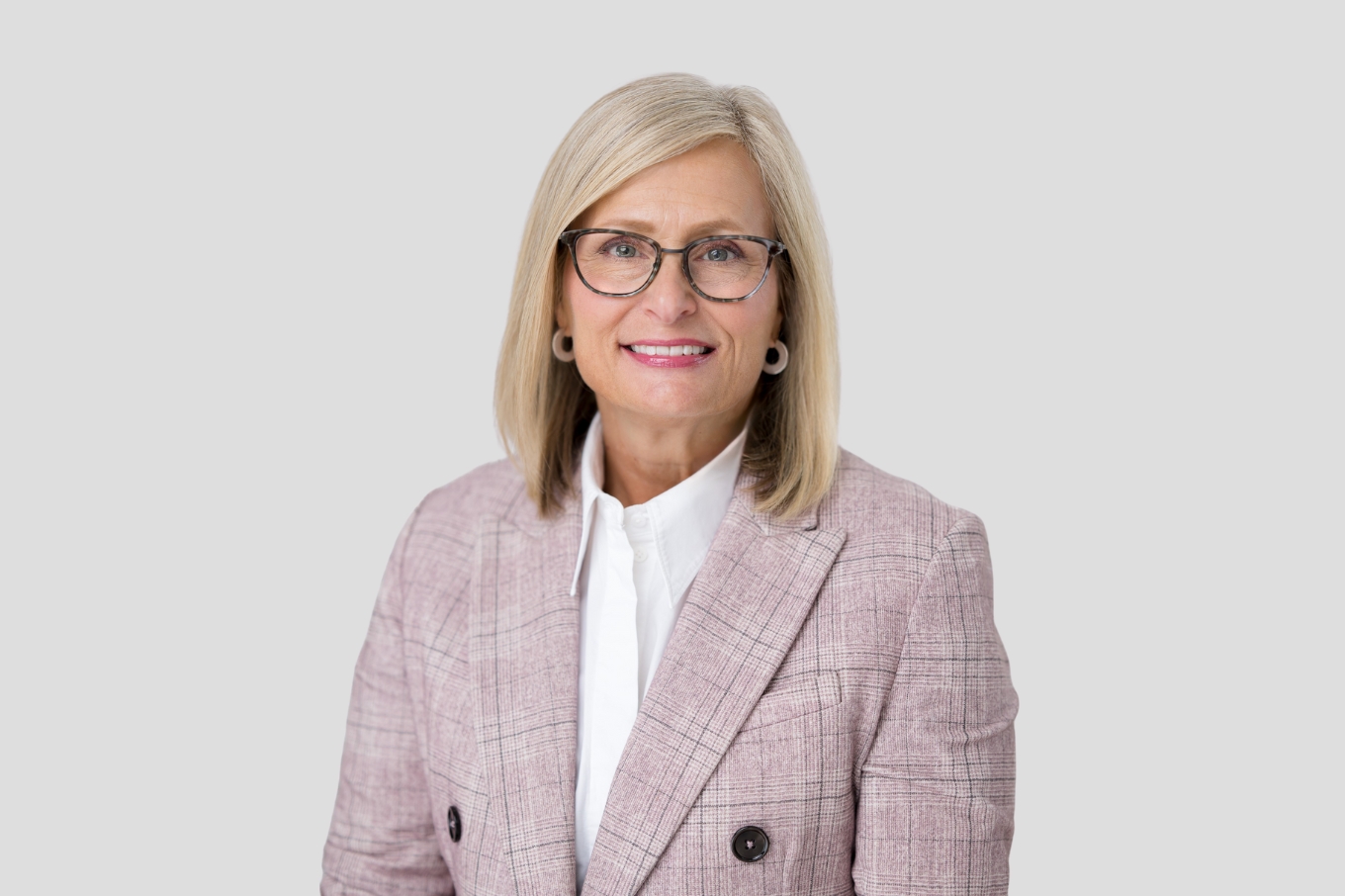
Anne Mahon named Leader-in-Residence of Burns Leadership Institute
Leading with empathy: a conversation with Anne Mahon
The James W. Burns Leadership Institute has appointed Anne Mahon as Leader-In-Residence (LIR) effective July 1.
Mahon, who served as Chancellor of the UM for two terms ending this Spring, is a writer and community activist with a background in philanthropy.
In her new role as Leader-In-Residence, she will help foster meaningful collaborations between the Burns Leadership Institute and the broader community. She will be an integral mentor to students across disciplines, collaborating with them and with the Institute on bringing new workshops and speakers to the UM to deepen students’ learning, community commitment, and networks.
Throughout her career, Mahon has woven a consistent thread of placing empathy, inclusivity and authenticity at the forefront of everything she does.
Her compassionate, innovative perspectives on leadership made her an ideal Chancellor for the University, a position that historian W.L. Morton once described as “the University’s best friend in the world.”
It’s also apparent in her groundbreaking non-fiction books Overcome: Stories of Women Who Grew Up in the Child Welfare System, The Lucky Ones: African Refugees’ Stories of Extraordinary Courage, and Redemption: Stories of Hope Resilience and Life after Gangs.
Chancellor Emeritus Mahon sat down with Dr. Gagnon to look back at her previous leadership experience, and forward to her vision as the new LIR.
SUZANNE GAGNON:
How have both your time as Chancellor—as well as your diverse experiences before that—shaped your leadership philosophy?
ANNE MAHON:
One of the things I’ve really realized in leadership is to be your authentic self. If that’s what you are, what you do and what you strive to be, then good things happen from that. People will see you, and that whatever you’re doing is genuine, and it will hold meaning. Another thing I have come to learn is that leaders come in many, many forms, and so it’s very important to stay open, because you have no idea who the next person will be that you feel is a leader to you.
Sometimes it is a classically hierarchical leader like [University of Manitoba President] Michael Benarroch. He is both a hierarchical leader, and a leader on a personal level because of who he is as a person.
But I can also think of community leaders who I’ve met, who are very, very grassroots-oriented people. Somebody else might say they don’t fit a classically, air quotes “leader” vibe, but they are a leader, and they’re a leader in their community.
Part of it is just staying open to people. And I think that underlying both of those comments about being authentic and staying open is really choosing to have, or trying to have, a disposition of humility, which I believe is central to being a leader.
SUZANNE GAGNON:
Thank you! What drew you to this role as Leader-In-Residence at the Burns Leadership Institute, and how do you see this as a continuation of your own leadership path?
ANNE MAHON:
I feel, firstly, extremely grateful to be invited. As Chancellor, I spent six years meeting with six cohorts of the President’s Student Leadership Program [the Burns Institute flagship program], and I know the quality of the students that participate in the program.
I guess there are two parts. One is I want to be with the students, and the other is, I want to learn from them.
When I came to the end of the Chancellor role, I said to myself, I really have to find a way to stay with that community of people because young people are honest. They’re enthusiastic. They’re full of ideas and optimism. And I like that.
So, when the invitation came, I didn’t have to think very hard at all, because I knew in my heart, I already wanted to do something in that vein, and luckily it came to be.
But really, I’m not just doing it altruistically. I feel that my world is enriched every time I’m with a group of people who are different from me.
I feel I’m doing this kind of selfishly and I’m absolutely thrilled.
SUZANNE GAGNON:
So how do you envision your work with the Institute influencing these young people, this next generation? What impact do you hope to have on them?
ANNE MAHON:
Well, in terms of impact, that is not for me to say but I can talk about my intention. The first is to impart to them how much I’ve learned from people on the margins, to encourage them to look in places that normally haven’t been looked in, and be willing to be vulnerable with communities of people you don’t know. And through that, to foster empathy and to foster openness. Because I think those are very, very important qualities for leadership and that benefit us in all parts of our life when we exercise them.
I just feel so strongly that there is strength in our diversity and our differences. Diversity is one of Winnipeg’s superpowers.
And I think that there are a lot of people right now in the world whose voices are trying to silence diversity. And I think that is a mistake, because diversity is a superpower.
SUZANNE GAGNON:
Thank you so much; one last question. How can institutions like the Burns Leadership Institute continue to cultivate that inclusiveness or purpose-driven leadership?
ANNE MAHON:
Well, I want to start by saying, I feel that the President’s Student Leadership Program is already doing that. And I know, because I’ve watched how this program attracts and works with diverse students.
But I think, continuing to include diverse backgrounds, diverse disciplines, and diverse lived experiences will help to cultivate this. Firstly, diverse people need to be invited to the table. But then, in working together with each other, there needs to be a safe and non-judgmental space.
People need to feel heard and respected, even if they don’t feel agreed with. Belonging is the goal.
This is especially important in Manitoba, where 18% of the population is Indigenous. And I think our Indigenous community has a lot of wisdom. Some passed down from the Elders, but also some from living through difficult challenges.
There are all these different individual things that can guide us, like Indigenous ways of knowing and being. Each of our own personal family histories and cultural histories strengthen us.
I’ve always thought of Manitoba as a humble province. And I like that. I want us to embrace our humbleness as Manitobans; to invite others in, so that no one ever feels like they’re not at the table. But then, once at the table, it can’t just be the old table. It has to be a new table, because there are new people there, which means the people at the table have to be adaptable.
Then there’s this connection that forms. Anytime we feel connected, we care more. We do more. We work harder together.
I have seen that be cultivated in the leadership program. And certainly, in my time as a Leader-In-Residence, I hope to cultivate that in my own small way, too.
–
The Burns Leadership Institute at the University of Manitoba was created through a visionary investment from the Power Corporation of Canada, Canada Life Inc., IG Wealth Management, and the Province of Manitoba. It is housed at the Asper School of Business and supports leadership education across faculties. Learn more about the Institute and leadership programming.