






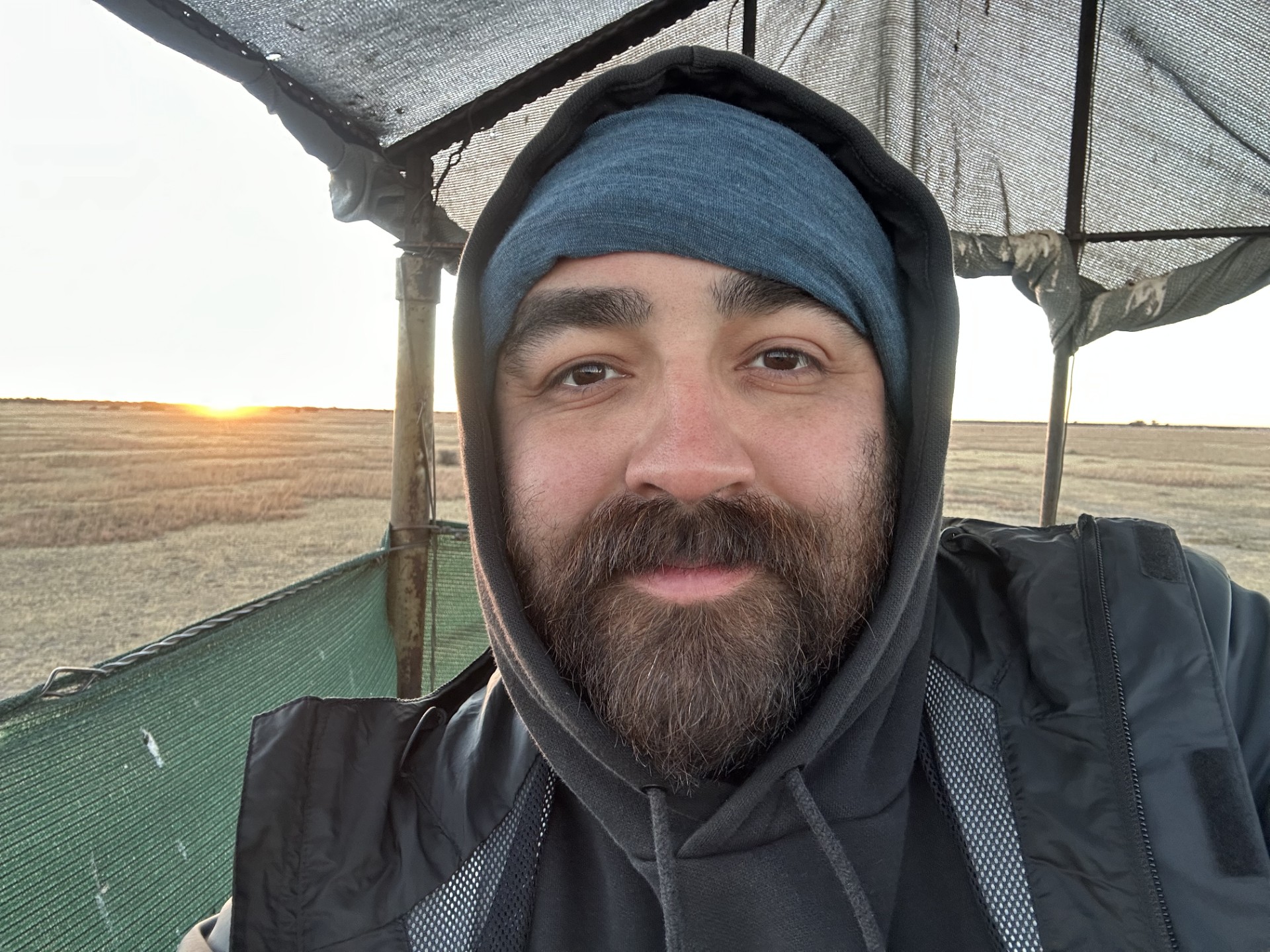
Brett Naylor is an Access Program student.
Access Program celebrates golden anniversary
Join the celebration at open house on Sept. 11
The University of Manitoba Access Program is celebrating its 50th anniversary with a come-and-go open house on Sept. 11 from 10 am to 4 pm at Migizii Agamik (Bald Eagle Lodge) on the UM Fort Garry Campus. Stop by to share in the celebration.
The Access Program supports the hearts, minds, bodies and spirits of a diverse student population on their journey to academic success. Since 1975, Access has supported over 700 UM graduates. Here are the stories of two students.
Brett Naylor
Brett Naylor worked as a cook for 20 years, and then he realized he missed being outside and close to nature like when he was growing up in Thompson and Gimli, Manitoba. He wanted to explore his options so he came to the University of Manitoba where an academic advisor and former Access student suggested he explore the Access Program.
Now the member of the Bloodvein First Nation is studying biological sciences in the Faculty of Science as an Access student. He plans to return to his community one day to advocate for it, and to encourage Indigenous kids to consider university.
Naylor fondly remembers his initial orientation with the program, and now he makes a point of speaking to new Access students at their orientation.
“University is hard. I had no idea what it entailed. It was reassuring to meet some students who were succeeding. A couple of mature students assured me I had a place here. I was not an outsider. I was not going to be alone.”
When he attended a science class with instructor, Emily McKinnon, he knew he wanted to pursue sciences. “It reminded me of my childhood on the lake and in nature.”
With Access, he says, “I got to see the university through a different set of eyes, from an Indigenous perspective. At Access, I felt more at home.”
Initially, Naylor worried about being a mature student in large classes full of 18-year-olds who had privileges he never had like being able to live at home during their studies.
“Access was pretty perfect. Smaller classes, other Indigenous students, other mature students, access to counselling, tutoring, cultural support, smudging… I got more exposure to my culture.”
Access helped him make the transition to university.
“I invite kids to check out the program all the time. Kids from up north are worried to come to Winnipeg. It’s a big city, culture shock. You are changing everything. You are thrust into adulthood, having to figure out the bus, rent, food, where to do your laundry. You spend half your time just trying to get by. It’s not just education. Access supports your ability to deal with life. It’s such an open, welcome place. Everyone’s nice and friendly. It is worth checking out.”
Naylor looks forward to stopping by the open house. “You get to know people. You are not just a face in the crowd. You form relationships. That’s really nice. University can be lonely. Just seeing a friendly face helps. It’s nice to touch base, to see where everyone is at. I will go to Migizii to say hi, to catch up with people from my first-year classes.”
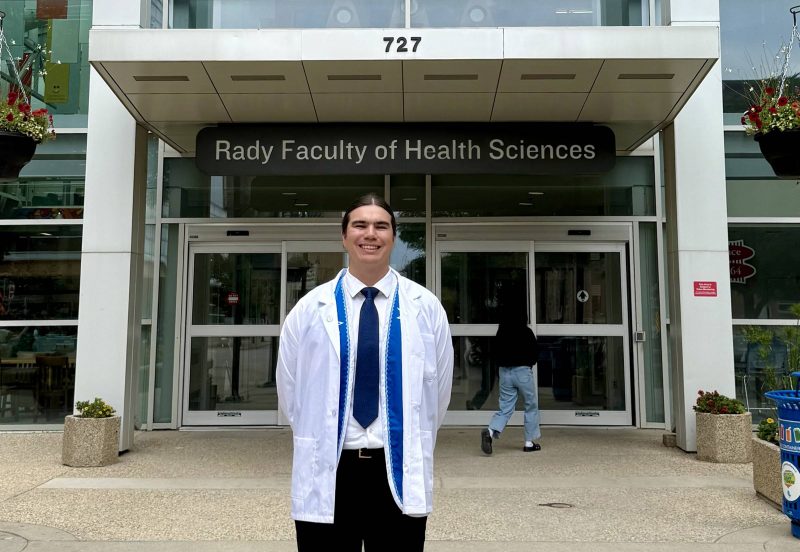
Jesse McGregor in his white coat at Rady Faculty of Health Sciences
Jesse McGregor
Jesse McGregor put on his white coat last week to start his medical studies at the Max Rady College of Medicine. This First Nations student from the Mispawistik (Grand Rapids) Cree Nation who grew in in Norway House began his journey at the University of Manitoba with the Access Program.
“I have always been a helper. It’s important to my identity to take on a caregiver role,” says McGregor, noting this calling is reflected in the Indigenous name he was given in ceremony when he was still in high school: Pimichiwan (Flowing Water), as water serves as a healer. His mom is also an inspiration, serving as a nurse in the north.
“Life on the reserve and life in the city are like two different worlds,” he says. “I remember walking in University Centre and feeling like I was a little fish in a big sea. Students were walking in many directions. There were moments of doubt. Every student is trying to find their way.”
The feelings of culture shock, the loneliness, the longing for home are tough for a bush kid who has come to the city, he says, sharing that his choice to go home for the weekend instead of study for his first exam led to him failing it.
“Access supported me through that. They really care. They helped to create a plan for me. They provided a tutor for me. I passed the course. Without the support, what would I have done? I had no plan. I was learning new skills. I needed guidance. It was a tough experience but I pulled through.”
McGregor is still friends with the fellow students he met in his first-year classes with Access. He attended many of their academic workshops to build his skills.
“The Access Program was always my place to go. Even after I transitioned to the Bannatyne Campus, I had their support system. They really did take great care of me.”
During a recent job as an Indigenous Student Recruitment Officer, McGregor had the opportunity to encourage others to pursue a university education and he always recommends the Access Program.
“They are the most down-to-earth, incredible team. On their 50th anniversary, I wish them all the best, many more students and many more years of success.”
Learn more about the Access Program