






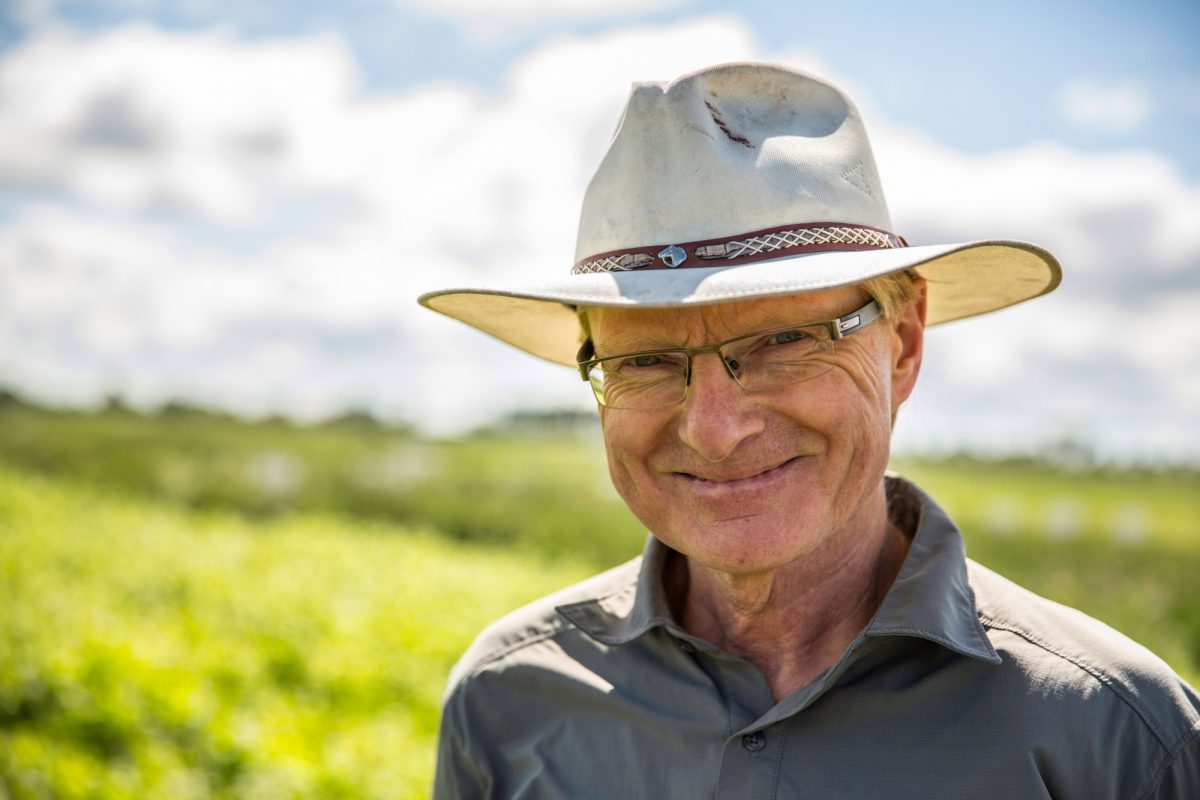
Growing a better future: UM Natural Systems Farming research is feeding the world
For over 30 years, Dr. Martin Entz has been at the forefront of sustainable farming research.
At the University of Manitoba’s Faculty of Agricultural and Food Sciences, Entz leads a research team dedicated to improving the future of farming by helping to reduce reliance on chemical inputs to improve soil health and biodiversity.
Entz’s approach replaces reliance on chemical fertilizers and pesticides with smarter techniques like intercropping – planting two or more crops together – and crop rotation, which keeps the soil healthy and pest-free. These methods, backed by decades of research, boost yields while supporting the land.
A key pillar of this work is the Glenlea Long-Term Rotation Study, Canada’s longest-running comparison of organic and conventional farming methods, now in its 34th year. His work is supported in part by an endowed Jarislowsky Chair in Natural Systems Agriculture for Climate Solutions, which promotes sustainable farming practices in Canada and around the world.
But what sets his research apart is the deep respect for Indigenous food systems, drawing on traditional knowledge to create resilient, sustainable farming models that nourish both people and the planet.
“I have seen improvements over the past 30 years, but many current food production methods are on an unsustainable path and susceptible to catastrophic failure thanks to climate change,” says Entz. “If we want to ensure future generations have enough to eat, a transformation in how we grow our food is not just necessary, it’s urgent.”
Food security in Canada and beyond
Entz and his team have global impact working in Asia, Central America and notably in East Africa, where they collaborate with the Canadian Foodgrains Bank, Canada’s largest food aid donor. Working internationally allows for reciprocal learning and free exchange of information, insights and processes for successful change.
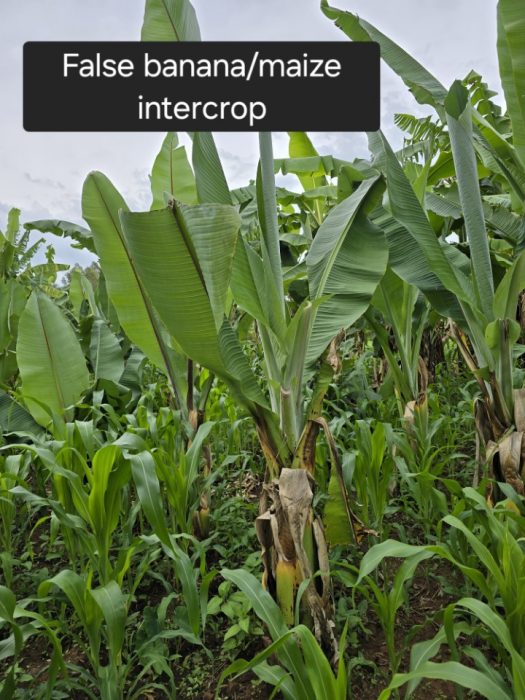
“In 2012, I toured East Africa and Zimbabwe to explore the differences between Canadian farming and other countries,” says Entz. “I looked at how farmers used legumes as intercrops with maize and other staples planted on the same fields. This allowed for better crop diversity, soil quality and helped reduce the number and kinds of pests that destroy crops.”
This collaborative work focuses on agriculture-based food security and land restoration projects. For over ten years, Entz has worked with farmers to develop cropping systems that cut costs by eliminating the need for chemical fertilizers and pest control. One project, supported by the Canadian NGO, SeedChange, facilitated hands-on contributions by Canadian organic farmers in breeding locally adapted wheat and oat varieties adapted to local climates.
Training the next generation of conservation agriculture researchers
UM natural systems agriculture attracts top students from around the world. Laetitia Mukungu (MSc, UM, 2024) gained research experience as a master’s student in the Faculty of Agriculture and Food Sciences and her passion for agriculture has taken her around the world, helping farmers optimize their crops.
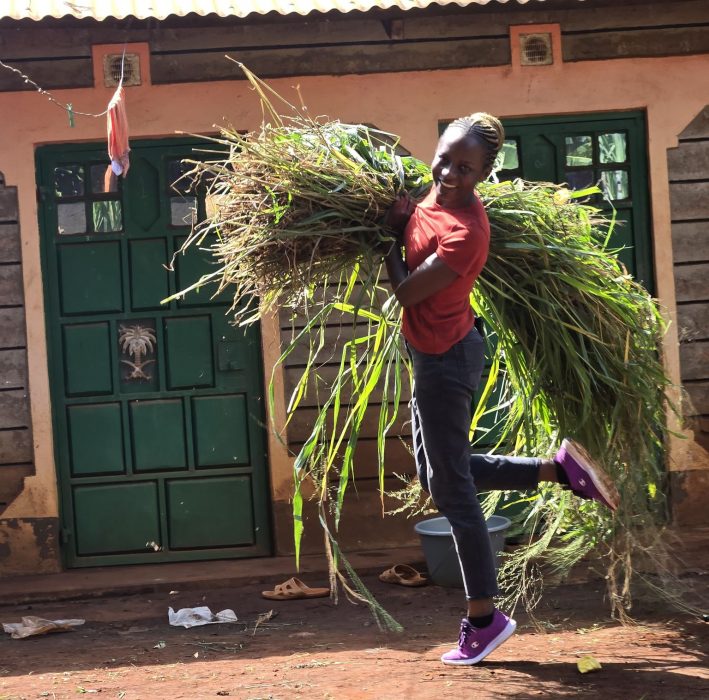
Laetitia Mukungu (MSc, UM, 2024) working in Kenya
Mukungu’s interest in agriculture began on her grandparents’ small-scale farm in Kenya, where she witnessed both the rewards and challenges of farming.
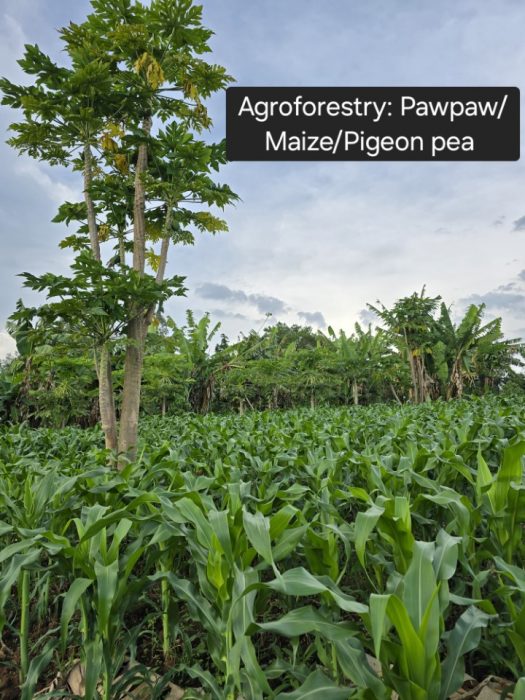
As part of the natural systems agriculture team in Kenya, Mukungu offers hope for farmers by introducing and scaling conservation agriculture for more sustainable food production. Soil health is improving while crop biodiversity is helping increase yields and is reducing the impacts of climate change. For small-scale farmers, these developments are safeguarding livelihoods today, while paving the way for more sustainable agriculture for the next generation.
“My work has shown the power of combining traditional knowledge with science. Youth engagement in Africa’s food security and economic development is vital, and I’m eager to expand my contribution to this mission,” says Mukungu.
Boosting nutritional security in Tanzania
In their latest international research, Dr. Martin Entz and University of Manitoba research associates Drs. Sasha Loewen and Michelle Carkner partnered with Canadian Foodgrains Bank agronomist Neil Miller to explore cropping systems that provide better food security options during drought in Tanzania.
The team recently published an article in Field Crops Research that focusses on lablab, an Indigenous drought tolerant legume that is valuable to nursing mothers thanks to its high protein and nutritional value. Recognizing its potential to enhance nutritional security, particularly for mothers and vulnerable communities, researchers are exploring how lablab can be integrated into local farming systems under intercropping situations.
Their findings show that lablab can be successfully cultivated alongside maize, the region’s staple energy crop, without compromising maize yields. This intercropping approach not only preserves food security but also boosts access to essential nutrients, offering a sustainable strategy to improve maternal health through agriculture.
Continued lablab research will identify the best agronomic practices to encourage its adoption. This will help East African farmers diversify and strengthen their cropping systems.
Canada’s leadership in global agriculture and food security
The University of Manitoba is a global leader in agricultural innovation and food security through cutting-edge research, sustainable practices and international collaboration. By sharing innovations and supporting smallholder farmers, UM is helping shape a more equitable and resilient food future.
Research at the University of Manitoba is partially supported by funding from the Government of Canada Research Support Fund.