







Dr. Titus Olukitibi in a lab at the University of Manitoba
New UM Banting fellow to address global public health inequity
Innovative HPV research to improve women’s health in Africa
Dr. Titus Olukitibi has been awarded the prestigious Banting Postdoctoral Fellowship to expand his research on human papillomavirus (HPV) in Kenya. This research could lead to the development of a groundbreaking therapeutic vaccine for HPV, for which there is no cure.
“Currently, there are prophylaxis [preventive] vaccines for HPV that are commonly given to children in high-income countries, but access remains limited in many African countries for many reasons, including high cost and health-care infrastructure gaps,” says Olukitibi.
“We know that some women can clear HPV naturally, so we want to find the immune cells responsible for that and use it to provide information for the development of a therapeutic vaccine to treat women already infected with HPV.”
Partnering for women’s health in Africa
Olukitibi is working with Dr. Keith Fowke, professor and department head of medical microbiology and infectious diseases in the Max Rady College of Medicine. Olukitibi’s work builds on 45 years of UM’s global leadership in health research in Africa.
His research will contribute to the longstanding collaboration between the University of Manitoba and the University of Nairobi, focusing on developing effective strategies to improve the health and well-being of sex workers in Kenya.
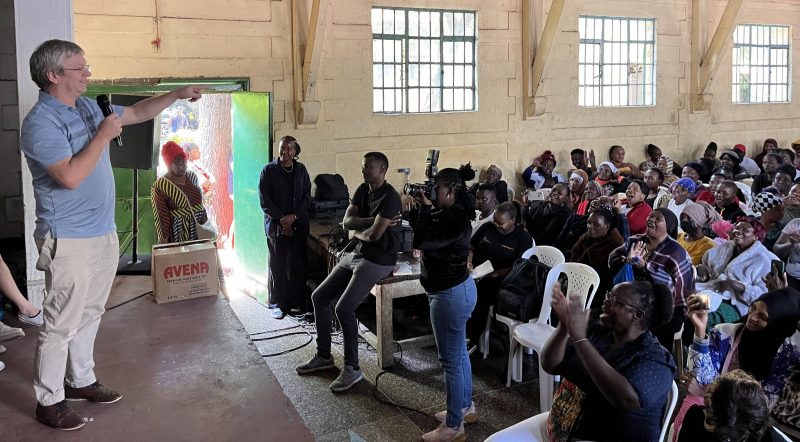
Dr. Keith Fowke working with partners in Kenya.
Olukitibi will collaborate with community members from two grassroots organizations committed to improving the health and well-being of marginalized and vulnerable people in Nairobi: the Sex Worker Outreach Program (SWOP) and Partners for Health and Development in Africa (PHDA).
Female sex workers (FSWs) in Kenya frequently encounter significant obstacles in accessing essential health-care services, including preventive HPV vaccines. This has led to a high number of HPV infections, a known cause of cervical cancer.
Blood samples have been collected from community members participating in the SWOP and PHDA programs. Olukitibi will focus on comparing the cellular composition of FSWs who can naturally clear HPV to those who are unable to do so.
He will conduct an in-depth analysis of the isolated immune cells responsible for combating HPV, aiming to identify the specific immune cells that play a crucial role in clearing the virus. This study will aid in informing the design and development of an innovative therapeutic vaccine for the treatment of infected patients.
Ensuring worldwide health equity in challenging times
This research transcends scientific discovery, offering the potential to transform health-care equity by ensuring that women in low- and middle-income countries have access to vital, life-saving prevention and treatment options.
With global health research facing increasing challenges, this funding is more important than ever. Recent budget cuts to programs in Africa, including PEPFAR (U.S. President’s Emergency Plan for AIDS Relief), could mean that important organizations such as SWOP will close and testing or treatment for sexually transmitted infections such as HIV and HPV will cease. This, in turn, could result in an increased risk of infections and preventable deaths.
“With this funding, important work can continue in Kenya,” says Olukitibi. “Communicating the importance of science in the current landscape of misinformation and funding cuts is imperative. Continued scientific inquiry and vigorous research are key to improving the health outcomes of women and families in Africa and around the world.”
Research at the University of Manitoba is partially supported by funding from the Government of Canada Research Support Fund.