






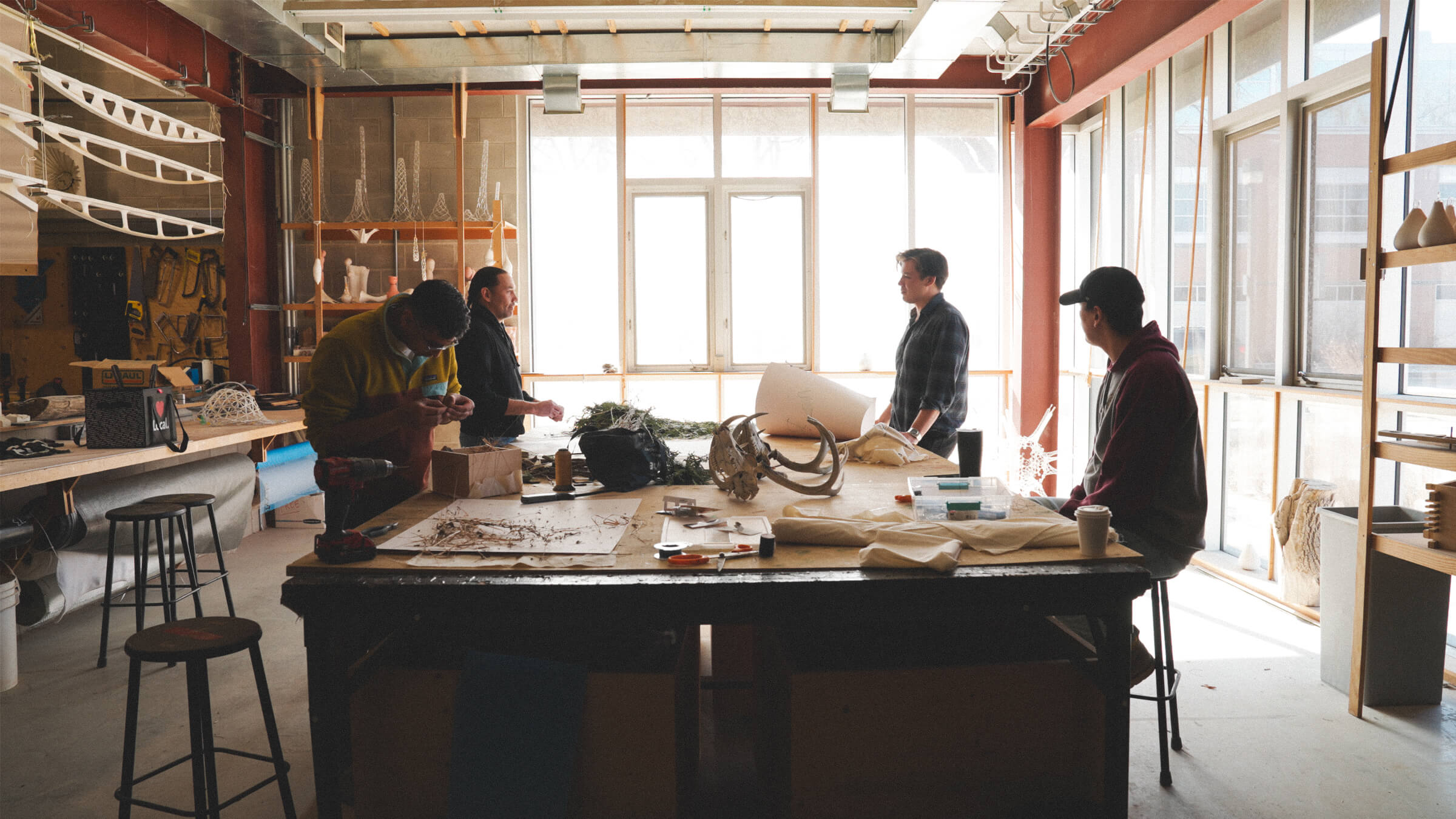
Every Friday, Ryan Gorrie joins UM architecture students to begin a process that is as much about discovery as it is about design.
Around a shared table on the Fort Garry campus, they stitch feathers, animal bones, and cedar boughs onto fabric, laughing and talking as their hands work. Then they walk down to the Red River, light a fire, and wait for the smoke to do its work.

Gorrie [BFA(Hons)/2004, MArch/2009], an Indigenous Practitioner-in-Residence this past year in UM’s Department of Architecture, explains how the smoke imprints on the fabric and, once you remove the objects, something striking reveals itself.
A member of the Anishinaabe Sand Point First Nation, and an architect with BrookMcIlroy, Gorrie began exploring smoke-based art during his master’s thesis in 2009.
“There’s a reverence to it. The land and materials become collaborators,” he says. “Smoke has a long-standing relationship with humankind, particularly in Indigenous communities. It was used to preserve food, clothing, and now, in our case, it helps create imagery.”
Gorrie’s workshops blend art, land-based knowledge, and Indigenous ways of being. Via the smoke, stories are told. Not just through the art, but the relationships formed around it.
“It feels freeing to spend a whole day making drawings and showing others how to do that,” he says. “There’s an energy in sharing this work. We’re creating knowledge together.”
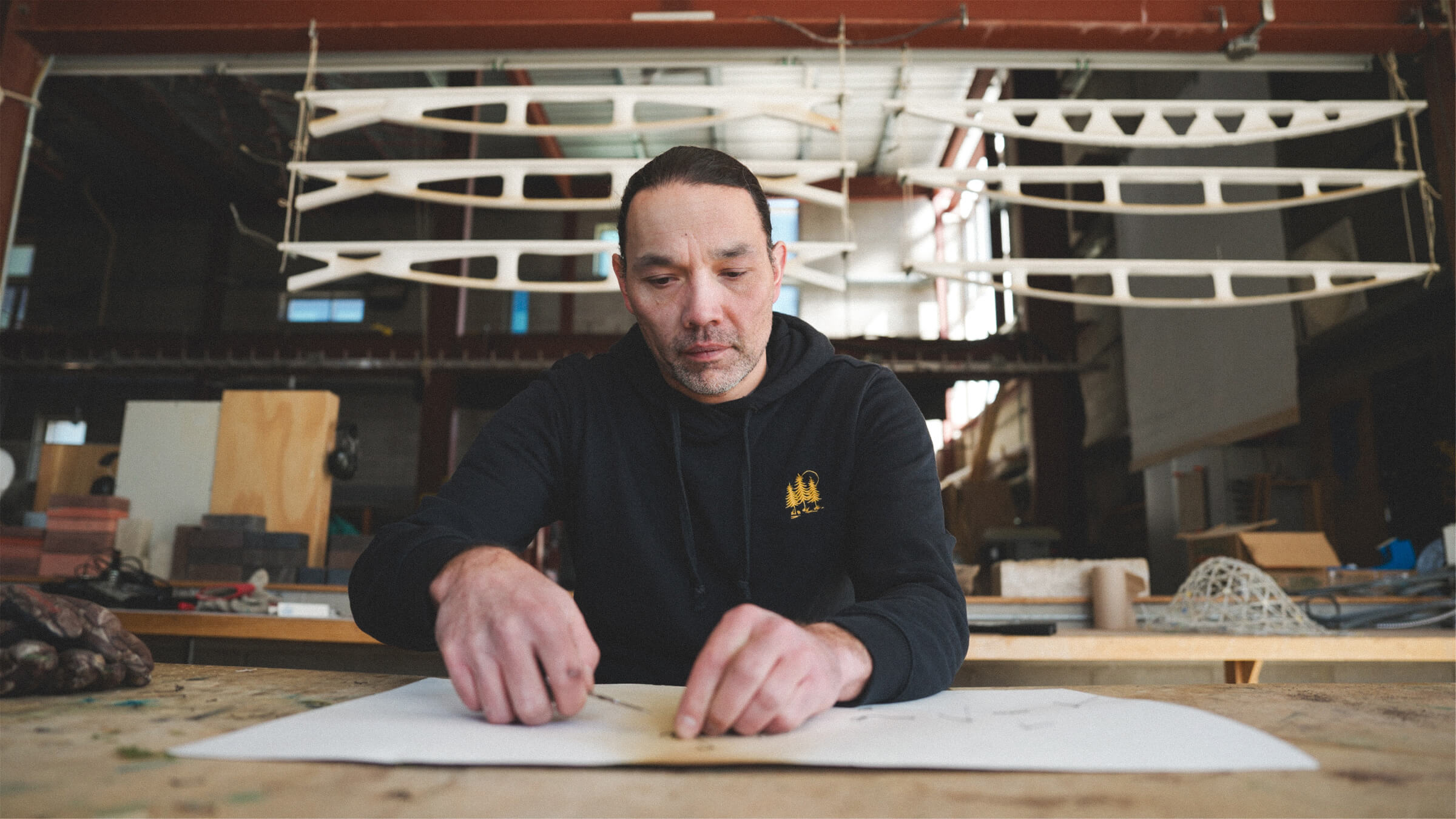
Ryan Gorrie, who leads BrookMcIlroy’s Winnipeg office and their Indigenous Design Studio, brings Indigenous perspectives to modern architecture. He also mentors young designers at the firm.
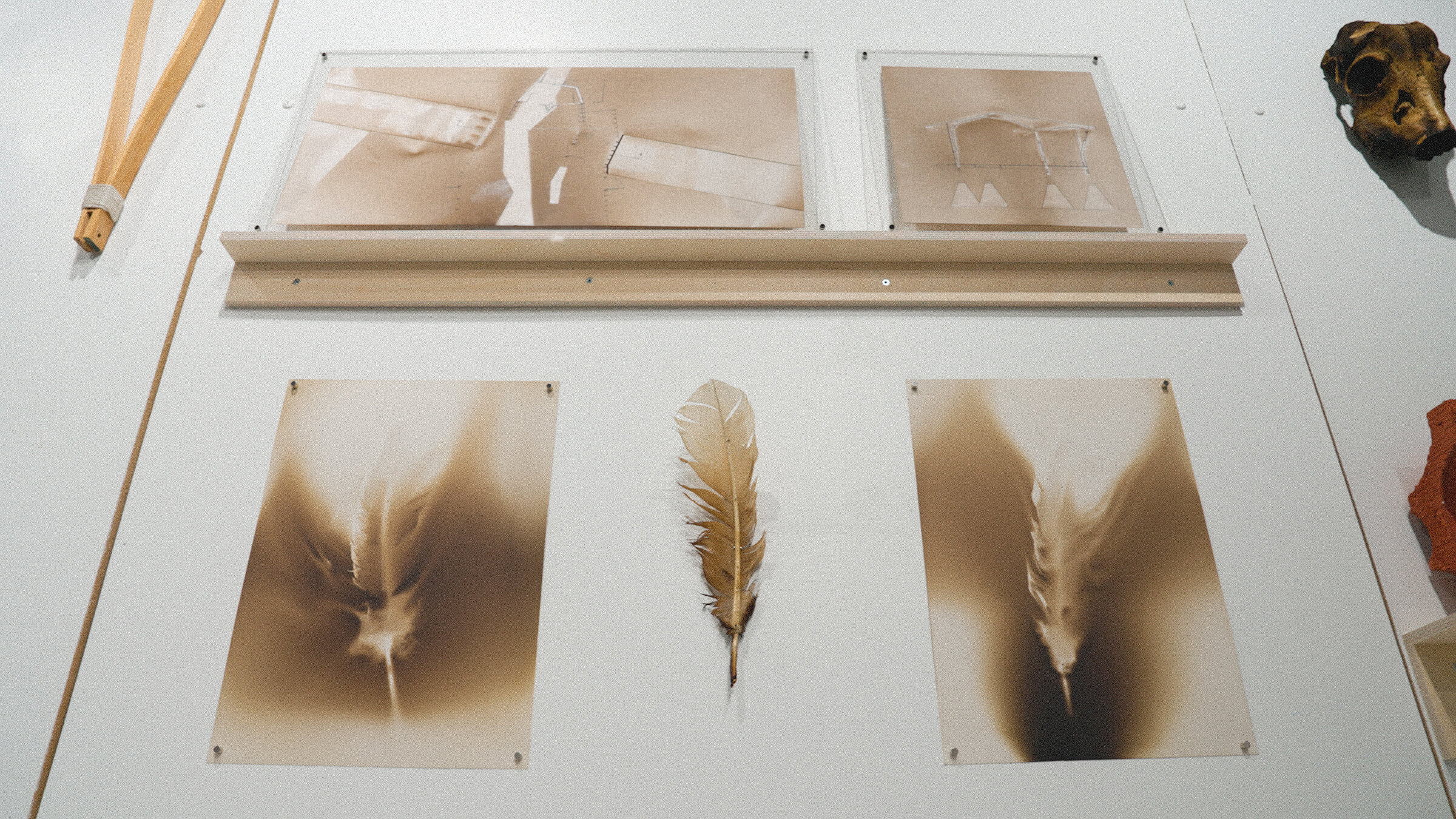
The hands-on process is deeply personal. Students carefully choose materials that carry meaning before attaching them to paper or fabric and hanging them in the smoke box. What comes out is unpredictable: a ghostly imprint of a feather, a swirling memory of an antler.
“There’s something spiritual about the imagery,” Gorrie says. “It’s like you’re seeing a feather through time.”
Sharing this artform with students is a chance to give back, he says. When Gorrie was a student, there were few Indigenous peers in the faculty. Mentorship played a key role in helping him find his place.
“It was the key to my success. Now I get to offer that support to others.”